
Introduction: Why India Should Be Your Next Adventure
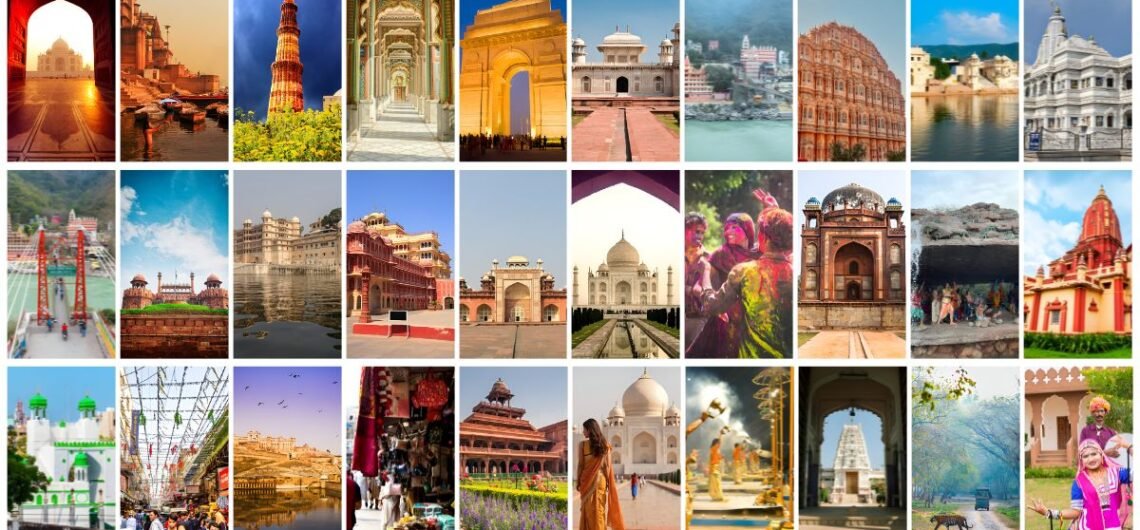
India is one of those rare destinations that stops you in your tracks. The best places to visit in India for first-time travelers span ancient temple cities, Himalayan hill stations, sun-drenched beaches, royal palaces, and serene backwaters — all within a single country. Few places on earth offer such a kaleidoscopic mix of culture, spirituality, wildlife, history, and cuisine in one journey.
From the moment you land, India engages every sense. The scent of marigold garlands at a temple gate, the sound of evening prayers drifting across a river, the explosion of spices in a street-side thali — these are experiences that stay with you long after you return home. India is the world’s most diverse democracy, home to 22 official languages, six major religions, dozens of distinct cuisines, and over 5,000 years of documented history.
That said, India can feel overwhelming to first-time visitors. Cities can be noisy and densely populated. Navigation takes some practice. Infrastructure varies widely between states. A first-time traveler who picks destinations without research can end up exhausted rather than enchanted.
That is exactly why this guide exists. We have curated the 15 best tourist places in India that offer the richest experiences with the most accessible infrastructure — places where international tourists are well-catered to, where English is widely spoken, and where the magic of India is most accessible.
Whether you are drawn to the Taj Mahal, a Himalayan sunrise, a Kerala houseboat, or a golden desert camp, this India travel guide will help you plan a confident, balanced, and deeply memorable first trip.
Top 15 Best Places to Visit in India for First-Time Travellers
1. Delhi – Historic and Cultural Introduction
Why Visit
Delhi is where most international travelers begin their India journey, and for good reason. India’s capital is a city of layers — Mughal monuments, British colonial architecture, vibrant bazaars, world-class museums, and a buzzing modern food scene exist side by side. Delhi is the ideal soft landing for first-timers.
Key Attractions
- Red Fort – A UNESCO World Heritage Site and the iconic seat of Mughal power
- Qutub Minar – The world’s tallest brick minaret, dating to the 12th century
- Humayun’s Tomb – The architectural blueprint for the Taj Mahal
- India Gate – The national war memorial at the heart of New Delhi
- Chandni Chowk – One of Asia’s oldest and busiest markets
Best Time to Visit
October to March (cool, dry, ideal for sightseeing)
Ideal Duration
2–3 days
Travel Tips for First-Time Visitors
- Use Delhi Metro for safe, efficient city travel
- Book accommodation in South Delhi or Aerocity for cleaner, quieter surroundings
- Avoid street food on day one — let your stomach acclimatize first
- Registered prepaid taxis from the airport are the safest option on arrival
How to Reach
Indira Gandhi International Airport (DEL) connects Delhi to virtually every major international gateway including London, New York, Dubai, Singapore, and Frankfurt.
Who Should Visit
History lovers, culture seekers, foodies, and anyone looking for a well-rounded introduction to India.
2. Agra – Home of the Taj Mahal
Why Visit
Agra is home to one of the Seven Wonders of the World. The Taj Mahal alone justifies the journey, but Agra also offers Agra Fort and the lesser-visited Fatehpur Sikri — making it a complete Mughal heritage experience. Most first-time visitors combine Agra with Delhi and Jaipur in the iconic Golden Triangle Tour.
Key Attractions
- Taj Mahal – The world’s greatest monument to love, best seen at sunrise
- Agra Fort – A red sandstone fortress with palaces, mosques, and river views
- Fatehpur Sikri – A perfectly preserved Mughal ghost city, 40 km from Agra
- Mehtab Bagh – The garden across the river for the best sunset view of the Taj
Best Time to Visit
October to March
Ideal Duration
1–2 days
Travel Tips for First-Time Visitors
- Buy Taj Mahal tickets online in advance to avoid queues
- Visit at sunrise for golden light and smaller crowds
- Hire a government-approved guide at the entrance for context and history
- Photography tripods are not permitted inside the Taj
How to Reach
Agra is 200 km from Delhi. The Gatimaan Express (1.5 hours) and Shatabdi Express (2 hours) offer comfortable rail connections. Road trips take 3–4 hours via the Yamuna Expressway.
Who Should Visit
Virtually every first-time visitor to India — the Taj Mahal is a non-negotiable bucket list experience.
3. Jaipur – Royal Heritage of Rajasthan
Why Visit
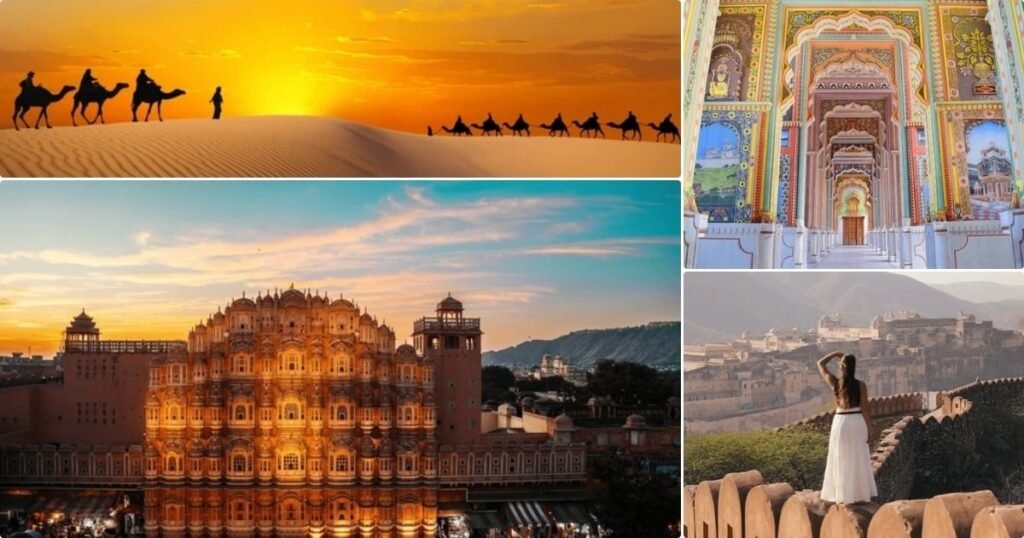
Known as the Pink City for its rose-coloured buildings, Jaipur is the capital of Rajasthan and the third corner of India’s famous Golden Triangle. It’s a city of fairy-tale palaces, elephant-topped forts, vivid bazaars, and living royal heritage. Rajasthan Tours typically begin here.
Key Attractions
- Amber Fort – A hilltop palace complex with stunning mirror-work interiors
- Hawa Mahal – The iconic “Palace of Winds” with 953 windows
- City Palace – Still partially occupied by the Jaipur royal family
- Jantar Mantar – A UNESCO-listed open-air astronomical observatory
Best Time to Visit
October to February
Ideal Duration
2–3 days
Travel Tips for First-Time Visitors
- Dress respectfully when visiting temples and palaces
- Negotiate prices at bazaars — it’s expected and part of the experience
- Pre-book Amber Fort entry tickets online to skip lines
- Tuk-tuk drivers often get commissions at shops — agree on a point-to-point fare only
How to Reach
Jaipur is 280 km from Delhi (5 hours by road or 4.5 hours by express train). It has its own international airport with direct flights from major Indian cities.
Who Should Visit
History enthusiasts, architecture lovers, shoppers, and photographers.
4. Rishikesh – Spiritual and Adventure Capital
Why Visit
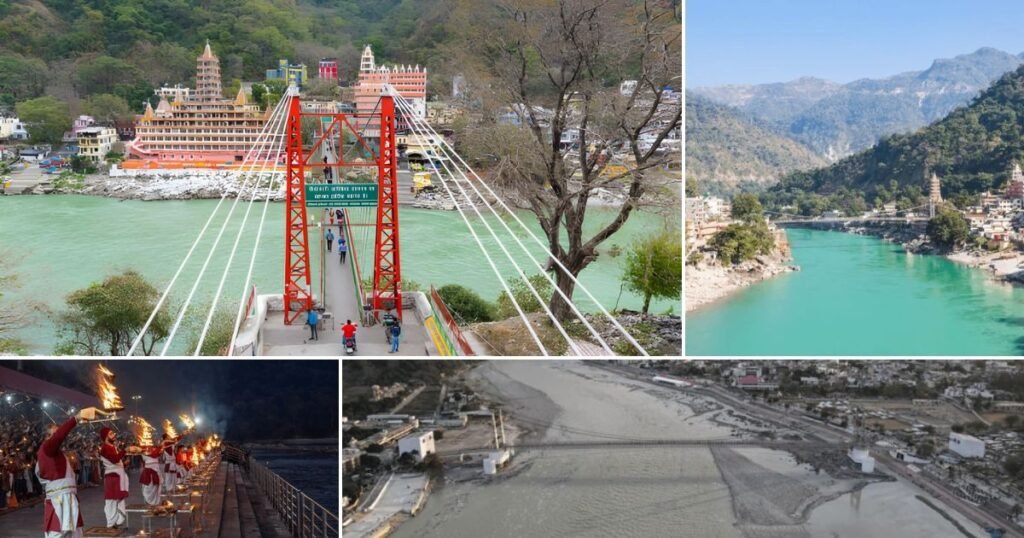
Rishikesh sits where the Ganges descends from the Himalayas into the plains, making it one of the world’s great spiritual destinations. It is also the adventure sports capital of India, famous for white-water rafting, bungee jumping, and yoga retreats. The famous Beatles Ashram — where the Fab Four composed much of the White Album — is located here.
Key Attractions
- Laxman Jhula & Ram Jhula – Iconic iron suspension bridges over the Ganges
- Triveni Ghat – Sacred bathing ghat with nightly Ganga Aarti ceremony
- Beatles Ashram (Chaurasi Kutia) – Now an open-air graffiti gallery
- White-water rafting on the Ganges – Grade 2–4 rapids for all skill levels
Best Time to Visit
February to May and September to November
Ideal Duration
2–3 days
Travel Tips for First-Time Visitors
- Alcohol and non-vegetarian food are not served in Rishikesh — it is a sacred city
- Book rafting through licensed operators only for safety
- The Ganga Aarti at Triveni Ghat (6:30 PM daily) is a spiritual highlight — arrive early for a good spot
- Carry layers; evenings can be cool even in the warmer months
How to Reach
Rishikesh is 250 km from Delhi (5–6 hours by road). Haridwar (25 km away) is the nearest major railway station with frequent connections to Delhi.
Who Should Visit
Yoga practitioners, spiritual travelers, adventure seekers, and those needing a peaceful detox from India’s busier cities.
5. Udaipur – City of Lakes and Romance
Why Visit
Udaipur is arguably the most romantic city in India, and many argue, one of the most beautiful in the world. Built around shimmering lakes and filled with white marble palaces, Udaipur is often called the “Venice of the East.” It’s the jewel of Rajasthan Tours.
Key Attractions
- Lake Pichola – Udaipur’s centrepiece lake with boat rides to island palaces
- City Palace – A 400-year-old palace complex perched above the lake
- Jag Mandir – A lake palace that inspired the James Bond film Octopussy
- Saheliyon Ki Bari – The serene “Garden of the Maidens” with fountains and kiosks
Best Time to Visit
October to March
Ideal Duration
2–3 days
Travel Tips for First-Time Visitors
- Stay in a heritage hotel overlooking Lake Pichola for the full experience
- Take a sunset boat ride on the lake — it’s worth every rupee
- Explore the Old City on foot or by rickshaw for the best bazaar experience
- Visit Monsoon Palace at sunset for panoramic views over the city
How to Reach
Udaipur has its own domestic airport with connections to Delhi, Mumbai, and Jaipur. It is also well-connected by train (12–13 hours from Delhi).
Who Should Visit
Couples, romantics, art lovers, and those seeking a more relaxed pace after the intensity of Delhi or Jaipur.
6. Ranthambore – Wildlife and Tiger Safari
Why Visit
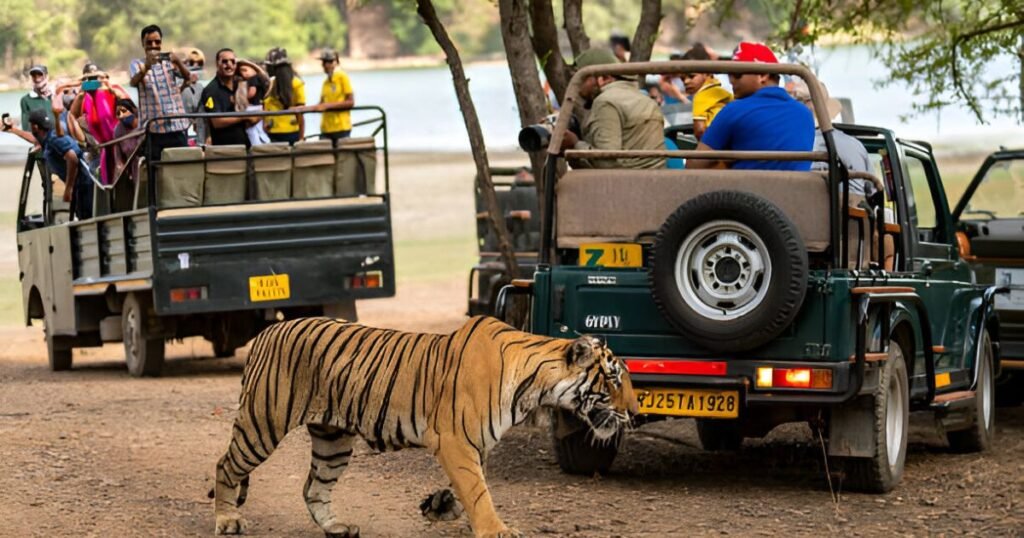
Ranthambore National Park in Rajasthan is India’s most famous tiger reserve and one of the best places in the world to see Bengal tigers in the wild. The park’s dramatic landscape — where tigers are regularly spotted near a 10th-century ruined fort — makes it uniquely photogenic. Combined with Jaipur, it forms a natural extension of the Rajasthan itinerary.
Key Attractions
- Tiger Safaris (Zones 1–5) – Morning and afternoon jeep safaris with expert naturalists
- Ranthambore Fort – A UNESCO-listed fort inside the park
- Padam Talao – The largest lake in the park, popular with tigers and crocodiles
- Birdwatching – Over 300 bird species including the rare Indian paradise flycatcher
Best Time to Visit
October to June (the park closes July–September for monsoon)
Ideal Duration
2 days (4 safaris recommended)
Travel Tips for First-Time Visitors
- Book safari permits online through the Rajasthan Forest Department website — demand far exceeds supply
- Zones 1–3 have the highest tiger sighting rates
- Wear muted, earth-toned clothing — avoid white and bright colours
- Binoculars significantly enhance the safari experience
How to Reach
Sawai Madhopur is the nearest railway station (11 km from the park), with excellent connections to Jaipur (2 hours) and Delhi (4–5 hours).
Who Should Visit
Wildlife enthusiasts, photographers, families, and anyone with a lifelong dream of seeing a wild tiger.
7. Jaisalmer – Golden City of Rajasthan
Why Visit
Rising from the Thar Desert like a mirage, Jaisalmer is one of the most extraordinary cities on earth. Its medieval fort — still inhabited by thousands of people — glows golden at sunset. Beyond the city, vast sand dunes offer camel treks, desert camps, and star-lit nights that are among India’s most magical experiences.
Key Attractions
- Jaisalmer Fort – One of the world’s few fully inhabited living forts
- Sam Sand Dunes – The Thar Desert’s iconic dunes, 45 km from the city
- Patwon Ki Haveli – A cluster of five mansions with intricate sandstone carvings
- Desert Camp at Sam – Overnight tented camps with folk music and camel rides
Best Time to Visit
October to February (avoid May–August when temperatures exceed 45°C)
Ideal Duration
2–3 days
Travel Tips for First-Time Visitors
- Spend at least one night at a desert camp — the experience is transformative
- Stay inside the fort for an authentic heritage experience
- Avoid booking camel safaris through hotel touts — go directly to reputable operators
- Carry a scarf — the desert wind and sand can be relentless
How to Reach
Jaisalmer has a domestic airport and a well-connected railway station. It is 590 km from Jaipur (overnight train or 9-hour drive).
Who Should Visit
Adventure travellers, photographers, history buffs, and romantics seeking a bucket-list desert night.
8. Varanasi – Spiritual Heart of India
Why Visit
Varanasi is one of the world’s oldest continuously inhabited cities and the spiritual heart of Hinduism. A boat ride at dawn along the sacred Ghats, watching hundreds of pilgrims bathing in the Ganges while priests perform ancient rituals, is one of travel’s most profound experiences. Varanasi is challenging, intense, and completely unforgettable.
Key Attractions
- Dashashwamedh Ghat – The main ghat with nightly Ganga Aarti (evening prayer ceremony)
- Assi Ghat – Popular with backpackers and morning yoga practitioners
- Manikarnika Ghat – The sacred burning ghat; a confronting but powerful experience
- Vishwanath Temple – One of the twelve Jyotirlinga temples of Lord Shiva
Best Time to Visit
October to March
Ideal Duration
2–3 days
Travel Tips for First-Time Visitors
- Rise before dawn for a Ganges sunrise boat ride — it’s the defining Varanasi experience
- Dress conservatively and behave respectfully at all ghats
- Photography at Manikarnika (the cremation ghat) is strictly prohibited
- Hire a local guide — navigating the Old City’s narrow lanes alone can be disorienting
How to Reach
Varanasi (Lal Bahadur Shastri International Airport) has direct flights from Delhi and Mumbai. It is also served by Varanasi Junction railway station with connections across India.
Who Should Visit
Spiritual seekers, philosophers, writers, and anyone seeking to understand India’s deepest cultural soul.
9. Goa – Beaches and Portuguese Heritage
Why Visit
Goa is India’s smallest state and its most famous beach destination. With 100+ km of Arabian Sea coastline, Portuguese colonial churches, vibrant nightlife, excellent seafood, and a distinctly laid-back atmosphere, Goa offers a pace of life unlike anywhere else in India. It’s the perfect place to unwind mid-trip or end your India journey.
Key Attractions
- Baga and Calangute Beaches – North Goa’s lively beach strip
- Palolem Beach – South Goa’s stunning crescent-shaped cove
- Basilica of Bom Jesus – A UNESCO-listed 400-year-old church housing St. Francis Xavier’s relics
- Old Goa – A cluster of colonial churches and convents, a UNESCO World Heritage Site
Best Time to Visit
November to February
Ideal Duration
3–5 days
Travel Tips for First-Time Visitors
- North Goa is party-oriented; South Goa is quieter and more scenic — choose accordingly
- Rent a scooter for the freedom to explore coastal roads independently
- Book beach shack restaurants directly on the beach for fresh-catch seafood meals
- Carry sunscreen — the Goa sun is intense year-round
How to Reach
Goa International Airport (Dabolim/Mopa) has direct flights from most major Indian and international cities.
Who Should Visit
Beach lovers, couples, backpackers, party-goers, and history enthusiasts interested in Portuguese colonial heritage.
10. Kerala Backwaters – Nature and Relaxation
Why Visit
The Kerala Backwaters — a 900 km network of canals, rivers, lakes, and lagoons — offer one of India’s most unique and tranquil experiences. Gliding through the backwaters on a traditional rice barge (kettuvallam houseboat), past paddy fields, coconut groves, and village life, is as close to paradise as India travel gets. Explore Kerala Tour Packages to make the most of this region.
Key Attractions
- Alleppey (Alappuzha) – The houseboat capital of India
- Kumarakom – A bird sanctuary on the banks of Vembanad Lake
- Vembanad Lake – India’s longest lake and the site of the famous Nehru Trophy Boat Race
- Kuttanad – The “Rice Bowl of Kerala,” where farming happens below sea level
Best Time to Visit
September to March
Ideal Duration
2–3 days
Travel Tips for First-Time Visitors
- Book an overnight houseboat — a day cruise doesn’t do justice to the experience
- Choose a houseboat with a cook onboard for authentic Kerala meals (fish curry, appam, puttu)
- Alleppey is more budget-friendly; Kumarakom is more luxurious
- Carry insect repellent — waterside evenings can bring mosquitoes
How to Reach
Cochin International Airport (COK) is the nearest major airport, 85 km from Alleppey. Trains connect Alleppey to Kochi, Trivandrum, and Chennai.
Who Should Visit
Nature lovers, couples, those seeking a slow travel experience, and anyone in need of genuine rest and rejuvenation.
11. Munnar – Tea Gardens and Hills
Why Visit
Perched at 1,600 metres in the Western Ghats, Munnar is Kerala’s most spectacular hill station. Rolling tea plantations, misty mountains, cascading waterfalls, and cool temperatures make it a world apart from India’s hot plains. It pairs naturally with a Kerala Backwaters visit.
Key Attractions
- Tea Plantations – Endless emerald-green carpets of tea bushes covering the hillsides
- Eravikulam National Park – Home to the endangered Nilgiri Tahr
- Mattupetty Dam – A scenic reservoir perfect for boating
- Top Station – The highest point in Munnar with panoramic views into Tamil Nadu
Best Time to Visit
September to May (June–August is peak monsoon)
Ideal Duration
2 days
Travel Tips for First-Time Visitors
- The drive up to Munnar from Kochi is spectacular — sit on the right side of the bus for the best views
- Visit a working tea factory to understand the full production process
- The Neelakurinji flowers bloom only once every 12 years (next bloom: 2030) — a rare spectacle worth planning for
- Carry a warm layer; evenings and mornings can be genuinely cold
How to Reach
Munnar is 130 km from Kochi (3.5 hours by road). No direct trains; road is the only option.
Who Should Visit
Nature lovers, trekkers, tea enthusiasts, photographers, and those seeking cool respite from India’s heat.
12. Darjeeling – Himalayan Beauty
Why Visit
Darjeeling sits at 2,050 metres in West Bengal, offering breathtaking views of the Kanchenjunga range — the world’s third-highest mountain. Famous for its aromatic Darjeeling tea, its UNESCO-listed Himalayan railway (the “Toy Train”), and sunrise views over the Himalayas from Tiger Hill, it is one of India’s most beloved hill stations.
Key Attractions
- Tiger Hill Sunrise – The most popular viewpoint in India for Himalayan sunrises
- Darjeeling Himalayan Railway – A UNESCO World Heritage narrow-gauge “Toy Train”
- Happy Valley Tea Estate – One of Darjeeling’s oldest working tea gardens
- Batasia Loop – A spiral railway loop with war memorial and mountain views
Best Time to Visit
March to May and October to November (clearest mountain views)
Ideal Duration
2–3 days
Travel Tips for First-Time Visitors
- Wake up at 4 AM for the Tiger Hill sunrise drive — book a jeep the evening before
- The Toy Train rides between Darjeeling and Ghum (8 km) are the most scenic option
- Altitude can cause mild headaches in the first 24 hours — rest, hydrate, and avoid alcohol
- Visit the market for the freshest first-flush Darjeeling tea direct from estates
How to Reach
Bagdogra Airport (near Siliguri) is the nearest airport, 90 km from Darjeeling (3 hours by road). New Jalpaiguri (NJP) is the nearest major railway station.
Who Should Visit
Mountain lovers, nature photographers, tea enthusiasts, and trekkers looking for a Himalayan taster without the intensity of Ladakh.
13. Amritsar – Golden Temple Experience
Why Visit
Amritsar is the spiritual home of Sikhism and the site of the Golden Temple (Harmandir Sahib) — the most sacred Sikh shrine and one of the most visited places of worship in the world. The langar (community kitchen) that feeds 100,000 people free of charge every single day is one of humanity’s greatest acts of hospitality.
Key Attractions
- Golden Temple – Covered in 750 kg of pure gold; mesmerizing at dawn and after dark
- Langar at the Golden Temple – Volunteer or simply eat in the world’s largest free kitchen
- Jallianwala Bagh – The solemn memorial to the 1919 massacre
- Wagah Border Ceremony – The daily flag-lowering ceremony at the India-Pakistan border, 30 km away
Best Time to Visit
October to March
Ideal Duration
1–2 days
Travel Tips for First-Time Visitors
- Cover your head before entering the Golden Temple complex — scarves are provided at the entrance
- The temple is most beautiful 30 minutes before sunrise and at night when it is illuminated
- Remove shoes and wash feet before entering (foot baths are provided)
- The Wagah Border ceremony at sunset (book seats in advance) is a loud, patriotic, theatrical spectacle
How to Reach
Sri Guru Ram Dass Jee International Airport has direct connections from Delhi, Mumbai, and several international cities. Direct trains connect Amritsar to Delhi (Shatabdi Express: 6 hours).
Who Should Visit
Spiritual travelers, history enthusiasts, and anyone who wants to witness India’s most humbling act of community service.
14. Hampi – UNESCO Heritage Ruins
Why Visit
Hampi is one of India’s most extraordinary archaeological sites — the ruined capital of the Vijayanagara Empire, which was once one of the world’s largest cities. Spread across a surreal boulder-strewn landscape in Karnataka, it is a UNESCO World Heritage Site where over 1,600 temple monuments lie scattered across 26 sq km of ancient terrain.
Key Attractions
- Virupaksha Temple – Still an active place of worship, continuously used for 7 centuries
- Vittala Temple and Stone Chariot – Hampi’s most iconic image, featured on the Indian 50-rupee note
- Hampi Bazaar – The main ancient market street of the Vijayanagara Empire
- Tungabhadra River – Take a coracle (round wicker boat) ride across to the hippie island
Best Time to Visit
October to February
Ideal Duration
2–3 days
Travel Tips for First-Time Visitors
- Rent a bicycle or motorbike to cover the vast site — it is too spread out to explore on foot
- Hire a licensed guide for context — the history of Vijayanagara makes the ruins come alive
- The sunrise from Matanga Hill is spectacular — a 20-minute climb rewards with panoramic views
- Book accommodation on both the Hampi side and the Hospet/island side for different experiences
How to Reach
Hospet (13 km away) is the nearest railway station. Hubli (74 km) has the nearest domestic airport. Bengaluru is 350 km away (6–7 hours).
Who Should Visit
History buffs, archaeology lovers, photographers, and adventurous travelers who want to see an India well off the main tourist circuit.
15. Khajuraho – Ancient Temple Architecture
Why Visit
The temple complex at Khajuraho in Madhya Pradesh is one of medieval India’s greatest artistic achievements. Built between 950–1050 AD by the Chandela dynasty, the temples are famous for their extraordinary erotic carvings — but equally remarkable for their sheer architectural perfection. They are a UNESCO World Heritage Site and a monument to the full range of human experience.
Key Attractions
- Western Group of Temples – The most preserved and most visited, including Kandariya Mahadeva Temple
- Kandariya Mahadeva Temple – The tallest and most ornate temple in the complex
- Eastern and Southern Groups – Quieter, less-visited Jain and Hindu temples
- Sound and Light Show – An evening narration in the Western Temple complex
Best Time to Visit
October to March
Ideal Duration
1–2 days
Travel Tips for First-Time Visitors
- The Western Group requires an entry fee; the other groups are free or cheaper
- A licensed Archaeological Survey of India guide provides invaluable context on the temple iconography
- Visit early morning for soft light and minimal crowds
- The Khajuraho Dance Festival (February–March) is one of India’s finest classical dance events
How to Reach
Khajuraho has a small domestic airport with connections to Delhi, Agra, and Varanasi. It is also served by a railway station.
Who Should Visit
Art lovers, history enthusiasts, architecture scholars, and curious travelers interested in India’s relationship with the full spectrum of human experience.
Why These Places Are Perfect for First-Time Travelers
Choosing the right destinations is the single most important decision a first-time India visitor can make. All 15 destinations in this guide were selected against the following criteria:
Tourist Infrastructure
All 15 destinations have well-developed tourism infrastructure including dedicated tourist information offices, English-speaking staff, licensed guides, and clearly marked sights. Major monuments are well-maintained and managed by the Archaeological Survey of India.
Safety
These are India’s most visited and best-managed tourist destinations. All are served by tourist police, registered accommodation options with 24/7 reception, and established emergency services. Solo travelers — including solo women travelers — regularly visit all destinations on this list.
Accessibility
All 15 destinations are reachable by flight, train, or a combination of both. They are not remote or difficult to reach. The India Travel Guide consistently highlights these as the most visitor-friendly cities.
Availability of Licensed Guides
Every destination on this list offers licensed, trained, English-speaking tourist guides through recognized operators — essential for making sense of India’s complex history and culture.
Accommodation Options
Every destination offers a wide spectrum of accommodation — from heritage palace hotels and boutique guesthouses to international business chains and budget hostels. First-time travelers will not struggle to find a room at any budget level.
Transportation Convenience
India’s rail network connects all 15 destinations efficiently. All major destinations are also served by domestic airports. Local transport options (Uber, Ola, auto-rickshaws, city buses) are readily available in all cities.
Cultural Experience
Each destination provides deep, authentic exposure to a different dimension of India — royal heritage, spiritual traditions, natural beauty, wildlife, beach culture, and ancient civilizations — ensuring a genuinely diverse introduction to the country.
Suggested 15-Day First-Time India Itinerary
This is the most popular and practical structure for a first India trip, combining the Golden Triangle Tour with wildlife, Rajasthan royalty, and Himalayan spirituality.
Days 1–3: Delhi
- Day 1: Arrive, rest, explore Connaught Place and India Gate
- Day 2: Old Delhi (Red Fort, Jama Masjid, Chandni Chowk), Qutub Minar
- Day 3: Humayun’s Tomb, National Museum, Lodhi Garden; evening departure to Agra
Transport: Gatimaan Express or Shatabdi Express (Delhi to Agra, 1.5–2 hrs)
Days 4–5: Agra
- Day 4: Taj Mahal at sunrise, Agra Fort, Mehtab Bagh at sunset
- Day 5: Morning — Fatehpur Sikri; afternoon departure to Jaipur
Transport: Road (Agra to Jaipur, 4–5 hours via NH21)
Days 6–8: Jaipur
- Day 6: Amber Fort, Jal Mahal, Nahargarh Fort sunset
- Day 7: City Palace, Jantar Mantar, Hawa Mahal, Johari Bazaar
- Day 8: Day trip to Abhaneri Step Well; evening departure to Ranthambore
Transport: Road (Jaipur to Sawai Madhopur, 3 hours)
Days 9–10: Ranthambore
- Day 9: Morning and afternoon safari (Zone 2 or 3 recommended)
- Day 10: Early morning safari, then travel to Udaipur
Transport: Road or train (Sawai Madhopur to Udaipur, 4–5 hours)
Days 11–12: Udaipur
- Day 11: City Palace, Lake Pichola boat ride, Jagdish Temple
- Day 12: Saheliyon Ki Bari, Monsoon Palace at sunset, lakeside dinner; depart to Rishikesh
Transport: Flight (Udaipur to Delhi, 1.5 hrs) then road/train (Delhi to Rishikesh, 5–6 hrs), or overnight train Udaipur to Haridwar (12–13 hrs)
Days 13–15: Rishikesh
- Day 13: Arrive, evening Ganga Aarti at Triveni Ghat
- Day 14: White-water rafting on the Ganges, Beatles Ashram, Laxman Jhula
- Day 15: Sunrise yoga, Ram Jhula, depart Delhi for international flight
Transport: Road (Rishikesh to Delhi, 5–6 hours or shared taxi/bus to Haridwar, then train)
Essential Travel Tips for First-Time Visitors to India
Visa Requirements
- Most nationalities can obtain an e-Visa on Arrival through India’s official e-Visa portal
- Apply at least 4 days before travel (72 hours minimum processing)
- e-Tourist Visas are valid for 30, 90, or 365 days depending on nationality
- Check visa requirements specific to your country at India Visa Online
Currency and Payments
- India uses the Indian Rupee (INR)
- ATMs are widely available in all tourist cities; carry some cash for smaller shops, local transport, and temples
- UPI (Unified Payments Interface) is widely used — apps like Paytm and Google Pay work with foreign cards in many places
- Inform your bank before travelling to avoid card blocks
Local Transportation
- Uber and Ola operate in all major cities and are the safest, most transparent options for local travel
- Auto-rickshaws are fun and cheap — always agree on a fare before boarding (or insist on the meter)
- Indian Railways is the best way to travel between cities — book on the IRCTC website or via third-party apps like Cleartrip or MakeMyTrip
- Domestic flights are affordable and practical for long distances
Dress Code
- Dress modestly when visiting temples, mosques, gurudwaras, and rural areas
- Remove shoes at places of worship
- In tourist areas like Goa, beach dress is acceptable near the beach but not in markets or towns
- Carry a lightweight scarf — useful for temple visits, sun protection, and cool evenings
Food Safety
- Eat at established restaurants, dhabas (roadside kitchens with high turnover), and hotel restaurants
- Avoid raw salads, unpeeled fruits, and ice from unknown sources in the first few days
- Bottled water is available everywhere — always check the seal before drinking
- Street food is generally safe at busy, high-turnover stalls — follow the locals
- Carry basic medication: oral rehydration salts, antidiarrheal tablets, and antacids
Mobile Connectivity
- Buy a local SIM card at the airport on arrival — Airtel and Jio both offer excellent 4G/5G coverage
- You will need your passport and a local contact’s address (your hotel will provide one)
- A basic plan with unlimited data costs as little as ₹300–500 ($4–6) per month
Cultural Etiquette
- Greet people with “Namaste” (hands pressed together) — universally appreciated
- Use your right hand for eating, passing items, and gesturing — the left is considered unclean
- Ask permission before photographing people, especially in rural areas and at religious sites
- Removing shoes before entering a home is standard practice — follow the lead of your host
- Bargaining is acceptable in bazaars but not in fixed-price shops or restaurants
Safety Tips
- Keep digital and physical copies of all important documents (passport, visa, insurance)
- Use hotel safes for passports and extra cash
- Avoid accepting food or drinks from strangers on long train journeys
- Use only prepaid, metered, or app-based taxis — never accept rides from touts at airports
- Travel insurance with medical evacuation cover is strongly recommended
- Share your itinerary with someone back home and check in regularly
Packing Suggestions
- Light, breathable clothing — India is predominantly warm; pack for the season of travel
- Comfortable walking shoes — you will cover enormous distances on foot
- Universal power adapter (India uses Type C, D, and M sockets at 230V)
- Basic first aid kit — plasters, antiseptic cream, antihistamines
- Reusable water bottle with filter — both practical and eco-conscious
- Scarf or pashmina — multipurpose: sun, cold, temple entry
- Small padlock — for hostel lockers and train compartment latches
Frequently Asked Questions
Q: What is the best place to visit in India for first-time travellers?
A: Delhi is the most recommended starting point for first-time visitors to India because it serves as the country’s main international gateway and offers a comprehensive introduction to India’s history, food, culture, and monuments. From Delhi, the Golden Triangle route (Delhi–Agra–Jaipur) provides the most accessible and rewarding introduction for first-timers.
Q: How many days are enough for a first India trip?
A: A minimum of 10–15 days is recommended for a first visit to India. With 10 days, you can comfortably cover the Golden Triangle (Delhi, Agra, Jaipur) and one additional destination.
Q: Is India safe for foreign tourists?
A: Yes, India is safe for foreign tourists, particularly in the well-established tourist destinations covered in this guide. India receives tens of millions of international visitors annually without major incident. As with any destination, common-sense precautions apply: use registered taxis, avoid isolated areas at night, keep valuables secure, and be alert in crowded areas.
Q: Which season is best for visiting India?
A: October to March is the ideal season for most of India. Temperatures are manageable, skies are clear, and major festivals including Diwali (October–November) and Holi (February–March) fall within this window. The summer months (April–June) are extremely hot across most of the country. The monsoon (July–September) brings heavy rainfall across most regions, though it is also the most lush and photogenic season in places like Kerala and the Western Ghats.
Q: What should first-time visitors avoid in India?
A: First-time visitors should avoid:
- Drinking tap water anywhere in India — always use sealed bottled water
- Accepting unsolicited help from strangers at airports, stations, and monuments (common tourist scam)
- Using unlicensed taxis without meters or app tracking
- Overpacking — heavy luggage is a genuine hindrance on Indian trains and in narrow heritage city lanes
- Tight schedules with no buffer — trains can run late and plans can change; build flexibility into your itinerary
- Disrespecting religious customs — removing shoes at sacred sites, dressing modestly, and being quiet in temples is essential
Conclusion
India rewards those who come prepared. The best places to visit in India for first-time travelers are those that combine iconic experiences with accessible infrastructure — and all 15 destinations in this guide deliver exactly that.
From the first glimpse of the Taj Mahal at dawn, to a silent sunrise over the Ganges in Varanasi, to a tiger padding through the Ranthambore grasslands, to the infinite golden dunes of Jaisalmer — India offers encounters that no amount of travel preparation can fully describe. You simply have to experience them.
The key is balance. A well-planned first India trip combines history and modernity (Delhi), iconic sightseeing (Agra), royal splendour (Rajasthan), wildlife (Ranthambore), spiritual depth (Varanasi or Rishikesh), and natural beauty (Kerala or Darjeeling). Mix and match according to your interests, pace yourself generously, and trust that the country will more than meet you halfway.
India does not just show you the world. It shows you something new about yourself.
Safe travels — or as they say in India: Shubh Yatra.

Comments