
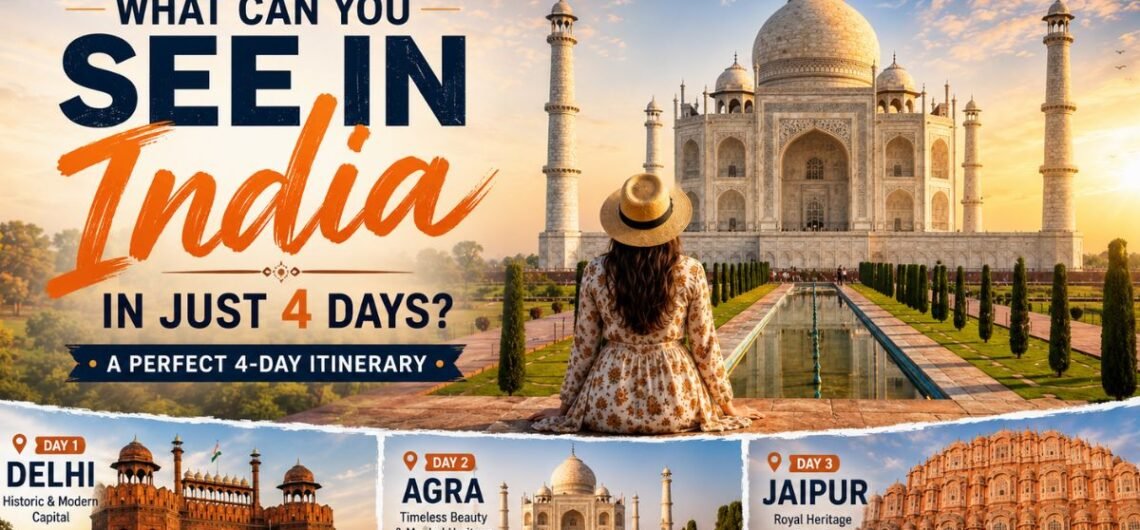
India is one of the most captivating destinations on Earth — a land of ancient temples, bustling bazaars, grand forts, and architectural wonders that span thousands of years of history. But with over 3.2 million square kilometres to explore, first-time visitors are often left wondering: where do I even begin? Planning a complete india itinerary for 4 days may seem like an impossible task, yet with the right focus, four days in India can deliver an extraordinary introduction to the subcontinent’s culture, cuisine, and heritage.
The key is to resist the temptation to cross multiple regions in a single trip. Instead, concentrating your time in North India — particularly the famous Golden Triangle circuit connecting Delhi, Agra, and Jaipur — allows you to move efficiently while experiencing some of India’s most iconic and UNESCO-listed landmarks.
For a broader overview of destinations, travel seasons, and cultural insights before you depart, the Official India Tourism Guide is an excellent resource for planning your journey.
Is 4 Days Enough to Experience India?
The honest answer is: yes — if you plan strategically. India’s sheer scale can be daunting, but that same scale means each region is a rich destination in its own right. Trying to mix the beaches of Goa, the backwaters of Kerala, and the hill stations of Himachal Pradesh into a single four-day window will result in exhausting airport queues and little meaningful sightseeing.
The smarter approach for a short trip is to choose one region and immerse yourself in it. North India’s Golden Triangle — named for the triangular geographic relationship between Delhi, Agra, and Jaipur — is arguably the most efficient travel circuit in the country. Within a four-day window, you can experience India’s capital city, the world’s most recognizable monument, and the vibrant royal heritage of Rajasthan.
Set realistic expectations: you won’t see everything, but what you do see will be genuinely memorable. Think of this as an appetizer — a beautifully curated first taste of a country you’ll almost certainly want to return to.
Day 1 – Explore the Historic and Modern Sides of Delhi
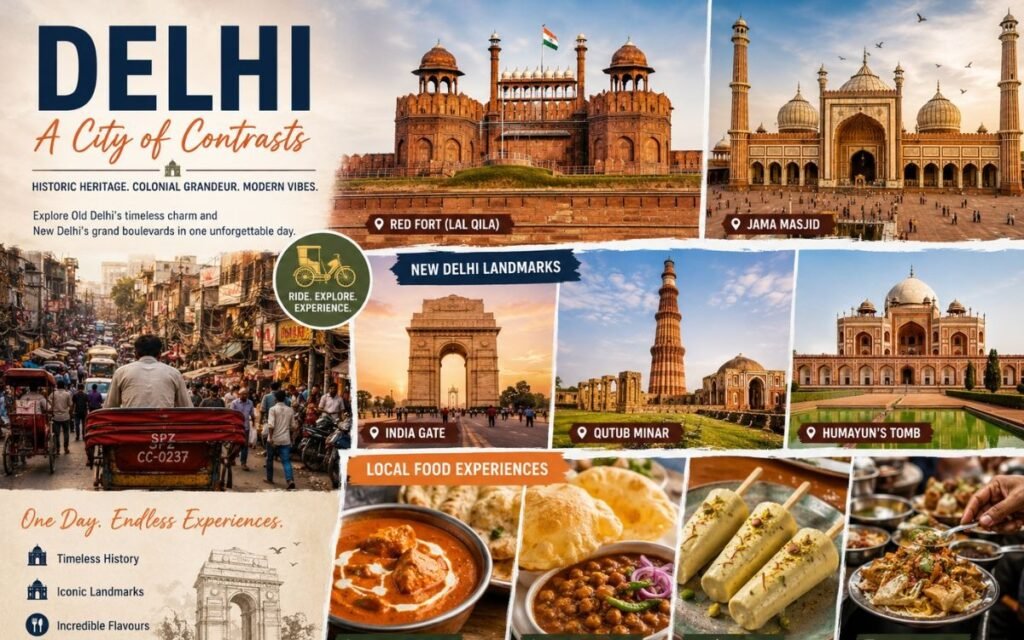
Delhi, India’s sprawling capital, is a city of contrasts where medieval mosques stand beside colonial boulevards and modern metro lines. With a full day, you can meaningfully explore both its historic Old Delhi neighbourhood and the planned grandeur of New Delhi.
Old Delhi Highlights
Begin your morning in Old Delhi, where the lanes narrow and the pace of life feels centuries removed from the modern city outside. The Red Fort (Lal Qila), a 17th-century Mughal masterpiece, is the ideal first stop — its imposing red sandstone walls and ornate pavilions set the historical tone for the entire trip. Nearby, Jama Masjid — one of India’s largest mosques — offers a powerful sense of scale and spiritual atmosphere, especially in the early morning hours.
Don’t miss a cycle rickshaw ride through Chandni Chowk, one of Asia’s oldest and busiest markets. The chaotic, colourful energy here is uniquely Delhi and gives first-time visitors an immediate sensory introduction to Indian street life.
New Delhi Landmarks
Spend your afternoon in the wider, more orderly avenues of New Delhi. India Gate, the nation’s war memorial, makes for a striking photo opportunity and a pleasant stroll. The Qutub Minar — a soaring 12th-century minaret and UNESCO World Heritage Site — is well worth the short drive south of the city centre. If time allows, the Humayun’s Tomb, an architectural forerunner to the Taj Mahal, is another UNESCO site that frequently impresses even seasoned travellers.
Local Food Experiences
Delhi’s food scene is extraordinary. For dinner, explore the street food in Chandni Chowk or head to Connaught Place for a mix of regional Indian cuisine and international options. Try butter chicken (said to have been invented in Delhi), chole bhature (spiced chickpeas with fried bread), and kulfi (Indian ice cream) to round out a thoroughly local culinary experience.
Day 2 – Discover the Timeless Beauty of Agra
Agra is approximately 200 kilometres south of Delhi and is best reached by the Gatimaan Express train — India’s fastest — or by road via the Yamuna Expressway. Either journey takes around two to three hours. Depart Delhi early to maximise your time at the monuments.
Sunrise at the Taj Mahal
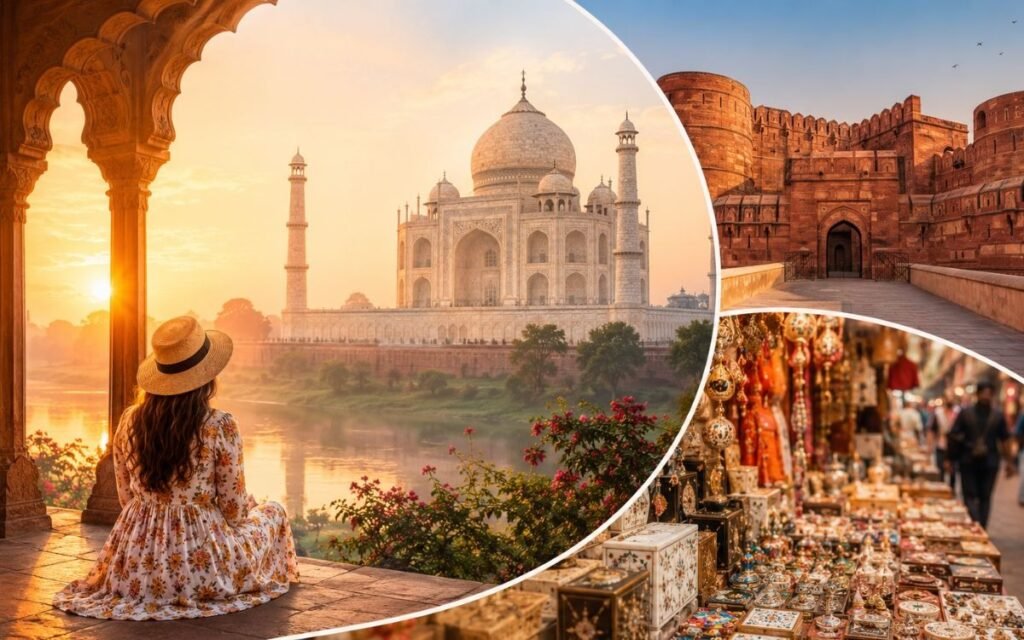
There is simply no experience in India quite like watching the Taj Mahal emerge from the morning mist at sunrise. Built by Mughal Emperor Shah Jahan in memory of his wife Mumtaz Mahal, this 17th-century mausoleum is widely regarded as the world’s greatest monument to love. The pale marble shifts from a soft pink at dawn to brilliant white in the midday sun, and photographers will find no shortage of angles worth capturing. Arrive early to beat the growing crowds.
Agra Fort
Just a short distance from the Taj Mahal, Agra Fort is another UNESCO World Heritage Site and a formidable reminder of Mughal power. The fort served as the primary residence of the Mughal emperors until 1638 and contains a remarkable collection of palaces, audience halls, and mosques built in a blend of Hindu and Islamic architectural styles. Shah Jahan himself spent his final years imprisoned here, with a view of the Taj Mahal across the river.
Local Markets and Mughal Heritage
Before departing Agra, spend an hour exploring the Kinari Bazaar for marble inlay souvenirs — a craft tradition closely tied to the Taj Mahal’s construction — and leather goods unique to the region. For travelers looking for a well-organized route covering Delhi, Agra, and Jaipur, a 4 days golden triangle tour can help maximize sightseeing while minimizing travel stress. Consider driving onward to Jaipur in the evening (around four hours) to get an early start on Day 3.
Day 3 – Experience Rajasthan’s Royal Heritage in Jaipur
Jaipur, the ‘Pink City’ and capital of Rajasthan, is a visual feast of rose-tinted palaces, ornate havelis, and bustling bazaars. Founded in 1727 by Maharaja Sawai Jai Singh II, it was one of India’s first planned cities and remains one of its most photogenic.
Amber Fort
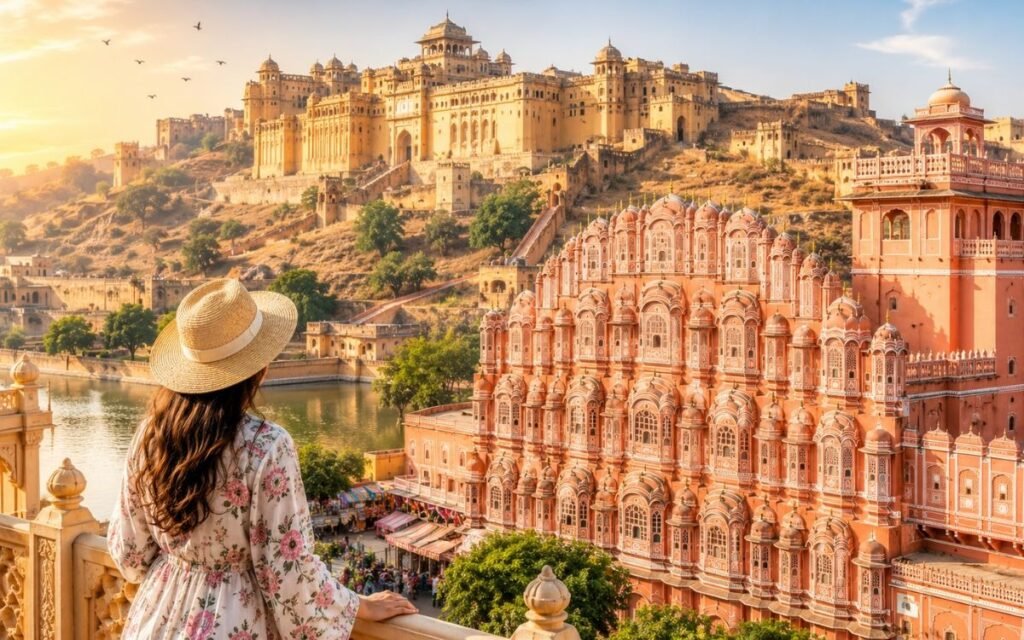
Begin the morning with a visit to Amber Fort, set dramatically atop a hill overlooking Maota Lake on the city’s outskirts. The fort is a masterpiece of Rajput architecture, with mirror-work halls, intricate carvings, and sweeping views of the surrounding landscape. Arrive early; the light is best in the morning and the crowds thinner.
City Palace
Back in the city centre, the City Palace complex is a stunning blend of Mughal and Rajput design that serves as both a royal residence and a public museum. Wander through courtyards adorned with painted murals, admire the two enormous silver vessels in the Diwan-i-Khas (once used to carry Ganges water for the Maharaja’s trip to England), and explore the textile and arms collections on display.
Hawa Mahal
A short walk away, the Hawa Mahal (‘Palace of Winds’) is Jaipur’s most recognisable facade — a five-storey honeycomb structure of 953 latticed windows that allowed royal women to observe street life while remaining unseen. It’s one of the most photographed buildings in Rajasthan and a must for any visitor to the Pink City.
Local Handicraft Markets
Jaipur’s bazaars are among India’s finest for traditional crafts. Johari Bazaar specialises in gemstones and jewellery; Bapu Bazaar offers textiles, block-printed fabrics, and mojris (traditional embroidered shoes). The city is particularly well known for blue pottery, miniature paintings, and semi-precious stonework — all excellent souvenirs to bring home.
Day 4 – Cultural Experiences Before Departure
Your final day in India needn’t be rushed. Even if you have an afternoon or evening flight from Delhi (a five-hour drive or train journey from Jaipur), the morning offers a final window to absorb the atmosphere.
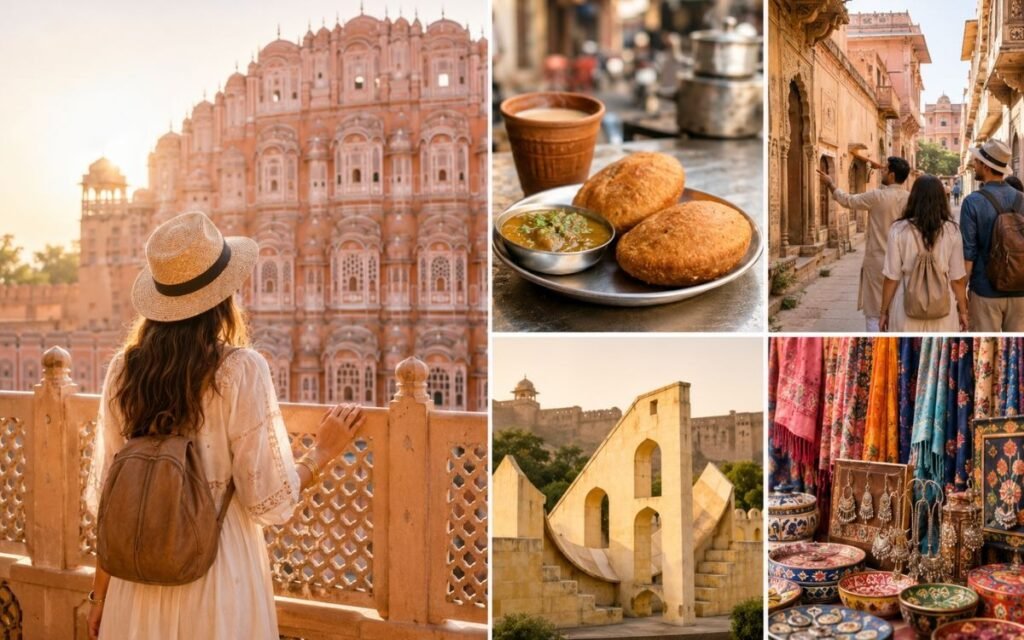
Local Cuisine: Start the morning with a traditional Rajasthani breakfast — pyaaz kachori (fried pastry filled with spiced onions) and chai at a local tea stall is a ritual worth experiencing before departure.
Heritage Walks: Many guesthouses in Jaipur’s old city offer short guided morning walks through the lanes surrounding the City Palace, giving an intimate view of residential and artisan neighbourhoods rarely seen by tourists.
Photography Opportunities: The golden hour light on Jaipur’s pink facades is magnificent. A final stroll around Hawa Mahal or the Jantar Mantar (Jaipur’s 18th-century astronomical observatory) makes for memorable last images.
Shopping for Souvenirs: If you haven’t already, use the morning to pick up last-minute gifts. Block-printed scarves are a popular choice. Silver jewellery also makes a meaningful keepsake. Hand-painted pottery is another great option. These lightweight souvenirs are easy to pack and carry.
Why the Golden Triangle Is the Best Choice for a Short India Trip
A golden triangle tour remains one of the most popular travel routes for first-time visitors seeking history, architecture, and cultural experiences. Here’s why it stands above other options for a four-day trip:
• Accessibility: All three cities are well-connected by fast trains, national highways, and domestic flights. Delhi’s Indira Gandhi International Airport handles flights from virtually every major global hub.
How to Make the Most of a 4-Day India Itinerary
Travel by Road or Train
India’s train network is one of the largest and most affordable in the world. The Gatimaan Express between Delhi and Agra takes under two hours. For the Agra–Jaipur leg, a private car is often the most flexible option, allowing stops at Fatehpur Sikri, a ghost city near Agra that is frequently overlooked but historically significant.
Pack Smart
North India’s temperatures vary considerably between seasons. In winter (November–February), bring layers; in summer, lightweight, breathable fabrics are essential. Comfortable walking shoes are non-negotiable — the marble floors of the Taj Mahal and the cobbled lanes of Old Delhi will test any footwear. A small day-pack, reusable water bottle, and a portable power bank will serve you well throughout the journey.
Start Early
India’s popular monuments receive millions of visitors annually. Starting each day before 8am — particularly at the Taj Mahal and Amber Fort — means smaller crowds, better photography conditions, and cooler temperatures in warmer months. Many of India’s most famous sites close on specific days of the week, so check opening hours in advance.
Book Attractions in Advance
Buy tickets for the Taj Mahal, Agra Fort, and Amber Fort online before your trip. It saves time and may reduce costs during the high season. Book your IRCTC train tickets early as well. Popular train services tend to sell out fast.
Should You Choose a Guided Tour?
For first-time visitors to India, guided tours offer significant advantages over independent travel.Local guides bring history to life in ways that audio guides and plaques cannot. They know the stories behind the monuments and share fascinating details that many travellers would otherwise miss. They can also handle logistical challenges and help visitors make the most of limited time.
Guides provide practical reassurance in unfamiliar settings. They know which food stalls are reliable and how to negotiate respectfully with rickshaw drivers. They can also recommend the best viewpoints for memorable photographs.
Many international travellers choose a Taj Mahal Private Trip for a more personalised experience. It allows them to avoid logistical hassles and gain deeper insights from experts in Mughal history and architecture. On a four-day journey, where every hour matters, the comfort and convenience of a private guide often justify the investment.
Frequently Asked Questions
1. Is 4 days enough time to visit India?
While India is vast, 4 days is enough for a focused trip covering the Golden Triangle — Delhi, Agra, and Jaipur. You’ll experience iconic UNESCO sites, vibrant bazaars, and Mughal and Rajput heritage without feeling overwhelmed.
2. What is the best India itinerary for 4 days?
The most recommended 4-day India itinerary is Delhi → Agra → Jaipur → Delhi.
3. How do I travel between Delhi, Agra, and Jaipur?
You can travel by train (the Gatimaan Express to Agra is popular), private car, or air-conditioned bus. Trains are cost-effective and scenic, while private transfers offer the most flexibility for a short trip.
4. Do I need a visa to visit India?
Most international travelers need a visa to enter India. Many nationalities can apply for an e-Visa online before arrival. Check with the official Indian embassy or consulate in your home country for current requirements.
5. What is the best time of year to visit Delhi, Agra, and Jaipur?
October to March is the ideal window — cooler temperatures make sightseeing comfortable. Summer (April–June) can be intensely hot. In contrast, the monsoon season (July–September) brings heavy rainfall. It also transforms the surroundings into a dramatic and beautiful landscape.
Conclusion
Travelers can successfully plan a 4-day India itinerary by exploring one region in depth. Delhi, Agra, and Jaipur offer a rich journey through India’s Mughal and Rajput heritage. You can walk through the bustling lanes of Old Delhi. Admire the Taj Mahal at sunrise. Explore Jaipur’s magnificent hilltop forts.
Instead of rushing between distant cities, focus on this classic circuit. As a result, you will enjoy a more relaxed and meaningful experience. Wander through local bazaars, sip a cup of chai, and discover India’s culture at a comfortable pace.
Although four days are not enough to fully understand India, they are enough to create unforgettable memories. In fact, this short journey often leaves travelers wanting to return again.
Plan thoughtfully, book early, pack light, and start each day before the sun climbs too high. India will take care of the rest.

Comments