
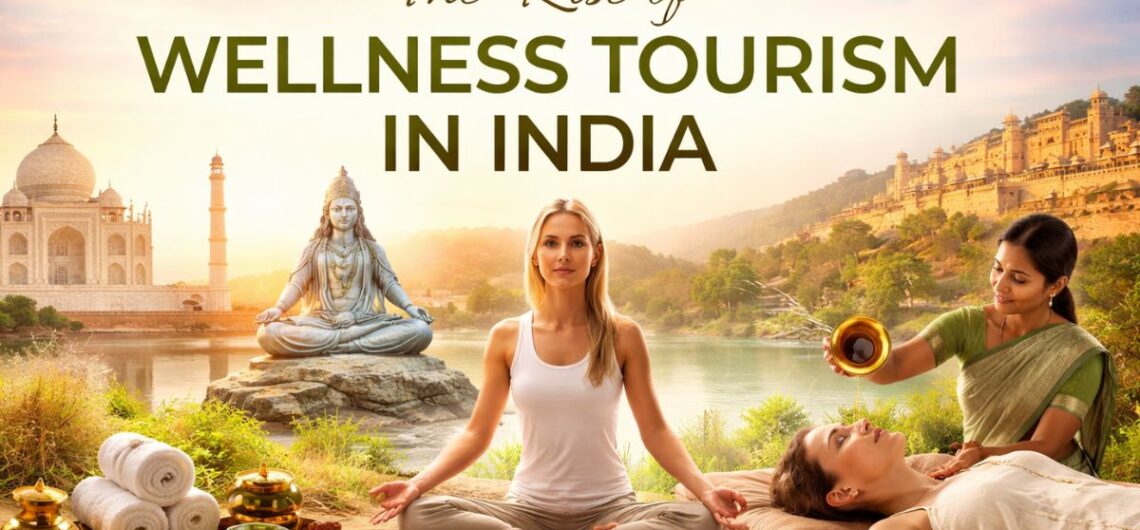
India has always been associated with spirituality, healing traditions, and holistic living. In recent years, wellness tourism in India has grown rapidly, attracting travellers who seek relaxation, mental clarity, and healthy lifestyles along with cultural exploration. From yoga retreats and Ayurveda therapies to meditation centers and luxury wellness resorts, India offers experiences that nourish both body and mind.
Today, wellness tourism is not just a niche market—it has become one of the fastest-growing segments in the travel industry. Travellers are increasingly choosing destinations that help them recharge, reduce stress, and improve overall well-being.
What Is Wellness Tourism?
Wellness tourism refers to travel focused on maintaining or improving personal health. Unlike traditional holidays centered only on sightseeing, wellness trips include activities such as:
- Yoga and meditation
- Ayurveda and natural therapies
- Detox programs
- Nature-based healing experiences
India is considered one of the best destinations for wellness travel because many of these practices originated here.
Quick Overview of Wellness Tourism in India
| Wellness Experience | Popular Destinations | Benefits |
| Yoga Retreats | Rishikesh, Goa, Kerala | Flexibility, stress relief |
| Ayurveda Treatments | Kerala, Jaipur | Detox and relaxation |
| Meditation Programs | Dharamshala, Varanasi | Mental clarity |
| Luxury Wellness Resorts | Rajasthan, Uttarakhand | Comfort with holistic care |
This diversity makes India appealing to travellers from around the world.
Why Wellness Tourism Is Growing in India
Several factors have contributed to the rise of wellness tourism:
1. Increasing Stress in Modern Life
People today are looking for ways to disconnect from busy schedules and digital overload. Wellness retreats provide a peaceful environment where travellers can slow down and focus on themselves.
2. Global Popularity of Yoga
Yoga, one of India’s greatest gifts to the world, has become a global movement. Millions of people practice yoga regularly, and many wish to experience it in its birthplace.
Destinations like Rishikesh, often called the “Yoga Capital of the World,” attract visitors who want authentic training and peaceful surroundings.
3. Ayurveda and Natural Healing Traditions
Ayurveda, an ancient system of medicine, focuses on balancing the body, mind, and spirit. Treatments include herbal therapies, massages, and dietary programs designed to detoxify and rejuvenate the body.
States like Kerala are especially famous for authentic Ayurveda experiences, drawing travellers seeking natural healing.
Popular Wellness Destinations in India
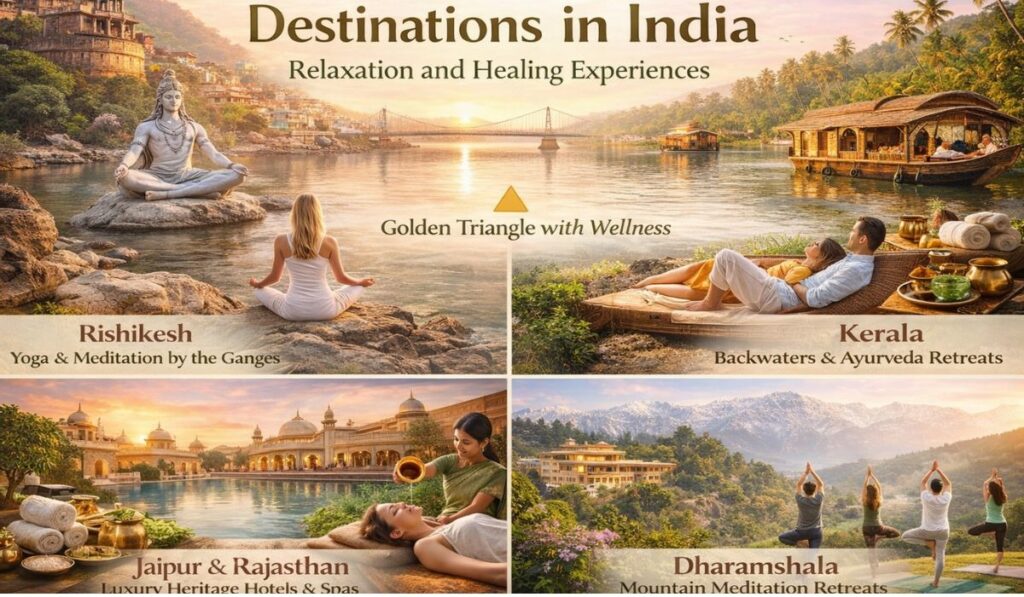
Rishikesh
Known for yoga schools, meditation centers, and peaceful surroundings along the Ganges River, Rishikesh is ideal for spiritual seekers and beginners alike.
Kerala
Famous for backwaters and Ayurveda retreats, Kerala offers a slow, relaxing pace of travel combined with healing therapies.
Jaipur and Rajasthan
Luxury heritage hotels and spa resorts combine royal hospitality with wellness programs, making Rajasthan a popular destination for travellers seeking comfort and relaxation.
Dharamshala
Nestled in the Himalayas, Dharamshala is known for meditation retreats and serene mountain landscapes.
Travellers often combine relaxation with culture through a Golden Triangle tour with wellness experiences.
The Role of Luxury Wellness Resorts
Luxury wellness resorts have played a major role in expanding wellness tourism. These properties combine traditional healing practices with modern comfort, offering:
- Personalized yoga sessions
- Ayurveda treatments
- Organic cuisine
- Meditation programs
- Peaceful natural surroundings
Such experiences appeal to travellers who want both relaxation and high-quality hospitality.
Wellness Tourism and Cultural Travel
One of the unique aspects of wellness tourism in India is how easily it blends with cultural exploration. Travellers can practice yoga in the morning and explore historic monuments in the afternoon.
Popular travel routes like the Golden Triangle (Delhi, Agra, Jaipur) are increasingly including wellness elements such as meditation sessions, spa therapies, and nature walks.
This combination allows visitors to experience both the cultural richness and the spiritual depth of India.
Best Time to Plan a Wellness Trip in India
The most comfortable time for wellness travel in North India is from October to March. During these months:
- Weather is pleasant for outdoor yoga
- Sightseeing is comfortable
- Retreat programs are widely available
For Ayurveda treatments in Kerala, the monsoon season is also considered beneficial, as the climate is believed to enhance therapy effectiveness.
Who Is Choosing Wellness Tourism?
Wellness tourism attracts a wide range of travellers:
- Professionals seeking stress relief
- Couples looking for relaxing holidays
- Solo travellers exploring mindfulness
- Retirees focusing on health and relaxation
- International visitors interested in yoga and Ayurveda
This growing audience has encouraged hotels and tour operators to develop specialized wellness packages.
The Future of Wellness Tourism in India
The future of wellness tourism in India looks promising. With increasing awareness of mental health, fitness, and holistic living, more travellers are prioritizing well-being when planning trips.
Government initiatives promoting yoga and traditional medicine have also strengthened India’s reputation as a global wellness destination.
In the coming years, we can expect:
- More eco-friendly retreats
- Personalized wellness programs
- Integration of technology with wellness services
- Expansion of boutique wellness resorts
FAQs: Wellness Tourism in India
1. What is wellness tourism?
Wellness tourism focuses on travel experiences that improve physical, mental, and emotional well-being.
2. Why is India popular for wellness travel?
India is the birthplace of yoga and Ayurveda, offering authentic experiences and skilled practitioners.
3. Which cities are best for yoga retreats in India?
Rishikesh, Goa, Kerala, and Dharamshala are among the most popular destinations.
4. Is wellness tourism expensive?
Options range from budget retreats to luxury wellness resorts, making it accessible to different travellers.
5. How long should a wellness trip be?
Most retreats last between 3 and 10 days, depending on the program.
6. Is Ayurveda safe for international travellers?
Yes, when treatments are taken at certified and reputable centers.
7. Can wellness tourism be combined with sightseeing?
Yes, many travellers combine yoga and spa treatments with cultural tours.
8. What should I pack for a wellness trip?
Comfortable clothing, a reusable water bottle, and personal essentials for yoga or meditation.
Conclusion
Wellness tourism in India is more than a trend—it is a reflection of changing travel preferences. Today’s travellers want meaningful experiences that refresh the body, calm the mind, and inspire the soul.
With its ancient traditions, diverse landscapes, and growing range of wellness retreats, India offers the perfect setting for this kind of travel. Whether practicing yoga at sunrise, enjoying Ayurveda therapy, or meditating in peaceful surroundings, visitors discover a deeper and more fulfilling way to explore the country.

Comments