<!-- wp:paragraph -->
<p>Yoga and Ayurveda tours in India combine traditional wellness practices with travel experiences such as meditation, yoga sessions, Ayurvedic treatments, healthy cuisine, cultural visits, and time in nature. Depending on the itinerary, travelers can experience these traditions alongside India's spiritual, historical, and cultural attractions.</p>
<!-- /wp:paragraph -->
<!-- wp:paragraph -->
<p>India is widely regarded as the birthplace of both yoga and Ayurveda, and travelers from around the world visit specifically to learn from local practitioners, teachers and wellness centers. That said, experiences vary considerably between providers — from simple daily yoga classes added to a sightseeing trip, to multi-week immersive retreats built entirely around Ayurvedic treatment plans. Understanding these differences helps travelers choose the right kind of trip.</p>
<!-- /wp:paragraph -->
<!-- wp:heading -->
<h2 class="wp-block-heading" id="h-what-are-yoga-and-ayurveda-tours-in-india">What Are Yoga and Ayurveda Tours in India?</h2>
<!-- /wp:heading -->
<!-- wp:paragraph -->
<p>Yoga tourism generally refers to travel built around structured yoga practice — daily classes, meditation, breathwork and, often, time spent learning from teachers in places associated with yoga's origins. Ayurveda tourism, by contrast, centers on India's traditional system of wellness, which takes a broader view of diet, lifestyle and daily routine, and may include consultations and traditional treatments offered by trained practitioners.</p>
<!-- /wp:paragraph -->
<!-- wp:paragraph -->
<p>Many wellness trips in India combine both traditions rather than treating them as separate categories. A "retreat" typically means staying in one location for an extended period with a fixed daily schedule, while a "tour" often moves between destinations and blends wellness activities with sightseeing. Both formats can include cultural and educational elements — talks on philosophy, cooking demonstrations, or visits to places with spiritual significance.</p>
<!-- /wp:paragraph -->
<!-- wp:paragraph -->
<p>These trips commonly run anywhere from a long weekend to several weeks, and many travelers choose to pair wellness time with India's broader cultural attractions rather than treating the two as separate trips. For readers who want to explore ready-made itineraries, the<a href="https://www.tajmahalprivatetrip.com/india-yoga-tour-packages/"> India Yoga Tour Packages</a> page is a useful starting point.</p>
<!-- /wp:paragraph -->
<!-- wp:heading -->
<h2 class="wp-block-heading" id="h-yoga-vs-ayurveda-what-is-the-difference">Yoga vs Ayurveda: What Is the Difference?</h2>
<!-- /wp:heading -->
<!-- wp:table -->
<figure class="wp-block-table"><table class="has-fixed-layout"><tbody><tr><td><strong>Yoga</strong></td><td><strong>Ayurveda</strong></td></tr><tr><td>Focuses on practices such as movement, breathing and meditation</td><td>Traditional Indian system involving approaches to diet, lifestyle and wellness</td></tr><tr><td>Often practiced through classes and guided sessions</td><td>May include consultations, massage and other traditional treatments</td></tr><tr><td>Can be incorporated into daily travel routines</td><td>Often forms part of a structured wellness program</td></tr><tr><td>Commonly associated with retreats and spiritual travel</td><td>Commonly associated with wellness and traditional health practices</td></tr></tbody></table></figure>
<!-- /wp:table -->
<!-- wp:paragraph -->
<p>Ayurvedic treatments should be provided by appropriately qualified practitioners, and travelers should not treat tourism experiences as a substitute for medical care.</p>
<!-- /wp:paragraph -->
<!-- wp:heading -->
<h2 class="wp-block-heading" id="h-why-combine-yoga-and-ayurveda-on-an-india-tour">Why Combine Yoga and Ayurveda on an India Tour?</h2>
<!-- /wp:heading -->
<!-- wp:paragraph -->
<p><strong>Mindful travel.</strong> Yoga and meditation can add a slower rhythm to a sightseeing itinerary, giving travelers a counterbalance to long days of monument-hopping.</p>
<!-- /wp:paragraph -->
<!-- wp:paragraph -->
<p><strong>Traditional wellness experiences.</strong> Travelers can learn about traditional Indian approaches to lifestyle and wellbeing directly from practitioners, rather than secondhand.</p>
<!-- /wp:paragraph -->
<!-- wp:paragraph -->
<p><strong>Cultural immersion.</strong> Wellness experiences can introduce visitors to traditions that extend well beyond India's famous monuments, offering a different lens on the country.</p>
<!-- /wp:paragraph -->
<!-- wp:paragraph -->
<p><strong>Slower travel.</strong> A wellness-focused itinerary can allow travelers to spend more time in one destination instead of moving between cities every day.</p>
<!-- /wp:paragraph -->
<!-- wp:paragraph -->
<p><strong>Personal reflection.</strong> Meditation, quiet surroundings and structured daily routines can appeal to travelers seeking a more reflective style of travel, separate from a typical checklist-style trip.</p>
<!-- /wp:paragraph -->
<!-- wp:paragraph -->
<p>It's worth noting that yoga and Ayurveda are not guarantees of specific health outcomes — they're wellness and cultural practices, and framing them that way sets realistic expectations.</p>
<!-- /wp:paragraph -->
<!-- wp:heading -->
<h2 class="wp-block-heading" id="h-what-does-a-typical-yoga-and-ayurveda-tour-include">What Does a Typical Yoga and Ayurveda Tour Include?</h2>
<!-- /wp:heading -->
<!-- wp:paragraph -->
<p>Most itineraries draw from a similar pool of activities, though the mix and order vary widely:</p>
<!-- /wp:paragraph -->
<!-- wp:list -->
<ul class="wp-block-list"><!-- wp:list-item -->
<li>Daily yoga sessions</li>
<!-- /wp:list-item -->
<!-- wp:list-item -->
<li>Meditation</li>
<!-- /wp:list-item -->
<!-- wp:list-item -->
<li>Breathing practices</li>
<!-- /wp:list-item -->
<!-- wp:list-item -->
<li>Ayurvedic consultations</li>
<!-- /wp:list-item -->
<!-- wp:list-item -->
<li>Traditional Ayurvedic treatments</li>
<!-- /wp:list-item -->
<!-- wp:list-item -->
<li>Wellness-focused meals</li>
<!-- /wp:list-item -->
<!-- wp:list-item -->
<li>Cultural experiences</li>
<!-- /wp:list-item -->
<!-- wp:list-item -->
<li>Visits to temples or spiritual sites</li>
<!-- /wp:list-item -->
<!-- wp:list-item -->
<li>Nature experiences</li>
<!-- /wp:list-item -->
<!-- wp:list-item -->
<li>Free time for relaxation</li>
<!-- /wp:list-item -->
<!-- wp:list-item -->
<li>Local sightseeing</li>
<!-- /wp:list-item --></ul>
<!-- /wp:list -->
<!-- wp:paragraph -->
<p>The exact inclusions vary by itinerary, destination, practitioner and tour provider, so travelers should review what is included before booking.</p>
<!-- /wp:paragraph -->
<!-- wp:heading -->
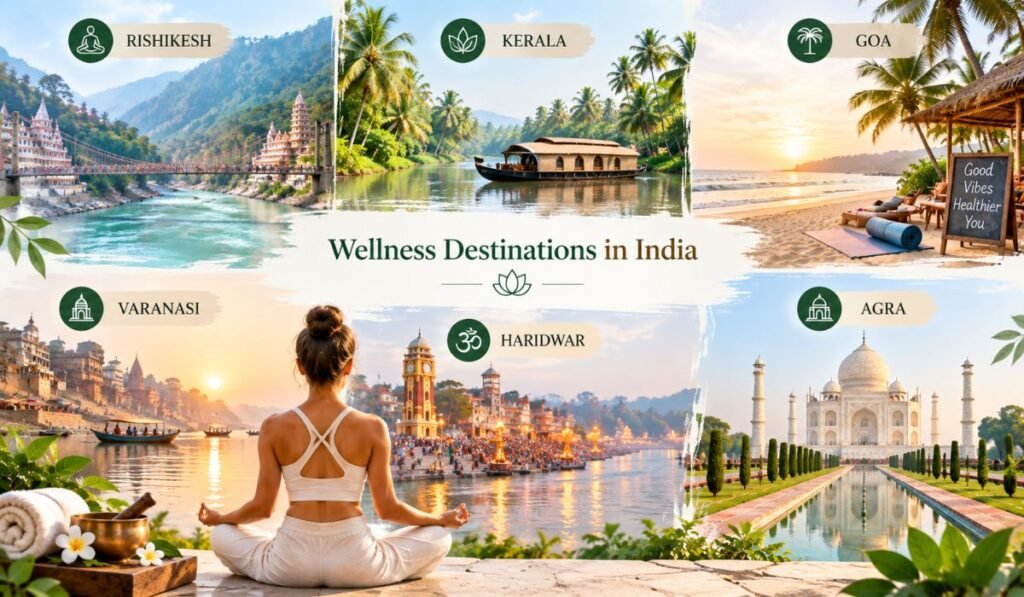
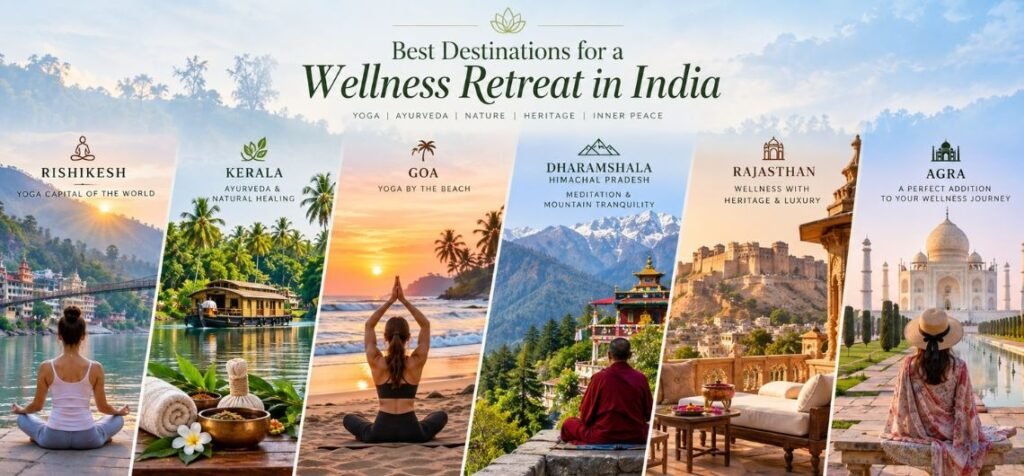
<h2 class="wp-block-heading" id="h-popular-destinations-for-yoga-and-ayurveda-in-india">Popular Destinations for Yoga and Ayurveda in India</h2>
<!-- /wp:heading -->
<!-- wp:image {"id":2987,"sizeSlug":"large","linkDestination":"none"} -->
<figure class="wp-block-image size-large"><img src="https://www.tajmahalprivatetrip.com/storage/2026/09/popular-yoga-ayurveda-destinations-india.jpg-1024x597.jpg" alt="Popular yoga and Ayurveda destinations in India including Rishikesh, Kerala, Goa, Varanasi, Haridwar and Agra" class="wp-image-2987" title="Popular Yoga and Ayurveda Destinations in India"/></figure>
<!-- /wp:image -->
<!-- wp:heading {"level":3} -->
<h3 class="wp-block-heading" id="h-rishikesh">Rishikesh</h3>
<!-- /wp:heading -->
<!-- wp:paragraph -->
<p>Known as one of the world's yoga capitals, Rishikesh sits on the banks of the Ganges in the foothills of the Himalayas. The town is home to numerous ashrams, yoga schools and meditation centers, and its spiritual atmosphere — riverside evening prayers, mountain surroundings, a strong community of long-term practitioners — draws travelers specifically for structured wellness retreats.</p>
<!-- /wp:paragraph -->
<!-- wp:heading {"level":3} -->
<h3 class="wp-block-heading" id="h-kerala">Kerala</h3>
<!-- /wp:heading -->
<!-- wp:paragraph -->
<p>Kerala is closely associated with Ayurveda traditions and is home to many dedicated wellness resorts. Its backwater surroundings and calmer pace make it a popular choice for longer wellness stays, often built around traditional treatments and consultations with Ayurvedic practitioners.</p>
<!-- /wp:paragraph -->
<!-- wp:heading {"level":3} -->
<h3 class="wp-block-heading" id="h-goa">Goa</h3>
<!-- /wp:heading -->
<!-- wp:paragraph -->
<p>Goa offers a more beach-based approach to wellness, with yoga retreats set against a relaxed, coastal backdrop. It tends to suit travelers who want wellness combined with leisure time, rather than an intensive, structured program.</p>
<!-- /wp:paragraph -->
<!-- wp:heading {"level":3} -->
<h3 class="wp-block-heading" id="h-varanasi">Varanasi</h3>
<!-- /wp:heading -->
<!-- wp:paragraph -->
<p>Varanasi's spiritual atmosphere, centered on the Ganges, makes it a strong choice for meditation and cultural experiences rooted in India's spiritual traditions. It is not primarily known as an Ayurveda destination, but it complements a wellness-themed itinerary well through its cultural and spiritual depth.</p>
<!-- /wp:paragraph -->
<!-- wp:heading {"level":3} -->
<h3 class="wp-block-heading" id="h-haridwar">Haridwar</h3>
<!-- /wp:heading -->
<!-- wp:paragraph -->
<p>Haridwar shares Rishikesh's riverside setting and is closely tied to India's spiritual traditions, with its ghats along the Ganga serving as a focal point for pilgrimage tourism as well as yoga and meditation experiences.</p>
<!-- /wp:paragraph -->
<!-- wp:heading {"level":3} -->
<h3 class="wp-block-heading" id="h-agra-and-north-india">Agra and North India</h3>
<!-- /wp:heading -->
<!-- wp:paragraph -->
<p>Agra is not primarily an Ayurveda destination, but wellness-focused travelers can combine yoga or spiritual experiences with cultural exploration of the Taj Mahal, Mughal heritage and local communities — making it a natural addition to a broader wellness-themed trip through North India.</p>
<!-- /wp:paragraph -->
<!-- wp:heading -->
<h2 class="wp-block-heading" id="h-can-you-combine-yoga-and-ayurveda-with-a-golden-triangle-tour">Can You Combine Yoga and Ayurveda With a Golden Triangle Tour?</h2>
<!-- /wp:heading -->
<!-- wp:paragraph -->
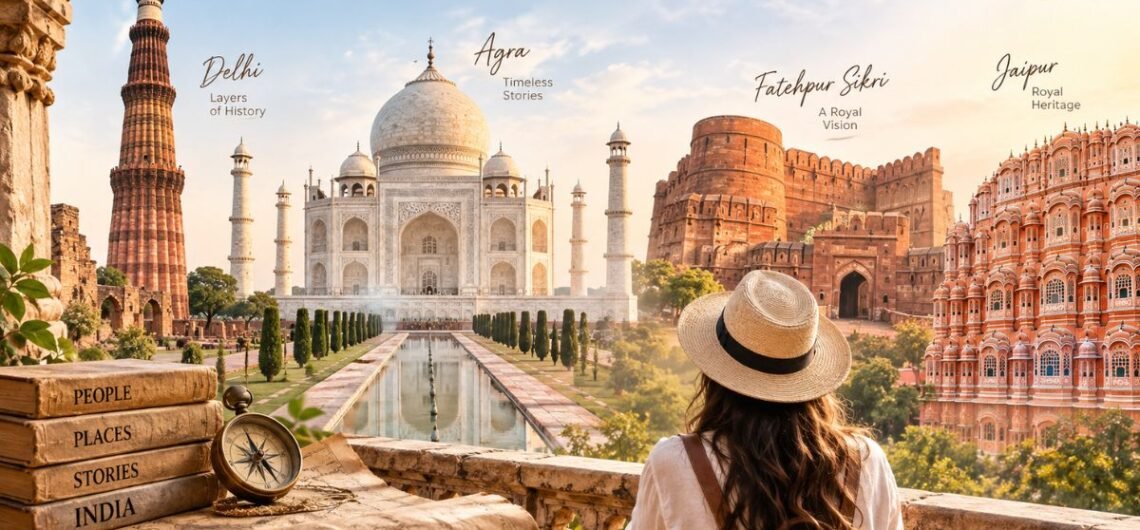
<p>A common itinerary structure pairs wellness time with India's classic Golden Triangle route — Delhi, Agra and Jaipur. This might look like a yoga session before a day of sightseeing, a meditation practice built into a slower travel day, or wellness-focused extensions added before or after the main circuit.</p>
<!-- /wp:paragraph -->
<!-- wp:paragraph -->
<p>Within this structure, Delhi can offer spiritual attractions, Agra brings cultural depth through its Mughal-era heritage, and Jaipur adds further heritage sightseeing — all of which can sit alongside a wellness routine rather than compete with it. Travelers with limited time can combine cultural sightseeing with wellness activities through a carefully planned<a href="https://www.tajmahalprivatetrip.com/tours/3-days-golden-triangle-tour-in-india/"> 3 Days Golden Triangle Tour in India</a>.</p>
<!-- /wp:paragraph -->
<!-- wp:heading -->
<h2 class="wp-block-heading" id="h-yoga-and-ayurveda-with-a-private-india-tour">Yoga and Ayurveda With a Private India Tour</h2>
<!-- /wp:heading -->
<!-- wp:paragraph -->
<p>Private travel arrangements can be particularly useful for wellness-focused trips, since they allow for:</p>
<!-- /wp:paragraph -->
<!-- wp:list -->
<ul class="wp-block-list"><!-- wp:list-item -->
<li>Flexible schedules built around yoga or treatment timings</li>
<!-- /wp:list-item -->
<!-- wp:list-item -->
<li>More time for meditation without a fixed group pace</li>
<!-- /wp:list-item -->
<!-- wp:list-item -->
<li>Customized sightseeing that fits around wellness activities</li>
<!-- /wp:list-item -->
<!-- wp:list-item -->
<li>Private transportation between destinations</li>
<!-- /wp:list-item -->
<!-- wp:list-item -->
<li>Easier combination of wellness and heritage tourism</li>
<!-- /wp:list-item --></ul>
<!-- /wp:list -->
<!-- wp:paragraph -->
<p>For travelers designing a trip around their own pace, a private India travel experience makes it easier to balance structured wellness time with cultural exploration.</p>
<!-- /wp:paragraph -->
<!-- wp:heading -->
<h2 class="wp-block-heading" id="h-cultural-experiences-to-add-to-a-wellness-journey">Cultural Experiences to Add to a Wellness Journey</h2>
<!-- /wp:heading -->
<!-- wp:heading {"level":3} -->
<h3 class="wp-block-heading" id="h-explore-mughal-heritage">Explore Mughal Heritage</h3>
<!-- /wp:heading -->
<!-- wp:paragraph -->
<p>Agra's architecture and history offer a natural complement to a wellness itinerary. Travelers who want to balance wellness activities with history can add a<a href="https://www.tajmahalprivatetrip.com/tours/mughal-heritage-walk/"> Mughal Heritage Walk</a> to explore Agra's historic neighborhoods and architectural traditions.</p>
<!-- /wp:paragraph -->
<!-- wp:heading {"level":3} -->
<h3 class="wp-block-heading" id="h-experience-rural-india">Experience Rural India</h3>
<!-- /wp:heading -->
<!-- wp:paragraph -->
<p>A<a href="https://www.tajmahalprivatetrip.com/tours/taj-mahal-village-tour/"> Taj Mahal Village Tour</a> introduces travelers to rural lifestyle, local communities, traditional crafts and agriculture — a grounded counterpart to time spent on formal wellness activities.</p>
<!-- /wp:paragraph -->
<!-- wp:heading {"level":3} -->
<h3 class="wp-block-heading" id="h-explore-local-food">Explore Local Food</h3>
<!-- /wp:heading -->
<!-- wp:paragraph -->
<p>Food is an important part of understanding Indian culture, and an<a href="https://www.tajmahalprivatetrip.com/tours/agra-food-tour/"> Agra Food Tour</a> can round out a wellness itinerary with a sensory, cultural dimension (without making specific dietary or medical claims about individual foods).</p>
<!-- /wp:paragraph -->
<!-- wp:heading {"level":3} -->
<h3 class="wp-block-heading" id="h-visit-traditional-markets">Visit Traditional Markets</h3>
<!-- /wp:heading -->
<!-- wp:paragraph -->
<p>A<a href="https://www.tajmahalprivatetrip.com/tours/spice-market-tour-agra/"> Spice Market Tour in Agra</a> offers insight into Indian spices, local markets and culinary traditions — a sensory experience that pairs naturally with a wellness-themed trip.</p>
<!-- /wp:paragraph -->
<!-- wp:heading -->
<h2 class="wp-block-heading" id="h-what-can-you-expect-during-an-ayurveda-experience">What Can You Expect During an Ayurveda Experience?</h2>
<!-- /wp:heading -->
<!-- wp:paragraph -->
<p><strong>Before the experience:</strong> Most treatments begin with a consultation or discussion, where travelers can understand the schedule, share relevant personal information, and ask questions about the treatments being offered.</p>
<!-- /wp:paragraph -->
<!-- wp:paragraph -->
<p><strong>During the experience:</strong> This typically involves traditional treatments, relaxation, dietary practices, and often yoga or meditation, guided throughout by the practitioner.</p>
<!-- /wp:paragraph -->
<!-- wp:paragraph -->
<p><strong>After the experience:</strong> Providers generally recommend rest, hydration, and following any specific instructions given — including allowing adequate time before intensive sightseeing.</p>
<!-- /wp:paragraph -->
<!-- wp:paragraph -->
<p>Individual experiences vary, and travelers should disclose relevant medications, allergies or health concerns to qualified practitioners before beginning any treatment.</p>
<!-- /wp:paragraph -->
<!-- wp:heading -->
<h2 class="wp-block-heading" id="h-how-to-choose-a-yoga-and-ayurveda-tour-in-india">How to Choose a Yoga and Ayurveda Tour in India</h2>
<!-- /wp:heading -->
<!-- wp:list -->
<ul class="wp-block-list"><!-- wp:list-item -->
<li>Check the qualifications of practitioners</li>
<!-- /wp:list-item -->
<!-- wp:list-item -->
<li>Understand exactly what is included</li>
<!-- /wp:list-item -->
<!-- wp:list-item -->
<li>Ask about treatment duration</li>
<!-- /wp:list-item -->
<!-- wp:list-item -->
<li>Check accommodation standards</li>
<!-- /wp:list-item -->
<!-- wp:list-item -->
<li>Review the daily schedule</li>
<!-- /wp:list-item -->
<!-- wp:list-item -->
<li>Consider the location</li>
<!-- /wp:list-item -->
<!-- wp:list-item -->
<li>Check whether meals are included</li>
<!-- /wp:list-item -->
<!-- wp:list-item -->
<li>Ask about transportation</li>
<!-- /wp:list-item -->
<!-- wp:list-item -->
<li>Understand cancellation policies</li>
<!-- /wp:list-item -->
<!-- wp:list-item -->
<li>Read recent traveler reviews</li>
<!-- /wp:list-item -->
<!-- wp:list-item -->
<li>Check whether the itinerary leaves enough time for rest</li>
<!-- /wp:list-item -->
<!-- wp:list-item -->
<li>Discuss any health considerations with an appropriate healthcare professional</li>
<!-- /wp:list-item --></ul>
<!-- /wp:list -->
<!-- wp:heading {"level":3} -->
<h3 class="wp-block-heading" id="h-how-many-days-do-you-need-for-a-yoga-and-ayurveda-tour"><strong>How Many Days Do You Need for a Yoga and Ayurveda Tour?</strong></h3>
<!-- /wp:heading -->
<!-- wp:table -->
<figure class="wp-block-table"><table class="has-fixed-layout"><tbody><tr><td><strong>Duration</strong></td><td><strong>Suitable For</strong></td><td><strong>Possible Experience</strong></td></tr><tr><td>3–4 Days</td><td>First-time wellness travelers</td><td>Yoga, meditation and introductory experiences</td></tr><tr><td>5–7 Days</td><td>Travelers wanting a deeper experience</td><td>Yoga + Ayurveda + cultural activities</td></tr><tr><td>7–14 Days</td><td>Longer wellness-focused trips</td><td>More structured wellness routine</td></tr><tr><td>2+ Weeks</td><td>Extended retreats</td><td>Immersive wellness-focused travel</td></tr></tbody></table></figure>
<!-- /wp:table -->
<!-- wp:paragraph -->
<p>There is no universal ideal duration — the right length depends on personal goals, prior experience and how much time is available for the broader trip.</p>
<!-- /wp:paragraph -->
<!-- wp:heading -->
<h2 class="wp-block-heading" id="h-can-you-combine-a-yoga-tour-with-the-taj-mahal">Can You Combine a Yoga Tour With the Taj Mahal?</h2>
<!-- /wp:heading -->
<!-- wp:image {"id":2989,"sizeSlug":"large","linkDestination":"none"} -->
<figure class="wp-block-image size-large"><img src="https://www.tajmahalprivatetrip.com/storage/2026/09/yoga-tour-with-taj-mahal-agra.jpg-1024x597.jpg" alt="Traveler practicing yoga with the Taj Mahal in Agra during a wellness tour in India" class="wp-image-2989" title="Yoga Tour With the Taj Mahal"/></figure>
<!-- /wp:image -->
<!-- wp:paragraph -->
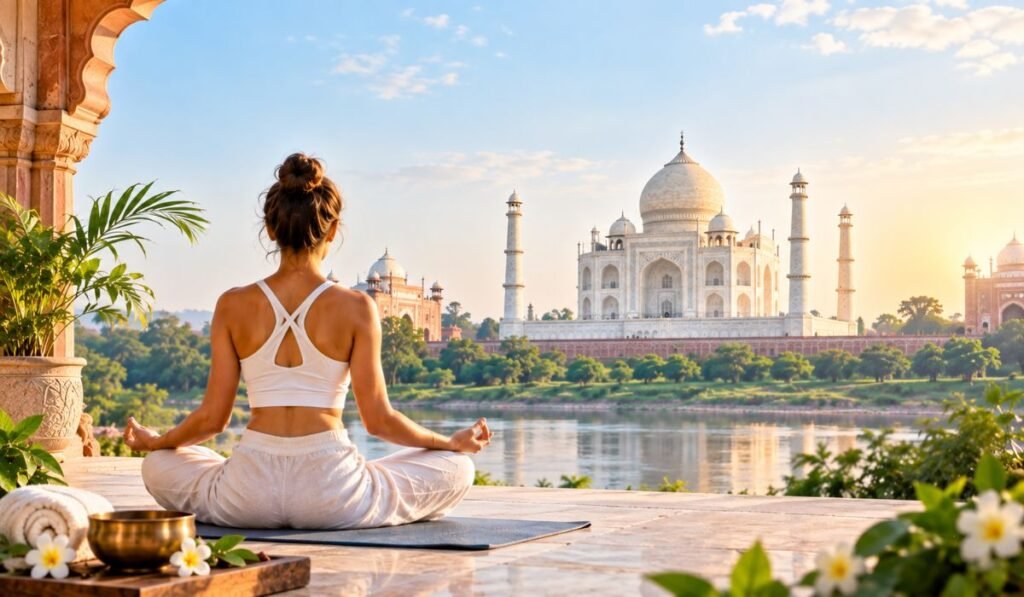
<p>Yes — a common route pairs wellness time with a classic cultural circuit: Delhi to Agra for the Taj Mahal, then on to Jaipur. Travelers who want to add one of India's most recognizable monuments to their wellness itinerary can explore suitable<a href="https://www.tajmahalprivatetrip.com/taj-mahal-tour-packages/"> Taj Mahal Tour Packages</a> alongside their cultural and spiritual experiences.</p>
<!-- /wp:paragraph -->
<!-- wp:heading -->
<h2 class="wp-block-heading" id="h-yoga-ayurveda-and-spiritual-travel-in-india">Yoga, Ayurveda and Spiritual Travel in India</h2>
<!-- /wp:heading -->
<!-- wp:paragraph -->
<p>Yoga tourism, Ayurveda tourism, spiritual tourism, pilgrimage tourism, and cultural tourism often overlap. However, each type of travel has a different focus. <strong>Yoga tourism</strong> centers on yoga practice and wellness experiences. <strong>Ayurveda tourism</strong> focuses on traditional wellness treatments and therapies. <strong>Spiritual and pilgrimage tourism</strong> involves visiting places with religious or spiritual significance. <strong>Cultural tourism</strong> allows travelers to explore India's heritage, traditions, and local customs. Many travelers combine two or more of these within a single itinerary — for instance, pairing yoga practice with visits to spiritually significant sites. Readers interested in this angle can explore the<a href="https://www.tajmahalprivatetrip.com/best-spiritual-tours-service-provider-in-india/"> Best Spiritual Tours Service Provider in India</a> for more on that side of travel planning.</p>
<!-- /wp:paragraph -->
<!-- wp:heading -->
<h2 class="wp-block-heading" id="h-best-time-for-a-yoga-and-ayurveda-tour-in-india">Best Time for a Yoga and Ayurveda Tour in India</h2>
<!-- /wp:heading -->
<!-- wp:paragraph -->
<p>Timing depends heavily on destination. Northern India (Delhi, Agra, Rishikesh, Haridwar) is generally most comfortable from October to March, avoiding both summer heat and the monsoon. Kerala's Ayurveda season is traditionally linked to the monsoon months, when practitioners believe treatments are especially effective, though the region is visited year-round. Goa is most popular from November to February. Regardless of destination, it's worth checking destination-specific weather before booking, since conditions vary significantly across India's regions and seasons.</p>
<!-- /wp:paragraph -->
<!-- wp:heading -->
<h2 class="wp-block-heading" id="h-what-should-you-pack-for-a-yoga-and-ayurveda-tour">What Should You Pack for a Yoga and Ayurveda Tour?</h2>
<!-- /wp:heading -->
<!-- wp:list -->
<ul class="wp-block-list"><!-- wp:list-item -->
<li>Comfortable yoga clothing</li>
<!-- /wp:list-item -->
<!-- wp:list-item -->
<li>Lightweight clothing</li>
<!-- /wp:list-item -->
<!-- wp:list-item -->
<li>Walking shoes</li>
<!-- /wp:list-item -->
<!-- wp:list-item -->
<li>Reusable water bottle</li>
<!-- /wp:list-item -->
<!-- wp:list-item -->
<li>Sun protection</li>
<!-- /wp:list-item -->
<!-- wp:list-item -->
<li>Personal toiletries</li>
<!-- /wp:list-item -->
<!-- wp:list-item -->
<li>Any prescribed medicines</li>
<!-- /wp:list-item -->
<!-- wp:list-item -->
<li>Travel documents</li>
<!-- /wp:list-item -->
<!-- wp:list-item -->
<li>Small day bag</li>
<!-- /wp:list-item -->
<!-- wp:list-item -->
<li>Modest clothing for temples</li>
<!-- /wp:list-item -->
<!-- wp:list-item -->
<li>Light layers for northern India in winter</li>
<!-- /wp:list-item --></ul>
<!-- /wp:list -->
<!-- wp:heading -->
<h2 class="wp-block-heading" id="h-tips-for-combining-wellness-and-sightseeing">Tips for Combining Wellness and Sightseeing</h2>
<!-- /wp:heading -->
<!-- wp:list -->
<ul class="wp-block-list"><!-- wp:list-item -->
<li>Don't schedule too many monuments after intensive wellness sessions</li>
<!-- /wp:list-item -->
<!-- wp:list-item -->
<li>Keep at least some free time in the itinerary</li>
<!-- /wp:list-item -->
<!-- wp:list-item -->
<li>Start sightseeing early in hot destinations</li>
<!-- /wp:list-item -->
<!-- wp:list-item -->
<li>Allow recovery time after treatments</li>
<!-- /wp:list-item -->
<!-- wp:list-item -->
<li>Don't overpack the daily schedule</li>
<!-- /wp:list-item -->
<!-- wp:list-item -->
<li>Choose private transportation when flexibility matters</li>
<!-- /wp:list-item -->
<!-- wp:list-item -->
<li>Respect local customs, especially at temples and spiritual sites</li>
<!-- /wp:list-item -->
<!-- wp:list-item -->
<li>Confirm treatment details before participating</li>
<!-- /wp:list-item --></ul>
<!-- /wp:list -->
<!-- wp:heading -->
<h2 class="wp-block-heading" id="h-frequently-asked-questions">Frequently Asked Questions</h2>
<!-- /wp:heading -->
<!-- wp:heading {"level":3} -->
<h3 class="wp-block-heading" id="h-what-is-a-yoga-and-ayurveda-tour-in-india">What is a yoga and Ayurveda tour in India?</h3>
<!-- /wp:heading -->
<!-- wp:paragraph -->
<p>It's a trip that combines structured yoga practice and traditional Ayurvedic wellness experiences with travel — often including meditation, treatments, wellness meals and cultural or sightseeing elements, depending on the itinerary.</p>
<!-- /wp:paragraph -->
<!-- wp:heading {"level":3} -->
<h3 class="wp-block-heading" id="h-what-is-the-difference-between-yoga-and-ayurveda">What is the difference between yoga and Ayurveda?</h3>
<!-- /wp:heading -->
<!-- wp:paragraph -->
<p>Yoga focuses on physical and mental practices like movement, breathing and meditation. Ayurveda is a broader traditional system covering diet, lifestyle and wellness, often involving consultations and treatments from trained practitioners.</p>
<!-- /wp:paragraph -->
<!-- wp:heading {"level":3} -->
<h3 class="wp-block-heading" id="h-which-places-in-india-are-popular-for-yoga-and-ayurveda">Which places in India are popular for yoga and Ayurveda?</h3>
<!-- /wp:heading -->
<!-- wp:paragraph -->
<p>Rishikesh and Haridwar are well known for yoga and spiritual travel, Kerala for Ayurveda, and Goa for beach-based yoga retreats. Varanasi and North India offer strong cultural and spiritual complements to a wellness trip.</p>
<!-- /wp:paragraph -->
<!-- wp:heading {"level":3} -->
<h3 class="wp-block-heading" id="h-can-i-combine-yoga-and-ayurveda-with-a-golden-triangle-tour">Can I combine yoga and Ayurveda with a Golden Triangle tour?</h3>
<!-- /wp:heading -->
<!-- wp:paragraph -->
<p>Yes. Many travelers add wellness activities — yoga sessions, meditation, slower travel days — to a Delhi–Agra–Jaipur itinerary, balancing cultural sightseeing with wellness time.</p>
<!-- /wp:paragraph -->
<!-- wp:heading {"level":3} -->
<h3 class="wp-block-heading" id="h-how-many-days-do-i-need-for-a-yoga-and-ayurveda-tour">How many days do I need for a yoga and Ayurveda tour?</h3>
<!-- /wp:heading -->
<!-- wp:paragraph -->
<p>It depends on your goals. First-time travelers often choose 3–7 days, while those wanting a deeper experience may plan 7–14 days or longer.</p>
<!-- /wp:paragraph -->
<!-- wp:heading {"level":3} -->
<h3 class="wp-block-heading" id="h-is-ayurveda-suitable-for-international-travelers">Is Ayurveda suitable for international travelers?</h3>
<!-- /wp:heading -->
<!-- wp:paragraph -->
<p>Many wellness centers welcome international travelers, but individual suitability depends on personal health and treatment type. Travelers should consult qualified practitioners and disclose relevant health information beforehand.</p>
<!-- /wp:paragraph -->
<!-- wp:heading {"level":3} -->
<h3 class="wp-block-heading" id="h-what-should-i-expect-from-an-ayurvedic-treatment">What should I expect from an Ayurvedic treatment?</h3>
<!-- /wp:heading -->
<!-- wp:paragraph -->
<p>Expect an initial consultation, followed by traditional treatments, relaxation and dietary guidance, and post-treatment instructions such as rest and hydration. Details vary by practitioner and treatment type.</p>
<!-- /wp:paragraph -->
<!-- wp:heading {"level":3} -->
<h3 class="wp-block-heading" id="h-can-i-visit-the-taj-mahal-during-a-yoga-tour-in-india">Can I visit the Taj Mahal during a yoga tour in India?</h3>
<!-- /wp:heading -->
<!-- wp:paragraph -->
<p>Yes. A common route combines wellness time with a stop in Agra to see the Taj Mahal, often as part of a broader Delhi–Agra–Jaipur itinerary.</p>
<!-- /wp:paragraph -->
<!-- wp:heading {"level":3} -->
<h3 class="wp-block-heading" id="h-what-should-i-pack-for-an-ayurveda-and-yoga-retreat">What should I pack for an Ayurveda and yoga retreat?</h3>
<!-- /wp:heading -->
<!-- wp:paragraph -->
<p>Comfortable yoga clothing, lightweight layers, walking shoes, sun protection, personal toiletries, any prescribed medication, and modest clothing for temple visits.</p>
<!-- /wp:paragraph -->
<!-- wp:heading {"level":3} -->
<h3 class="wp-block-heading" id="h-how-do-i-choose-a-yoga-and-ayurveda-tour-provider">How do I choose a yoga and Ayurveda tour provider?</h3>
<!-- /wp:heading -->
<!-- wp:paragraph -->
<p>Check practitioner qualifications, review what's included, look at accommodation standards and the daily schedule, read recent traveler reviews, and confirm cancellation policies before booking.</p>
<!-- /wp:paragraph -->
<!-- wp:heading -->
<h2 class="wp-block-heading" id="h-final-thoughts">Final Thoughts</h2>
<!-- /wp:heading -->
<!-- wp:paragraph -->
<p>Yoga and Ayurveda travel can offer a different way to experience India, combining wellness traditions with culture, spirituality, history and local experiences. Rather than treating wellness as a separate part of the journey, travelers can build an itinerary that balances yoga, Ayurveda, sightseeing and time to slow down.</p>
<!-- /wp:paragraph -->
<!-- wp:paragraph -->
<p>If you are planning a wellness-focused India journey, explore the available India Yoga Tour Packages and consider combining them with cultural experiences in destinations such as Delhi and Agra.</p>
<!-- /wp:paragraph -->
Yoga and Ayurveda tours in India combine traditional wellness practices with travel experiences such as meditation, yoga sessions, Ayurvedic treatments, healthy cuisine, cultural visits, and time in nature. Depending on the itinerary, travelers can experience these traditions alongside India’s spiritual, historical, and cultural attractions.
India is widely regarded as the birthplace of both yoga and Ayurveda, and travelers from around the world visit specifically to learn from local practitioners, teachers and wellness centers. That said, experiences vary considerably between providers — from simple daily yoga classes added to a sightseeing trip, to multi-week immersive retreats built entirely around Ayurvedic treatment plans. Understanding these differences helps travelers choose the right kind of trip.
What Are Yoga and Ayurveda Tours in India?
Yoga tourism generally refers to travel built around structured yoga practice — daily classes, meditation, breathwork and, often, time spent learning from teachers in places associated with yoga’s origins. Ayurveda tourism, by contrast, centers on India’s traditional system of wellness, which takes a broader view of diet, lifestyle and daily routine, and may include consultations and traditional treatments offered by trained practitioners.
Many wellness trips in India combine both traditions rather than treating them as separate categories. A “retreat” typically means staying in one location for an extended period with a fixed daily schedule, while a “tour” often moves between destinations and blends wellness activities with sightseeing. Both formats can include cultural and educational elements — talks on philosophy, cooking demonstrations, or visits to places with spiritual significance.
These trips commonly run anywhere from a long weekend to several weeks, and many travelers choose to pair wellness time with India’s broader cultural attractions rather than treating the two as separate trips. For readers who want to explore ready-made itineraries, the India Yoga Tour Packages page is a useful starting point.
Yoga vs Ayurveda: What Is the Difference?
Yoga
Ayurveda
Focuses on practices such as movement, breathing and meditation
Traditional Indian system involving approaches to diet, lifestyle and wellness
Often practiced through classes and guided sessions
May include consultations, massage and other traditional treatments
Can be incorporated into daily travel routines
Often forms part of a structured wellness program
Commonly associated with retreats and spiritual travel
Commonly associated with wellness and traditional health practices
Ayurvedic treatments should be provided by appropriately qualified practitioners, and travelers should not treat tourism experiences as a substitute for medical care.
Why Combine Yoga and Ayurveda on an India Tour?
Mindful travel. Yoga and meditation can add a slower rhythm to a sightseeing itinerary, giving travelers a counterbalance to long days of monument-hopping.
Traditional wellness experiences. Travelers can learn about traditional Indian approaches to lifestyle and wellbeing directly from practitioners, rather than secondhand.
Cultural immersion. Wellness experiences can introduce visitors to traditions that extend well beyond India’s famous monuments, offering a different lens on the country.
Slower travel. A wellness-focused itinerary can allow travelers to spend more time in one destination instead of moving between cities every day.
Personal reflection. Meditation, quiet surroundings and structured daily routines can appeal to travelers seeking a more reflective style of travel, separate from a typical checklist-style trip.
It’s worth noting that yoga and Ayurveda are not guarantees of specific health outcomes — they’re wellness and cultural practices, and framing them that way sets realistic expectations.
What Does a Typical Yoga and Ayurveda Tour Include?
Most itineraries draw from a similar pool of activities, though the mix and order vary widely:
Daily yoga sessions
Meditation
Breathing practices
Ayurvedic consultations
Traditional Ayurvedic treatments
Wellness-focused meals
Cultural experiences
Visits to temples or spiritual sites
Nature experiences
Free time for relaxation
Local sightseeing
The exact inclusions vary by itinerary, destination, practitioner and tour provider, so travelers should review what is included before booking.
Popular Destinations for Yoga and Ayurveda in India
Rishikesh
Known as one of the world’s yoga capitals, Rishikesh sits on the banks of the Ganges in the foothills of the Himalayas. The town is home to numerous ashrams, yoga schools and meditation centers, and its spiritual atmosphere — riverside evening prayers, mountain surroundings, a strong community of long-term practitioners — draws travelers specifically for structured wellness retreats.
Kerala
Kerala is closely associated with Ayurveda traditions and is home to many dedicated wellness resorts. Its backwater surroundings and calmer pace make it a popular choice for longer wellness stays, often built around traditional treatments and consultations with Ayurvedic practitioners.
Goa
Goa offers a more beach-based approach to wellness, with yoga retreats set against a relaxed, coastal backdrop. It tends to suit travelers who want wellness combined with leisure time, rather than an intensive, structured program.
Varanasi
Varanasi’s spiritual atmosphere, centered on the Ganges, makes it a strong choice for meditation and cultural experiences rooted in India’s spiritual traditions. It is not primarily known as an Ayurveda destination, but it complements a wellness-themed itinerary well through its cultural and spiritual depth.
Haridwar
Haridwar shares Rishikesh’s riverside setting and is closely tied to India’s spiritual traditions, with its ghats along the Ganga serving as a focal point for pilgrimage tourism as well as yoga and meditation experiences.
Agra and North India
Agra is not primarily an Ayurveda destination, but wellness-focused travelers can combine yoga or spiritual experiences with cultural exploration of the Taj Mahal, Mughal heritage and local communities — making it a natural addition to a broader wellness-themed trip through North India.
Can You Combine Yoga and Ayurveda With a Golden Triangle Tour?
A common itinerary structure pairs wellness time with India’s classic Golden Triangle route — Delhi, Agra and Jaipur. This might look like a yoga session before a day of sightseeing, a meditation practice built into a slower travel day, or wellness-focused extensions added before or after the main circuit.
Within this structure, Delhi can offer spiritual attractions, Agra brings cultural depth through its Mughal-era heritage, and Jaipur adds further heritage sightseeing — all of which can sit alongside a wellness routine rather than compete with it. Travelers with limited time can combine cultural sightseeing with wellness activities through a carefully planned 3 Days Golden Triangle Tour in India.
Yoga and Ayurveda With a Private India Tour
Private travel arrangements can be particularly useful for wellness-focused trips, since they allow for:
Flexible schedules built around yoga or treatment timings
More time for meditation without a fixed group pace
Customized sightseeing that fits around wellness activities
Private transportation between destinations
Easier combination of wellness and heritage tourism
For travelers designing a trip around their own pace, a private India travel experience makes it easier to balance structured wellness time with cultural exploration.
Cultural Experiences to Add to a Wellness Journey
Explore Mughal Heritage
Agra’s architecture and history offer a natural complement to a wellness itinerary. Travelers who want to balance wellness activities with history can add a Mughal Heritage Walk to explore Agra’s historic neighborhoods and architectural traditions.
Experience Rural India
A Taj Mahal Village Tour introduces travelers to rural lifestyle, local communities, traditional crafts and agriculture — a grounded counterpart to time spent on formal wellness activities.
Explore Local Food
Food is an important part of understanding Indian culture, and an Agra Food Tour can round out a wellness itinerary with a sensory, cultural dimension (without making specific dietary or medical claims about individual foods).
Visit Traditional Markets
A Spice Market Tour in Agra offers insight into Indian spices, local markets and culinary traditions — a sensory experience that pairs naturally with a wellness-themed trip.
What Can You Expect During an Ayurveda Experience?
Before the experience: Most treatments begin with a consultation or discussion, where travelers can understand the schedule, share relevant personal information, and ask questions about the treatments being offered.
During the experience: This typically involves traditional treatments, relaxation, dietary practices, and often yoga or meditation, guided throughout by the practitioner.
After the experience: Providers generally recommend rest, hydration, and following any specific instructions given — including allowing adequate time before intensive sightseeing.
Individual experiences vary, and travelers should disclose relevant medications, allergies or health concerns to qualified practitioners before beginning any treatment.
How to Choose a Yoga and Ayurveda Tour in India
Check the qualifications of practitioners
Understand exactly what is included
Ask about treatment duration
Check accommodation standards
Review the daily schedule
Consider the location
Check whether meals are included
Ask about transportation
Understand cancellation policies
Read recent traveler reviews
Check whether the itinerary leaves enough time for rest
Discuss any health considerations with an appropriate healthcare professional
How Many Days Do You Need for a Yoga and Ayurveda Tour?
Duration
Suitable For
Possible Experience
3–4 Days
First-time wellness travelers
Yoga, meditation and introductory experiences
5–7 Days
Travelers wanting a deeper experience
Yoga + Ayurveda + cultural activities
7–14 Days
Longer wellness-focused trips
More structured wellness routine
2+ Weeks
Extended retreats
Immersive wellness-focused travel
There is no universal ideal duration — the right length depends on personal goals, prior experience and how much time is available for the broader trip.
Can You Combine a Yoga Tour With the Taj Mahal?
Yes — a common route pairs wellness time with a classic cultural circuit: Delhi to Agra for the Taj Mahal, then on to Jaipur. Travelers who want to add one of India’s most recognizable monuments to their wellness itinerary can explore suitable Taj Mahal Tour Packages alongside their cultural and spiritual experiences.
Yoga, Ayurveda and Spiritual Travel in India
Yoga tourism, Ayurveda tourism, spiritual tourism, pilgrimage tourism, and cultural tourism often overlap. However, each type of travel has a different focus. Yoga tourism centers on yoga practice and wellness experiences. Ayurveda tourism focuses on traditional wellness treatments and therapies. Spiritual and pilgrimage tourism involves visiting places with religious or spiritual significance. Cultural tourism allows travelers to explore India’s heritage, traditions, and local customs. Many travelers combine two or more of these within a single itinerary — for instance, pairing yoga practice with visits to spiritually significant sites. Readers interested in this angle can explore the Best Spiritual Tours Service Provider in India for more on that side of travel planning.
Best Time for a Yoga and Ayurveda Tour in India
Timing depends heavily on destination. Northern India (Delhi, Agra, Rishikesh, Haridwar) is generally most comfortable from October to March, avoiding both summer heat and the monsoon. Kerala’s Ayurveda season is traditionally linked to the monsoon months, when practitioners believe treatments are especially effective, though the region is visited year-round. Goa is most popular from November to February. Regardless of destination, it’s worth checking destination-specific weather before booking, since conditions vary significantly across India’s regions and seasons.
What Should You Pack for a Yoga and Ayurveda Tour?
Comfortable yoga clothing
Lightweight clothing
Walking shoes
Reusable water bottle
Sun protection
Personal toiletries
Any prescribed medicines
Travel documents
Small day bag
Modest clothing for temples
Light layers for northern India in winter
Tips for Combining Wellness and Sightseeing
Don’t schedule too many monuments after intensive wellness sessions
Keep at least some free time in the itinerary
Start sightseeing early in hot destinations
Allow recovery time after treatments
Don’t overpack the daily schedule
Choose private transportation when flexibility matters
Respect local customs, especially at temples and spiritual sites
Confirm treatment details before participating
Frequently Asked Questions
What is a yoga and Ayurveda tour in India?
It’s a trip that combines structured yoga practice and traditional Ayurvedic wellness experiences with travel — often including meditation, treatments, wellness meals and cultural or sightseeing elements, depending on the itinerary.
What is the difference between yoga and Ayurveda?
Yoga focuses on physical and mental practices like movement, breathing and meditation. Ayurveda is a broader traditional system covering diet, lifestyle and wellness, often involving consultations and treatments from trained practitioners.
Which places in India are popular for yoga and Ayurveda?
Rishikesh and Haridwar are well known for yoga and spiritual travel, Kerala for Ayurveda, and Goa for beach-based yoga retreats. Varanasi and North India offer strong cultural and spiritual complements to a wellness trip.
Can I combine yoga and Ayurveda with a Golden Triangle tour?
Yes. Many travelers add wellness activities — yoga sessions, meditation, slower travel days — to a Delhi–Agra–Jaipur itinerary, balancing cultural sightseeing with wellness time.
How many days do I need for a yoga and Ayurveda tour?
It depends on your goals. First-time travelers often choose 3–7 days, while those wanting a deeper experience may plan 7–14 days or longer.
Is Ayurveda suitable for international travelers?
Many wellness centers welcome international travelers, but individual suitability depends on personal health and treatment type. Travelers should consult qualified practitioners and disclose relevant health information beforehand.
What should I expect from an Ayurvedic treatment?
Expect an initial consultation, followed by traditional treatments, relaxation and dietary guidance, and post-treatment instructions such as rest and hydration. Details vary by practitioner and treatment type.
Can I visit the Taj Mahal during a yoga tour in India?
Yes. A common route combines wellness time with a stop in Agra to see the Taj Mahal, often as part of a broader Delhi–Agra–Jaipur itinerary.
What should I pack for an Ayurveda and yoga retreat?
Comfortable yoga clothing, lightweight layers, walking shoes, sun protection, personal toiletries, any prescribed medication, and modest clothing for temple visits.
How do I choose a yoga and Ayurveda tour provider?
Check practitioner qualifications, review what’s included, look at accommodation standards and the daily schedule, read recent traveler reviews, and confirm cancellation policies before booking.
Final Thoughts
Yoga and Ayurveda travel can offer a different way to experience India, combining wellness traditions with culture, spirituality, history and local experiences. Rather than treating wellness as a separate part of the journey, travelers can build an itinerary that balances yoga, Ayurveda, sightseeing and time to slow down.
If you are planning a wellness-focused India journey, explore the available India Yoga Tour Packages and consider combining them with cultural experiences in destinations such as Delhi and Agra.
<!-- wp:paragraph -->
<p>Most travelers arrive at India's great monuments already knowing the headline story. The Taj Mahal is a monument to love. Agra Fort is "the other Mughal building" people visit on the same day. Qutub Minar is a tall, ancient tower for photographs. But exploring the forgotten stories India's historical places hold reveals a much richer side of these famous landmarks. These stories aren't wrong — but they are incomplete.</p>
<!-- /wp:paragraph -->
<!-- wp:paragraph -->
<p>India's history is layered in a way that few countries can match. Sultanate rulers, Mughal emperors, Rajput kings, and later the British all shaped these cities. Their influence can still be seen in some of the same buildings.</p>
<!-- /wp:paragraph -->
<!-- wp:paragraph -->
<p>Walk through Delhi, Agra, or Jaipur and you are moving through centuries of political change. You will also discover layers of craftsmanship and daily life. These cities offer much more than the greatest hits of a single dynasty.</p>
<!-- /wp:paragraph -->
<!-- wp:paragraph -->
<p>Understanding what lies behind the famous photo stops changes the experience of visiting them. A knowledgeable guide can point out an inscription or explain a palace window's design. They can also clarify which parts of a story are documented and which come from local legend. These insights can turn a quick stop into a memorable experience.</p>
<!-- /wp:paragraph -->
<!-- wp:paragraph -->
<p>The Taj Mahal, Agra Fort, Qutub Minar, Humayun's Tomb, and Jaipur's palaces all hold fascinating chapters of history. Many of these stories rarely appear in a standard itinerary. That is exactly what makes these monuments worth slowing down for.</p>
<!-- /wp:paragraph -->
<!-- wp:heading -->
<h2 class="wp-block-heading" id="h-why-do-historical-monuments-have-forgotten-stories"><strong>Why Do Historical Monuments Have Forgotten Stories?</strong></h2>
<!-- /wp:heading -->
<!-- wp:paragraph -->
<p>History tends to get simplified the further it travels from its source. A monument built over decades, involving thousands of people, gets compressed into a single sentence: one ruler, one date, one reason for being built.</p>
<!-- /wp:paragraph -->
<!-- wp:paragraph -->
<p>There are a few reasons the fuller picture gets lost:</p>
<!-- /wp:paragraph -->
<!-- wp:list -->
<ul class="wp-block-list"><!-- wp:list-item -->
<li><strong>Rulers dominate the record.</strong> Emperors and kings are well documented, while the architects, craftsmen, and laborers who actually built these monuments are often mentioned only briefly, or not at all.</li>
<!-- /wp:list-item -->
<!-- wp:list-item -->
<li><strong>Political change reshapes the narrative.</strong> Each new ruler or era sometimes emphasized different aspects of a monument's history to suit their own image.</li>
<!-- /wp:list-item -->
<!-- wp:list-item -->
<li><strong>Oral traditions fill the gaps.</strong> Where written records are thin, local stories and legends step in — some rooted in real events, others embellished over generations.</li>
<!-- /wp:list-item -->
<!-- wp:list-item -->
<li><strong>Details hide in plain sight.</strong> Inscriptions, architectural motifs, and the layout of surrounding neighborhoods often carry historical information that a passing visitor simply won't notice without guidance.</li>
<!-- /wp:list-item --></ul>
<!-- /wp:list -->
<!-- wp:paragraph -->
<p>It's worth being upfront here: not every story attached to a famous monument is documented history. Some are well-supported by inscriptions, court chronicles, and archaeological evidence. Others are local traditions passed down through generations, and some are popular legends that have been repeated so often they feel like fact. A good local guide — and a good travel guide — should make it clear which is which, rather than presenting every colorful tale as settled history.</p>
<!-- /wp:paragraph -->
<!-- wp:heading -->
<h2 class="wp-block-heading" id="h-the-taj-mahal-more-than-a-monument-to-love"><strong>The Taj Mahal – More Than a Monument to Love</strong></h2>
<!-- /wp:heading -->
<!-- wp:image {"id":2978,"sizeSlug":"large","linkDestination":"none"} -->
<figure class="wp-block-image size-large"><img src="https://www.tajmahalprivatetrip.com/storage/2026/09/image-3-1024x597.jpeg" alt="Artisan creating traditional marble inlay work beside a traveler viewing the Taj Mahal at sunset" class="wp-image-2978" title="Taj Mahal History and Marble Inlay Craftsmanship"/></figure>
<!-- /wp:image -->
<!-- wp:paragraph -->
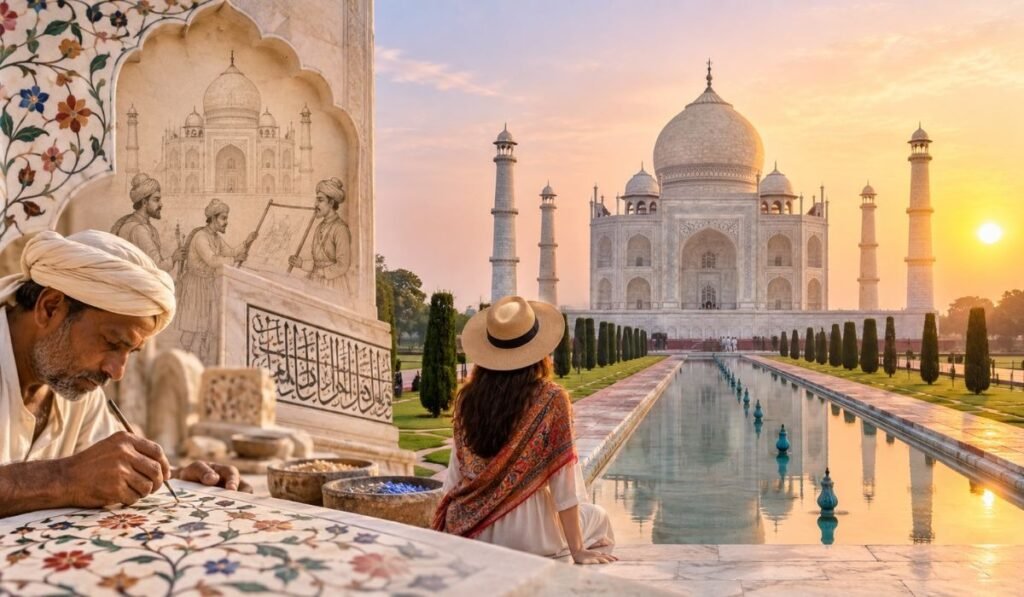
<p>The Taj Mahal's basic story is well known: the Mughal emperor Shah Jahan commissioned it in memory of his wife, Mumtaz Mahal, who died in 1631. Construction of the main mausoleum took roughly a decade, with the surrounding complex completed a few years later. That much is well documented. What often gets skipped is everything that had to happen to make it possible.</p>
<!-- /wp:paragraph -->
<!-- wp:heading {"level":3} -->
<h3 class="wp-block-heading" id="h-the-forgotten-people-behind-the-taj-mahal"><strong>The Forgotten People Behind the Taj Mahal</strong></h3>
<!-- /wp:heading -->
<!-- wp:paragraph -->
<p>The Taj Mahal wasn't the work of one architect signing off on a single vision. Court records and later scholarship point to a design process involving multiple master builders, with calligraphers, marble carvers, and inlay artisans drawn from across the Mughal empire and beyond — Persia, Central Asia, and even parts of Europe, according to historical accounts of the period.</p>
<!-- /wp:paragraph -->
<!-- wp:paragraph -->
<p>The pietra dura (stone inlay) work alone required specialists who could set semi-precious stones — jade, lapis lazuli, turquoise, carnelian — into marble with painstaking precision. Calligraphers inscribed entire passages of the Quran along the gateways and mausoleum in a way that appears uniform in size from the ground, a technique that required careful proportional planning. None of these craftsmen are household names today, but their combined work is what makes the building extraordinary up close, not just from a distance.</p>
<!-- /wp:paragraph -->
<!-- wp:heading {"level":3} -->
<h3 class="wp-block-heading" id="h-the-taj-mahal-s-changing-appearance"><strong>The Taj Mahal's Changing Appearance</strong></h3>
<!-- /wp:heading -->
<!-- wp:paragraph -->
<p>One detail seasoned visitors notice and first-timers often miss: the Taj Mahal doesn't look the same twice. The white marble is genuinely reflective, so its appearance shifts with the light. Early morning brings a soft, slightly pink tone. Midday light flattens the marble into a bright, almost stark white. As the sun sets, the stone can pick up warm golden and amber hues. Under moonlight, the building takes on a cooler, almost silver quality. This isn't folklore — it's a straightforward effect of white marble under changing natural light, and it's part of why photographers and repeat visitors often return at different times of day.</p>
<!-- /wp:paragraph -->
<!-- wp:heading {"level":3} -->
<h3 class="wp-block-heading" id="h-stories-hidden-in-the-architecture"><strong>Stories Hidden in the Architecture</strong></h3>
<!-- /wp:heading -->
<!-- wp:paragraph -->
<p>Look past the overall silhouette and the Taj Mahal is full of intentional detail: floral motifs carved and inlaid throughout the marble, a strict geometric symmetry across the entire complex, and a charbagh (four-part) garden layout that reflects Persian and Mughal ideas about paradise. The calligraphy, the inlay work, and the symmetry weren't decorative afterthoughts — in Mughal architecture, they were ways of expressing religious and dynastic ideas through design itself.</p>
<!-- /wp:paragraph -->
<!-- wp:paragraph -->
<p>Travelers who want to see this level of detail up close, with a guide who can explain what they're looking at, often do best with a private<a href="https://www.tajmahalprivatetrip.com/taj-mahal-tour-packages/"> Taj Mahal tour from Delhi</a> rather than a rushed group stop, since it allows time to actually look rather than just photograph.</p>
<!-- /wp:paragraph -->
<!-- wp:heading -->
<h2 class="wp-block-heading" id="h-agra-fort-the-palace-behind-the-red-walls"><strong>Agra Fort – The Palace Behind the Red Walls</strong></h2>
<!-- /wp:heading -->
<!-- wp:image {"id":2980,"sizeSlug":"large","linkDestination":"none"} -->
<figure class="wp-block-image size-large"><img src="https://www.tajmahalprivatetrip.com/storage/2026/09/image-5-1024x571.jpeg" alt="Agra Fort entrance with massive red sandstone walls and tourists exploring the historic Mughal monument" class="wp-image-2980" title="Agra Fort – Historic Red Sandstone Fort in Agra"/></figure>
<!-- /wp:image -->
<!-- wp:paragraph -->
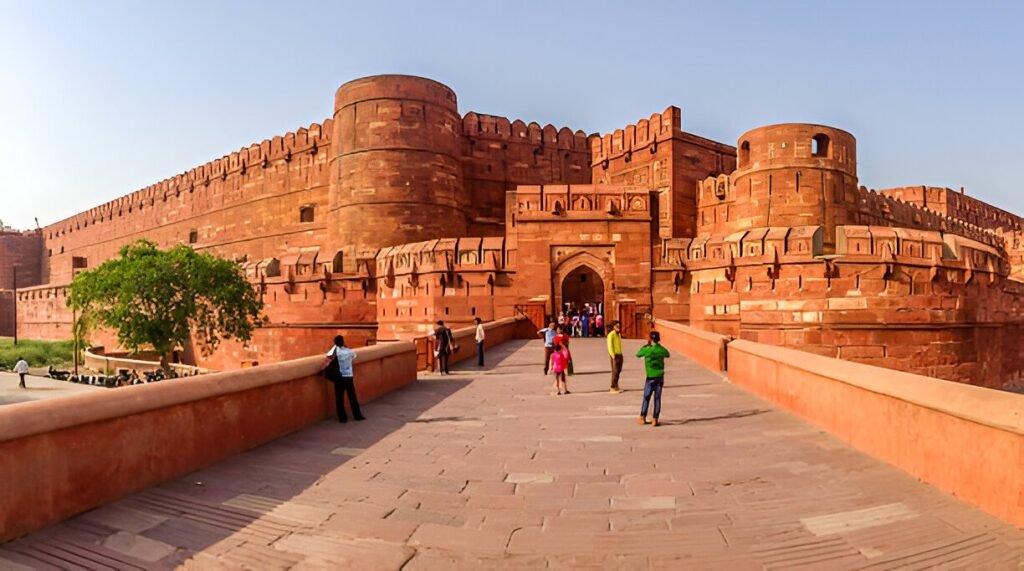
<p>Agra Fort tends to get treated as a secondary stop, something to see after the Taj Mahal rather than a destination in its own right. That undersells it. This was a working seat of imperial power for generations of Mughal rulers, not a single-purpose monument.</p>
<!-- /wp:paragraph -->
<!-- wp:heading {"level":3} -->
<h3 class="wp-block-heading" id="h-from-military-stronghold-to-imperial-residence"><strong>From Military Stronghold to Imperial Residence</strong></h3>
<!-- /wp:heading -->
<!-- wp:paragraph -->
<p>The fort's massive red sandstone walls were largely built under Emperor Akbar starting in the 1560s, on the site of an earlier fort. What began as a military stronghold was steadily transformed by Akbar's successors, Jahangir and Shah Jahan, who added palaces, courtyards, and audience halls, including marble structures that contrast sharply with the fort's defensive red sandstone exterior. By the time Shah Jahan was finished expanding it, Agra Fort functioned as much as a royal residence and administrative center as a military installation.</p>
<!-- /wp:paragraph -->
<!-- wp:heading {"level":3} -->
<h3 class="wp-block-heading" id="h-shah-jahan-s-final-years-at-agra-fort"><strong>Shah Jahan's Final Years at Agra Fort</strong></h3>
<!-- /wp:heading -->
<!-- wp:paragraph -->
<p>One of the more quietly dramatic parts of Agra Fort's history is well documented: after Shah Jahan fell ill, his son Aurangzeb took control of the empire and confined his father to Agra Fort for the final years of his life, from 1658 until his death in 1666. This wasn't a footnote — it was a significant power transition within the Mughal dynasty, and it played out inside the same fort travelers walk through today.</p>
<!-- /wp:paragraph -->
<!-- wp:heading {"level":3} -->
<h3 class="wp-block-heading" id="h-the-view-toward-the-taj-mahal"><strong>The View Toward the Taj Mahal</strong></h3>
<!-- /wp:heading -->
<!-- wp:paragraph -->
<p>According to historical tradition, Shah Jahan spent his final years able to see the Taj Mahal from the fort, a detail that adds real weight to a visit. Standing at that viewpoint connects two monuments that are usually visited hours apart into a single, continuous story about the same emperor's rise and confinement.</p>
<!-- /wp:paragraph -->
<!-- wp:paragraph -->
<p>Visitors piecing together Agra's full history — Agra Fort, the Taj Mahal, and Fatehpur Sikri together — will find more context in the site's<a href="https://www.tajmahalprivatetrip.com/ultimate-agra-travel-guide-for-international-tourists/"> Ultimate Agra Travel Guide for International Tourists</a>.</p>
<!-- /wp:paragraph -->
<!-- wp:heading -->
<h2 class="wp-block-heading" id="h-qutub-minar-the-story-is-bigger-than-the-tower"><strong>Qutub Minar – The Story Is Bigger Than the Tower</strong></h2>
<!-- /wp:heading -->
<!-- wp:image {"id":2979,"sizeSlug":"large","linkDestination":"none"} -->
<figure class="wp-block-image size-large"><img src="https://www.tajmahalprivatetrip.com/storage/2026/09/image-4-1024x597.jpeg" alt="Qutub Minar surrounded by historic ruins and flying birds at a heritage site in Delhi" class="wp-image-2979" title="The Story Is Bigger Than the Tower – Qutub Minar History"/></figure>
<!-- /wp:image -->
<!-- wp:paragraph -->
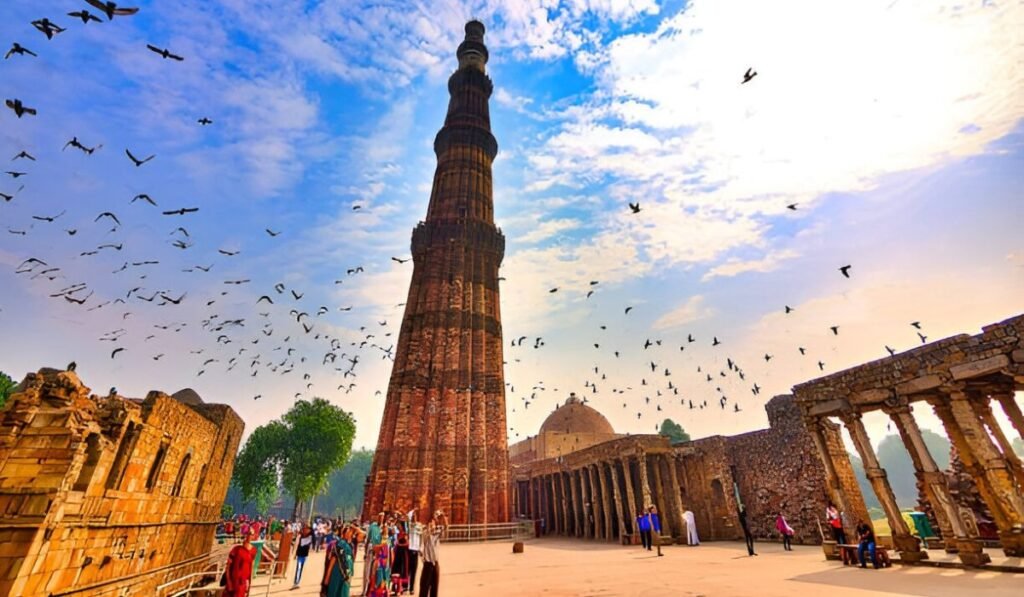
<p>Qutub Minar is frequently treated as a single photogenic tower, but it marks the beginning of a major shift in Indian history: the establishment of the Delhi Sultanate.</p>
<!-- /wp:paragraph -->
<!-- wp:paragraph -->
<p>Construction began around 1192–1193 under Qutb-ud-din Aibak, and the minaret was completed and later added to by his successors, most notably Iltutmish. Standing at over 70 meters, it remains one of the tallest brick minarets in the world. Its sandstone and marble bands are covered in intricate carvings and inscriptions in Arabic and Nagari script — details easy to miss when looking up at the tower from a distance.</p>
<!-- /wp:paragraph -->
<!-- wp:heading {"level":3} -->
<h3 class="wp-block-heading" id="h-the-monuments-around-qutub-minar"><strong>The Monuments Around Qutub Minar</strong></h3>
<!-- /wp:heading -->
<!-- wp:paragraph -->
<p>The tower itself is only part of the story. The surrounding Qutub complex includes the Quwwat-ul-Islam Mosque, one of the earliest mosques built in India, and the Iron Pillar of Delhi, a metallurgical curiosity that has resisted significant rusting for over a thousand years despite standing outdoors. Treating Qutub Minar as an isolated structure means missing a wider archaeological complex that documents the earliest years of Islamic rule in Delhi.</p>
<!-- /wp:paragraph -->
<!-- wp:paragraph -->
<p>Travelers combining Delhi's Sultanate-era history with Agra and Jaipur on the same trip typically do so through a<a href="https://www.tajmahalprivatetrip.com/golden-triangle-tour-packages/"> Golden Triangle tour from Delhi</a>.</p>
<!-- /wp:paragraph -->
<!-- wp:heading -->
<h2 class="wp-block-heading" id="h-humayun-s-tomb-the-monument-that-helped-shape-mughal-architecture"><strong>Humayun's Tomb – The Monument That Helped Shape Mughal Architecture</strong></h2>
<!-- /wp:heading -->
<!-- wp:paragraph -->
<p>Humayun's Tomb doesn't draw the same crowds as the Taj Mahal, but historians often point to it as the building that made the Taj Mahal possible. Commissioned by Humayun's widow, Empress Bega Begum, and built between 1565 and 1572, it introduced a Persian-influenced charbagh garden-tomb layout that hadn't been used at this scale in India before.</p>
<!-- /wp:paragraph -->
<!-- wp:heading {"level":3} -->
<h3 class="wp-block-heading" id="h-the-connection-with-the-taj-mahal"><strong>The Connection With the Taj Mahal</strong></h3>
<!-- /wp:heading -->
<!-- wp:paragraph -->
<p>The architectural DNA is visible if you know to look for it: a central domed mausoleum set within a symmetrical four-part garden, raised on a platform, aligned along clear axial paths. Roughly eighty years later, the Taj Mahal would refine this same basic formula in white marble. Visiting Humayun's Tomb before or after the Taj Mahal gives a much clearer sense of how Mughal architecture developed over generations rather than appearing fully formed.</p>
<!-- /wp:paragraph -->
<!-- wp:heading -->
<h2 class="wp-block-heading" id="h-fatehpur-sikri-the-abandoned-imperial-city-with-a-fascinating-story"><strong>Fatehpur Sikri – The Abandoned Imperial City With a Fascinating Story</strong></h2>
<!-- /wp:heading -->
<!-- wp:image {"id":2977,"sizeSlug":"large","linkDestination":"none"} -->
<figure class="wp-block-image size-large"><img src="https://www.tajmahalprivatetrip.com/storage/2026/09/image-2-1024x597.jpeg" alt="Buland Darwaza at Fatehpur Sikri showcasing grand Mughal architecture and historic red sandstone design" class="wp-image-2977" title="Fatehpur Sikri – Historic Mughal Architecture and Heritage"/></figure>
<!-- /wp:image -->
<!-- wp:paragraph -->
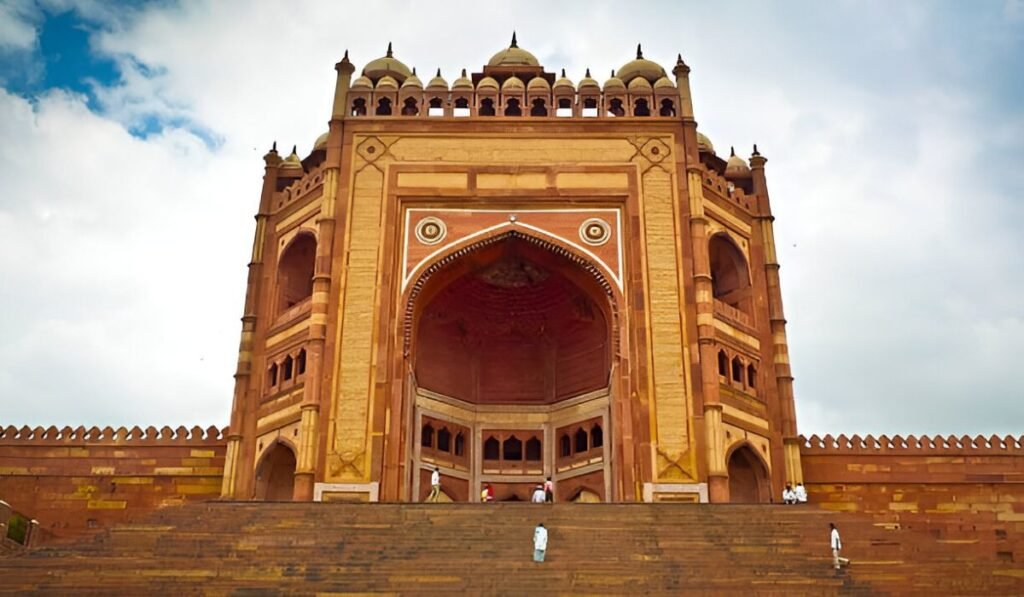
<p>Few places in India tell a more unusual story than Fatehpur Sikri. Emperor Akbar built this entire city from scratch starting in 1571, intending it as his new imperial capital, and it briefly became one of the most important centers of Mughal administration and culture.</p>
<!-- /wp:paragraph -->
<!-- wp:paragraph -->
<p>The city's architecture reflects Akbar's particular interests: a blend of Hindu, Jain, and Islamic design elements, along with structures built for religious debate between scholars of different faiths. Yet within roughly fifteen years, the capital was largely abandoned, most commonly attributed to an inadequate and unreliable water supply, though historians also point to shifting military and political priorities as contributing factors.</p>
<!-- /wp:paragraph -->
<!-- wp:heading {"level":3} -->
<h3 class="wp-block-heading" id="h-the-stories-behind-buland-darwaza-and-panch-mahal"><strong>The Stories Behind Buland Darwaza and Panch Mahal</strong></h3>
<!-- /wp:heading -->
<!-- wp:paragraph -->
<p>Buland Darwaza, the "Gate of Magnificence," was built to commemorate Akbar's military victory in Gujarat and remains one of the tallest gateways in the world. Panch Mahal, a five-story pillared pavilion with no walls, was designed for open-air relaxation and offers a clear view of how differently Mughal royal life was structured compared to the more enclosed palace spaces at Agra Fort.</p>
<!-- /wp:paragraph -->
<!-- wp:paragraph -->
<p>Fatehpur Sikri is typically visited as part of a<a href="https://www.tajmahalprivatetrip.com/tours/3-days-golden-triangle-tour-in-india/"> Golden Triangle tour with Fatehpur Sikri</a>, since it sits naturally along the route between Agra and Jaipur.</p>
<!-- /wp:paragraph -->
<!-- wp:heading -->
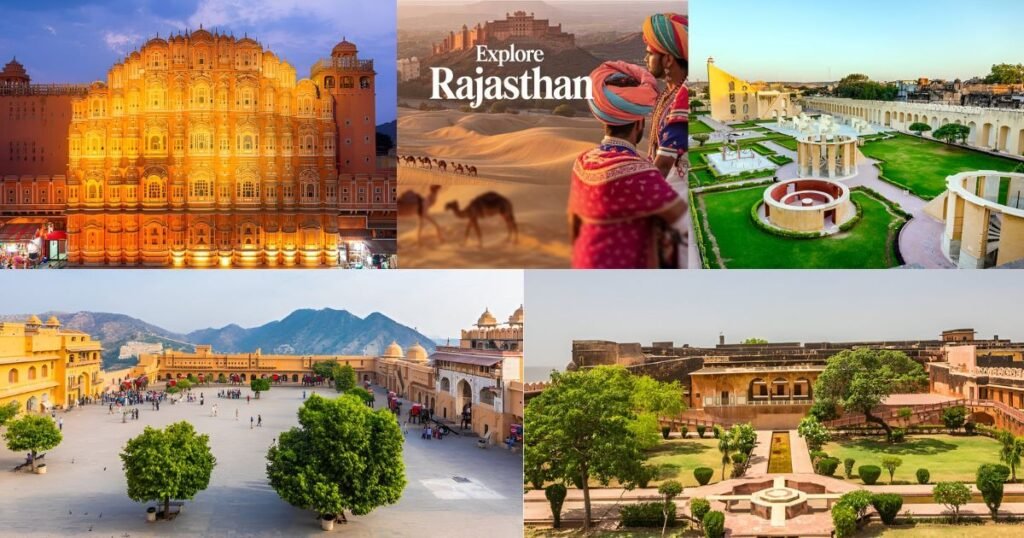
<h2 class="wp-block-heading" id="h-jaipur-s-famous-monuments-stories-behind-the-pink-city"><strong>Jaipur's Famous Monuments – Stories Behind the Pink City</strong></h2>
<!-- /wp:heading -->
<!-- wp:image {"id":2981,"sizeSlug":"large","linkDestination":"none"} -->
<figure class="wp-block-image size-large"><img src="https://www.tajmahalprivatetrip.com/storage/2026/09/image-6-1024x538.jpeg" alt="" class="wp-image-2981"/></figure>
<!-- /wp:image -->
<!-- wp:paragraph -->
<p>Jaipur represents a different historical world from Mughal Delhi and Agra. It is Rajput royal territory, with its own architectural language and court traditions.</p>
<!-- /wp:paragraph -->
<!-- wp:heading {"level":3} -->
<h3 class="wp-block-heading" id="h-hawa-mahal-more-than-a-beautiful-facade"><strong>Hawa Mahal – More Than a Beautiful Facade</strong></h3>
<!-- /wp:heading -->
<!-- wp:paragraph -->
<p>Hawa Mahal was built in 1799 under Maharaja Sawai Pratap Singh. It is often reduced to a single Instagram frame, but its design had a specific social purpose. The building has hundreds of small carved windows. They allowed royal women observing purdah to watch street festivals and daily life below. They could do so without being seen from outside. What looks purely decorative from the street was actually thoughtful urban and social design.</p>
<!-- /wp:paragraph -->
<!-- wp:heading {"level":3} -->
<h3 class="wp-block-heading" id="h-amber-fort-where-rajput-and-mughal-influences-meet"><strong>Amber Fort – Where Rajput and Mughal Influences Meet</strong></h3>
<!-- /wp:heading -->
<!-- wp:paragraph -->
<p>The Golden Triangle includes several famous monuments across three cities. Delhi is home to Qutub Minar and Humayun's Tomb. Agra features the Taj Mahal, Agra Fort, and Fatehpur Sikri. Jaipur includes Amber Fort, Hawa Mahal, and Jantar Mantar.</p>
<!-- /wp:paragraph -->
<!-- wp:heading {"level":3} -->
<h3 class="wp-block-heading" id="h-jantar-mantar-the-scientific-side-of-royal-india"><strong>Jantar Mantar – The Scientific Side of Royal India</strong></h3>
<!-- /wp:heading -->
<!-- wp:paragraph -->
<p>Jantar Mantar was built between 1728 and 1734 by Maharaja Sawai Jai Singh II. It is easy to underestimate because it does not look like a typical palace or fort. It's an observatory, containing large stone and masonry instruments used to track celestial movements, including the world's largest stone sundial. It's a reminder that Jaipur's rulers invested in science and astronomy alongside military and architectural ambitions.</p>
<!-- /wp:paragraph -->
<!-- wp:paragraph -->
<p>These three monuments, together with Jaipur's City Palace, form the core of most<a href="https://www.tajmahalprivatetrip.com/golden-triangle-tour-packages/"> Golden Triangle</a> itineraries through the Pink City.</p>
<!-- /wp:paragraph -->
<!-- wp:heading -->
<h2 class="wp-block-heading" id="h-the-stories-that-tourists-often-miss"><strong>The Stories That Tourists Often Miss</strong></h2>
<!-- /wp:heading -->
<!-- wp:paragraph -->
<p>Beyond individual monuments, a few broader themes run through almost all of India's major historical sites.</p>
<!-- /wp:paragraph -->
<!-- wp:heading {"level":3} -->
<h3 class="wp-block-heading" id="h-the-craftsmen-behind-india-s-monuments"><strong>The Craftsmen Behind India's Monuments</strong></h3>
<!-- /wp:heading -->
<!-- wp:paragraph -->
<p>Stone carvers, marble inlay artisans, calligraphers, sculptors, and metalworkers made these buildings physically possible, yet their names rarely appear in the popular version of any monument's story. Looking closely at carved details is often the closest a visitor gets to acknowledging that craftsmanship directly.</p>
<!-- /wp:paragraph -->
<!-- wp:heading {"level":3} -->
<h3 class="wp-block-heading" id="h-women-and-royal-life"><strong>Women and Royal Life</strong></h3>
<!-- /wp:heading -->
<!-- wp:paragraph -->
<p>From the screened windows of Hawa Mahal to the private courtyards within Agra Fort and Amber Fort, royal women shaped how palace architecture was designed, even though their names are far less documented than the rulers around them. Noticing these spaces adds a dimension to palace visits that's easy to walk past.</p>
<!-- /wp:paragraph -->
<!-- wp:heading {"level":3} -->
<h3 class="wp-block-heading" id="h-architecture-as-a-record-of-cultural-exchange"><strong>Architecture as a Record of Cultural Exchange</strong></h3>
<!-- /wp:heading -->
<!-- wp:paragraph -->
<p>Persian garden design, Central Asian building techniques, Rajput fortification styles, and Islamic architectural elements all show up across these monuments, often within the same building. Rather than separate national styles, Indian monuments frequently represent centuries of exchange between regions and traditions.</p>
<!-- /wp:paragraph -->
<!-- wp:heading -->
<h2 class="wp-block-heading" id="h-documented-history-vs-local-legends"><strong>Documented History vs Local Legends</strong></h2>
<!-- /wp:heading -->
<!-- wp:paragraph -->
<p>It is worth being deliberate about this. Fascinating stories can easily be repeated as facts without evidence.</p>
<!-- /wp:paragraph -->
<!-- wp:paragraph -->
<p><strong>Documented history</strong> refers to events supported by inscriptions, court chronicles, archaeology, and established scholarship. Examples include the Taj Mahal's construction dates and Shah Jahan's confinement at Agra Fort.</p>
<!-- /wp:paragraph -->
<!-- wp:paragraph -->
<p><strong>Local traditions</strong> are stories passed down through generations. They are often linked to a specific site and may contain genuine historical details.</p>
<!-- /wp:paragraph -->
<!-- wp:paragraph -->
<p><strong>Popular legends</strong> are widely repeated stories. These include claims about Shah Jahan planning a black marble mausoleum across the river. Another is the story that workers' hands were cut off after the Taj Mahal was completed.</p>
<!-- /wp:paragraph -->
<!-- wp:paragraph -->
<p>Such stories can make travel more dramatic. However, they lack solid historical evidence.</p>
<!-- /wp:paragraph -->
<!-- wp:paragraph -->
<p>A good travel guide should clearly separate fact from tradition and legend. <strong>The same applies to a good local guide.</strong> Not every story should be presented with equal certainty.</p>
<!-- /wp:paragraph -->
<!-- wp:heading -->
<h2 class="wp-block-heading" id="h-why-knowing-the-story-changes-the-way-you-experience-india"><strong>Why Knowing the Story Changes the Way You Experience India</strong></h2>
<!-- /wp:heading -->
<!-- wp:paragraph -->
<p>Historical context doesn't just add trivia — it changes what you're actually looking at.</p>
<!-- /wp:paragraph -->
<!-- wp:paragraph -->
<p>The Taj Mahal is more than a beautiful monument. Its design reflects decades of craftsmanship and a distinctive architectural style. At Agra Fort, the red sandstone fortress becomes a place shaped by real imperial power struggles. Meanwhile, Hawa Mahal is more than a photo backdrop; it reflects thoughtful design connected to Jaipur's royal and social customs.</p>
<!-- /wp:paragraph -->
<!-- wp:paragraph -->
<p>This is where a knowledgeable local guide adds real value. They do more than recite dates and facts. They connect what you see with the people, stories, and decisions behind each monument.</p>
<!-- /wp:paragraph -->
<!-- wp:heading -->
<h2 class="wp-block-heading" id="h-how-to-explore-india-s-historical-places-beyond-the-famous-photo-stops"><strong>How to Explore India's Historical Places Beyond the Famous Photo Stops</strong></h2>
<!-- /wp:heading -->
<!-- wp:paragraph -->
<p>A few practical habits make a real difference:</p>
<!-- /wp:paragraph -->
<!-- wp:list -->
<ul class="wp-block-list"><!-- wp:list-item -->
<li><strong>Hire a knowledgeable local guide</strong> who can distinguish documented history from legend.</li>
<!-- /wp:list-item -->
<!-- wp:list-item -->
<li><strong>Visit early in the morning</strong> where possible, both for lighter crowds and better light on marble and sandstone surfaces.</li>
<!-- /wp:list-item -->
<!-- wp:list-item -->
<li><strong>Do a little research before visiting</strong> so you know what to look for once you arrive.</li>
<!-- /wp:list-item -->
<!-- wp:list-item -->
<li><strong>Look closely at inscriptions and architectural details</strong>, not just the overall structure.</li>
<!-- /wp:list-item -->
<!-- wp:list-item -->
<li><strong>Ask guides directly about lesser-known stories</strong> — most are glad to share them if asked.</li>
<!-- /wp:list-item -->
<!-- wp:list-item -->
<li><strong>Explore the neighborhoods and complexes around major monuments</strong>, rather than treating the main structure as the entire site.</li>
<!-- /wp:list-item -->
<!-- wp:list-item -->
<li><strong>Allow enough time at each stop</strong> instead of rushing between multiple monuments in one day.</li>
<!-- /wp:list-item -->
<!-- wp:list-item -->
<li><strong>Pair major attractions with smaller, less-famous historical sites</strong> nearby.</li>
<!-- /wp:list-item --></ul>
<!-- /wp:list -->
<!-- wp:paragraph -->
<p>Travelers who want more flexibility and a relaxed pace can choose a private tour. A dedicated guide often works better than a fixed group schedule.</p>
<!-- /wp:paragraph -->
<!-- wp:heading -->
<h2 class="wp-block-heading" id="h-frequently-asked-questions"><strong>Frequently Asked Questions</strong></h2>
<!-- /wp:heading -->
<!-- wp:heading {"level":3} -->
<h3 class="wp-block-heading" id="h-what-are-some-forgotten-stories-behind-famous-indian-monuments"><strong>What are some forgotten stories behind famous Indian monuments?</strong></h3>
<!-- /wp:heading -->
<!-- wp:paragraph -->
<p>Many monuments have histories that go beyond their famous rulers. These stories include the architects and craftsmen who built them. They also reveal the original purpose of certain design features. Humayun's Tomb, for example, directly influenced later buildings such as the Taj Mahal.</p>
<!-- /wp:paragraph -->
<!-- wp:heading {"level":3} -->
<h3 class="wp-block-heading" id="h-what-is-the-story-behind-the-taj-mahal"><strong>What is the story behind the Taj Mahal?</strong></h3>
<!-- /wp:heading -->
<!-- wp:paragraph -->
<p>Shah Jahan commissioned the Taj Mahal in memory of his wife, Mumtaz Mahal, who died in 1631. Beyond its well-known origin, the Taj Mahal has a fascinating history. Thousands of craftsmen and artisans from across the region helped build it. The marble also changes in appearance under sunlight and moonlight.</p>
<!-- /wp:paragraph -->
<!-- wp:heading {"level":3} -->
<h3 class="wp-block-heading" id="h-what-is-special-about-agra-fort"><strong>What is special about Agra Fort?</strong></h3>
<!-- /wp:heading -->
<!-- wp:paragraph -->
<p>Agra Fort served as a Mughal military stronghold and imperial residence for generations. It later became the place where Shah Jahan spent his final years under confinement. From within the fort, he could reportedly see the Taj Mahal.</p>
<!-- /wp:paragraph -->
<!-- wp:heading {"level":3} -->
<h3 class="wp-block-heading" id="h-why-is-fatehpur-sikri-historically-important"><strong>Why is Fatehpur Sikri historically important?</strong></h3>
<!-- /wp:heading -->
<!-- wp:paragraph -->
<p>Akbar began building Fatehpur Sikri as his imperial capital in 1571. The city reflects his interest in Hindu, Jain, and Islamic architectural and cultural traditions. However, it was largely abandoned within about fifteen years. Water shortages were one of the main reasons for its decline.</p>
<!-- /wp:paragraph -->
<!-- wp:heading {"level":3} -->
<h3 class="wp-block-heading" id="h-what-is-the-history-behind-hawa-mahal"><strong>What is the history behind Hawa Mahal?</strong></h3>
<!-- /wp:heading -->
<!-- wp:paragraph -->
<p>Built in 1799, Hawa Mahal has beautifully carved windows with a practical purpose. They allowed royal women observing purdah to watch street life and festivals from inside. They could enjoy these scenes without being seen from outside. This design combined architectural beauty with an important social function.</p>
<!-- /wp:paragraph -->
<!-- wp:heading {"level":3} -->
<h3 class="wp-block-heading" id="h-which-historical-places-are-included-in-the-golden-triangle"><strong>Which historical places are included in the Golden Triangle?</strong></h3>
<!-- /wp:heading -->
<!-- wp:paragraph -->
<p>The Golden Triangle typically covers several major attractions. In Delhi, these include Qutub Minar and Humayun's Tomb. Agra is home to the Taj Mahal, Agra Fort, and Fatehpur Sikri. In Jaipur, popular sites include Amber Fort, Hawa Mahal, and Jantar Mantar.</p>
<!-- /wp:paragraph -->
<!-- wp:heading {"level":3} -->
<h3 class="wp-block-heading" id="h-is-it-better-to-visit-indian-monuments-with-a-local-guide"><strong>Is it better to visit Indian monuments with a local guide?</strong></h3>
<!-- /wp:heading -->
<!-- wp:paragraph -->
<p>Yes, in most cases. A knowledgeable guide can point out important architectural details and explain the historical context. They can also separate documented history from local legends. These are details that are easy to miss on a self-guided visit.</p>
<!-- /wp:paragraph -->
<!-- wp:heading {"level":3} -->
<h3 class="wp-block-heading" id="h-how-can-travelers-experience-india-s-history-beyond-the-main-tourist-attractions"><strong>How can travelers experience India's history beyond the main tourist attractions?</strong></h3>
<!-- /wp:heading -->
<!-- wp:paragraph -->
<p>Slow down at each site and explore the areas around major monuments. Ask guides about lesser-known stories and local history. Pair famous attractions with smaller historical sites nearby. These simple steps help travelers see beyond the standard photo stops.</p>
<!-- /wp:paragraph -->
<!-- wp:heading -->
<h2 class="wp-block-heading" id="h-final-thoughts"><strong>Final Thoughts</strong></h2>
<!-- /wp:heading -->
<!-- wp:paragraph -->
<p>India's monuments are not simply beautiful buildings — they're records of the people, politics, craftsmanship, and cultural exchange that shaped them. The Taj Mahal, Agra Fort, Delhi's Sultanate-era monuments, and Jaipur's palaces all hold stories beyond a quick photo caption.</p>
<!-- /wp:paragraph -->
<!-- wp:paragraph -->
<p>Want to explore these historic landmarks at your own pace? Discover Taj Mahal Private Trip's Golden Triangle and Agra tours with a flexible itinerary and knowledgeable local guidance.</p>
<!-- /wp:paragraph -->
Most travelers arrive at India’s great monuments already knowing the headline story. The Taj Mahal is a monument to love. Agra Fort is “the other Mughal building” people visit on the same day. Qutub Minar is a tall, ancient tower for photographs. But exploring the forgotten stories India’s historical places hold reveals a much richer side of these famous landmarks. These stories aren’t wrong — but they are incomplete.
India’s history is layered in a way that few countries can match. Sultanate rulers, Mughal emperors, Rajput kings, and later the British all shaped these cities. Their influence can still be seen in some of the same buildings.
Walk through Delhi, Agra, or Jaipur and you are moving through centuries of political change. You will also discover layers of craftsmanship and daily life. These cities offer much more than the greatest hits of a single dynasty.
Understanding what lies behind the famous photo stops changes the experience of visiting them. A knowledgeable guide can point out an inscription or explain a palace window’s design. They can also clarify which parts of a story are documented and which come from local legend. These insights can turn a quick stop into a memorable experience.
The Taj Mahal, Agra Fort, Qutub Minar, Humayun’s Tomb, and Jaipur’s palaces all hold fascinating chapters of history. Many of these stories rarely appear in a standard itinerary. That is exactly what makes these monuments worth slowing down for.
Why Do Historical Monuments Have Forgotten Stories?
History tends to get simplified the further it travels from its source. A monument built over decades, involving thousands of people, gets compressed into a single sentence: one ruler, one date, one reason for being built.
There are a few reasons the fuller picture gets lost:
Rulers dominate the record. Emperors and kings are well documented, while the architects, craftsmen, and laborers who actually built these monuments are often mentioned only briefly, or not at all.
Political change reshapes the narrative. Each new ruler or era sometimes emphasized different aspects of a monument’s history to suit their own image.
Oral traditions fill the gaps. Where written records are thin, local stories and legends step in — some rooted in real events, others embellished over generations.
Details hide in plain sight. Inscriptions, architectural motifs, and the layout of surrounding neighborhoods often carry historical information that a passing visitor simply won’t notice without guidance.
It’s worth being upfront here: not every story attached to a famous monument is documented history. Some are well-supported by inscriptions, court chronicles, and archaeological evidence. Others are local traditions passed down through generations, and some are popular legends that have been repeated so often they feel like fact. A good local guide — and a good travel guide — should make it clear which is which, rather than presenting every colorful tale as settled history.
The Taj Mahal – More Than a Monument to Love
The Taj Mahal’s basic story is well known: the Mughal emperor Shah Jahan commissioned it in memory of his wife, Mumtaz Mahal, who died in 1631. Construction of the main mausoleum took roughly a decade, with the surrounding complex completed a few years later. That much is well documented. What often gets skipped is everything that had to happen to make it possible.
The Forgotten People Behind the Taj Mahal
The Taj Mahal wasn’t the work of one architect signing off on a single vision. Court records and later scholarship point to a design process involving multiple master builders, with calligraphers, marble carvers, and inlay artisans drawn from across the Mughal empire and beyond — Persia, Central Asia, and even parts of Europe, according to historical accounts of the period.
The pietra dura (stone inlay) work alone required specialists who could set semi-precious stones — jade, lapis lazuli, turquoise, carnelian — into marble with painstaking precision. Calligraphers inscribed entire passages of the Quran along the gateways and mausoleum in a way that appears uniform in size from the ground, a technique that required careful proportional planning. None of these craftsmen are household names today, but their combined work is what makes the building extraordinary up close, not just from a distance.
The Taj Mahal’s Changing Appearance
One detail seasoned visitors notice and first-timers often miss: the Taj Mahal doesn’t look the same twice. The white marble is genuinely reflective, so its appearance shifts with the light. Early morning brings a soft, slightly pink tone. Midday light flattens the marble into a bright, almost stark white. As the sun sets, the stone can pick up warm golden and amber hues. Under moonlight, the building takes on a cooler, almost silver quality. This isn’t folklore — it’s a straightforward effect of white marble under changing natural light, and it’s part of why photographers and repeat visitors often return at different times of day.
Stories Hidden in the Architecture
Look past the overall silhouette and the Taj Mahal is full of intentional detail: floral motifs carved and inlaid throughout the marble, a strict geometric symmetry across the entire complex, and a charbagh (four-part) garden layout that reflects Persian and Mughal ideas about paradise. The calligraphy, the inlay work, and the symmetry weren’t decorative afterthoughts — in Mughal architecture, they were ways of expressing religious and dynastic ideas through design itself.
Travelers who want to see this level of detail up close, with a guide who can explain what they’re looking at, often do best with a private Taj Mahal tour from Delhi rather than a rushed group stop, since it allows time to actually look rather than just photograph.
Agra Fort – The Palace Behind the Red Walls
Agra Fort tends to get treated as a secondary stop, something to see after the Taj Mahal rather than a destination in its own right. That undersells it. This was a working seat of imperial power for generations of Mughal rulers, not a single-purpose monument.
From Military Stronghold to Imperial Residence
The fort’s massive red sandstone walls were largely built under Emperor Akbar starting in the 1560s, on the site of an earlier fort. What began as a military stronghold was steadily transformed by Akbar’s successors, Jahangir and Shah Jahan, who added palaces, courtyards, and audience halls, including marble structures that contrast sharply with the fort’s defensive red sandstone exterior. By the time Shah Jahan was finished expanding it, Agra Fort functioned as much as a royal residence and administrative center as a military installation.
Shah Jahan’s Final Years at Agra Fort
One of the more quietly dramatic parts of Agra Fort’s history is well documented: after Shah Jahan fell ill, his son Aurangzeb took control of the empire and confined his father to Agra Fort for the final years of his life, from 1658 until his death in 1666. This wasn’t a footnote — it was a significant power transition within the Mughal dynasty, and it played out inside the same fort travelers walk through today.
The View Toward the Taj Mahal
According to historical tradition, Shah Jahan spent his final years able to see the Taj Mahal from the fort, a detail that adds real weight to a visit. Standing at that viewpoint connects two monuments that are usually visited hours apart into a single, continuous story about the same emperor’s rise and confinement.
Qutub Minar is frequently treated as a single photogenic tower, but it marks the beginning of a major shift in Indian history: the establishment of the Delhi Sultanate.
Construction began around 1192–1193 under Qutb-ud-din Aibak, and the minaret was completed and later added to by his successors, most notably Iltutmish. Standing at over 70 meters, it remains one of the tallest brick minarets in the world. Its sandstone and marble bands are covered in intricate carvings and inscriptions in Arabic and Nagari script — details easy to miss when looking up at the tower from a distance.
The Monuments Around Qutub Minar
The tower itself is only part of the story. The surrounding Qutub complex includes the Quwwat-ul-Islam Mosque, one of the earliest mosques built in India, and the Iron Pillar of Delhi, a metallurgical curiosity that has resisted significant rusting for over a thousand years despite standing outdoors. Treating Qutub Minar as an isolated structure means missing a wider archaeological complex that documents the earliest years of Islamic rule in Delhi.
Travelers combining Delhi’s Sultanate-era history with Agra and Jaipur on the same trip typically do so through a Golden Triangle tour from Delhi.
Humayun’s Tomb – The Monument That Helped Shape Mughal Architecture
Humayun’s Tomb doesn’t draw the same crowds as the Taj Mahal, but historians often point to it as the building that made the Taj Mahal possible. Commissioned by Humayun’s widow, Empress Bega Begum, and built between 1565 and 1572, it introduced a Persian-influenced charbagh garden-tomb layout that hadn’t been used at this scale in India before.
The Connection With the Taj Mahal
The architectural DNA is visible if you know to look for it: a central domed mausoleum set within a symmetrical four-part garden, raised on a platform, aligned along clear axial paths. Roughly eighty years later, the Taj Mahal would refine this same basic formula in white marble. Visiting Humayun’s Tomb before or after the Taj Mahal gives a much clearer sense of how Mughal architecture developed over generations rather than appearing fully formed.
Fatehpur Sikri – The Abandoned Imperial City With a Fascinating Story
Few places in India tell a more unusual story than Fatehpur Sikri. Emperor Akbar built this entire city from scratch starting in 1571, intending it as his new imperial capital, and it briefly became one of the most important centers of Mughal administration and culture.
The city’s architecture reflects Akbar’s particular interests: a blend of Hindu, Jain, and Islamic design elements, along with structures built for religious debate between scholars of different faiths. Yet within roughly fifteen years, the capital was largely abandoned, most commonly attributed to an inadequate and unreliable water supply, though historians also point to shifting military and political priorities as contributing factors.
The Stories Behind Buland Darwaza and Panch Mahal
Buland Darwaza, the “Gate of Magnificence,” was built to commemorate Akbar’s military victory in Gujarat and remains one of the tallest gateways in the world. Panch Mahal, a five-story pillared pavilion with no walls, was designed for open-air relaxation and offers a clear view of how differently Mughal royal life was structured compared to the more enclosed palace spaces at Agra Fort.
Jaipur’s Famous Monuments – Stories Behind the Pink City
Jaipur represents a different historical world from Mughal Delhi and Agra. It is Rajput royal territory, with its own architectural language and court traditions.
Hawa Mahal – More Than a Beautiful Facade
Hawa Mahal was built in 1799 under Maharaja Sawai Pratap Singh. It is often reduced to a single Instagram frame, but its design had a specific social purpose. The building has hundreds of small carved windows. They allowed royal women observing purdah to watch street festivals and daily life below. They could do so without being seen from outside. What looks purely decorative from the street was actually thoughtful urban and social design.
Amber Fort – Where Rajput and Mughal Influences Meet
The Golden Triangle includes several famous monuments across three cities. Delhi is home to Qutub Minar and Humayun’s Tomb. Agra features the Taj Mahal, Agra Fort, and Fatehpur Sikri. Jaipur includes Amber Fort, Hawa Mahal, and Jantar Mantar.
Jantar Mantar – The Scientific Side of Royal India
Jantar Mantar was built between 1728 and 1734 by Maharaja Sawai Jai Singh II. It is easy to underestimate because it does not look like a typical palace or fort. It’s an observatory, containing large stone and masonry instruments used to track celestial movements, including the world’s largest stone sundial. It’s a reminder that Jaipur’s rulers invested in science and astronomy alongside military and architectural ambitions.
These three monuments, together with Jaipur’s City Palace, form the core of most Golden Triangle itineraries through the Pink City.
The Stories That Tourists Often Miss
Beyond individual monuments, a few broader themes run through almost all of India’s major historical sites.
The Craftsmen Behind India’s Monuments
Stone carvers, marble inlay artisans, calligraphers, sculptors, and metalworkers made these buildings physically possible, yet their names rarely appear in the popular version of any monument’s story. Looking closely at carved details is often the closest a visitor gets to acknowledging that craftsmanship directly.
Women and Royal Life
From the screened windows of Hawa Mahal to the private courtyards within Agra Fort and Amber Fort, royal women shaped how palace architecture was designed, even though their names are far less documented than the rulers around them. Noticing these spaces adds a dimension to palace visits that’s easy to walk past.
Architecture as a Record of Cultural Exchange
Persian garden design, Central Asian building techniques, Rajput fortification styles, and Islamic architectural elements all show up across these monuments, often within the same building. Rather than separate national styles, Indian monuments frequently represent centuries of exchange between regions and traditions.
Documented History vs Local Legends
It is worth being deliberate about this. Fascinating stories can easily be repeated as facts without evidence.
Documented history refers to events supported by inscriptions, court chronicles, archaeology, and established scholarship. Examples include the Taj Mahal’s construction dates and Shah Jahan’s confinement at Agra Fort.
Local traditions are stories passed down through generations. They are often linked to a specific site and may contain genuine historical details.
Popular legends are widely repeated stories. These include claims about Shah Jahan planning a black marble mausoleum across the river. Another is the story that workers’ hands were cut off after the Taj Mahal was completed.
Such stories can make travel more dramatic. However, they lack solid historical evidence.
A good travel guide should clearly separate fact from tradition and legend. The same applies to a good local guide. Not every story should be presented with equal certainty.
Why Knowing the Story Changes the Way You Experience India
Historical context doesn’t just add trivia — it changes what you’re actually looking at.
The Taj Mahal is more than a beautiful monument. Its design reflects decades of craftsmanship and a distinctive architectural style. At Agra Fort, the red sandstone fortress becomes a place shaped by real imperial power struggles. Meanwhile, Hawa Mahal is more than a photo backdrop; it reflects thoughtful design connected to Jaipur’s royal and social customs.
This is where a knowledgeable local guide adds real value. They do more than recite dates and facts. They connect what you see with the people, stories, and decisions behind each monument.
How to Explore India’s Historical Places Beyond the Famous Photo Stops
A few practical habits make a real difference:
Hire a knowledgeable local guide who can distinguish documented history from legend.
Visit early in the morning where possible, both for lighter crowds and better light on marble and sandstone surfaces.
Do a little research before visiting so you know what to look for once you arrive.
Look closely at inscriptions and architectural details, not just the overall structure.
Ask guides directly about lesser-known stories — most are glad to share them if asked.
Explore the neighborhoods and complexes around major monuments, rather than treating the main structure as the entire site.
Allow enough time at each stop instead of rushing between multiple monuments in one day.
Pair major attractions with smaller, less-famous historical sites nearby.
Travelers who want more flexibility and a relaxed pace can choose a private tour. A dedicated guide often works better than a fixed group schedule.
Frequently Asked Questions
What are some forgotten stories behind famous Indian monuments?
Many monuments have histories that go beyond their famous rulers. These stories include the architects and craftsmen who built them. They also reveal the original purpose of certain design features. Humayun’s Tomb, for example, directly influenced later buildings such as the Taj Mahal.
What is the story behind the Taj Mahal?
Shah Jahan commissioned the Taj Mahal in memory of his wife, Mumtaz Mahal, who died in 1631. Beyond its well-known origin, the Taj Mahal has a fascinating history. Thousands of craftsmen and artisans from across the region helped build it. The marble also changes in appearance under sunlight and moonlight.
What is special about Agra Fort?
Agra Fort served as a Mughal military stronghold and imperial residence for generations. It later became the place where Shah Jahan spent his final years under confinement. From within the fort, he could reportedly see the Taj Mahal.
Why is Fatehpur Sikri historically important?
Akbar began building Fatehpur Sikri as his imperial capital in 1571. The city reflects his interest in Hindu, Jain, and Islamic architectural and cultural traditions. However, it was largely abandoned within about fifteen years. Water shortages were one of the main reasons for its decline.
What is the history behind Hawa Mahal?
Built in 1799, Hawa Mahal has beautifully carved windows with a practical purpose. They allowed royal women observing purdah to watch street life and festivals from inside. They could enjoy these scenes without being seen from outside. This design combined architectural beauty with an important social function.
Which historical places are included in the Golden Triangle?
The Golden Triangle typically covers several major attractions. In Delhi, these include Qutub Minar and Humayun’s Tomb. Agra is home to the Taj Mahal, Agra Fort, and Fatehpur Sikri. In Jaipur, popular sites include Amber Fort, Hawa Mahal, and Jantar Mantar.
Is it better to visit Indian monuments with a local guide?
Yes, in most cases. A knowledgeable guide can point out important architectural details and explain the historical context. They can also separate documented history from local legends. These are details that are easy to miss on a self-guided visit.
How can travelers experience India’s history beyond the main tourist attractions?
Slow down at each site and explore the areas around major monuments. Ask guides about lesser-known stories and local history. Pair famous attractions with smaller historical sites nearby. These simple steps help travelers see beyond the standard photo stops.
Final Thoughts
India’s monuments are not simply beautiful buildings — they’re records of the people, politics, craftsmanship, and cultural exchange that shaped them. The Taj Mahal, Agra Fort, Delhi’s Sultanate-era monuments, and Jaipur’s palaces all hold stories beyond a quick photo caption.
Want to explore these historic landmarks at your own pace? Discover Taj Mahal Private Trip’s Golden Triangle and Agra tours with a flexible itinerary and knowledgeable local guidance.
<!-- wp:paragraph -->
<p>Few countries offer the range of wellness traditions found in India. It is the birthplace of yoga, the home of Ayurveda, and a country where meditation and mindfulness have been practiced for thousands of years. If you're planning a wellness retreat in India, you have an unusually wide set of choices: mountain ashrams in the Himalayas, Ayurvedic centers in Kerala's backwaters, beach resorts in Goa, and quiet meditation halls in Himachal Pradesh. Many travelers also choose to pair their retreat with India's cultural side — its monuments, food, and heritage sites — for a trip that restores the body and satisfies curiosity in equal measure. This guide walks through what to expect, where to go, how to choose a retreat, and how to plan a trip that blends wellness with sightseeing.</p>
<!-- /wp:paragraph -->
<!-- wp:heading -->
<h2 class="wp-block-heading" id="h-what-is-a-wellness-retreat-in-india"><strong>What Is a Wellness Retreat in India?</strong></h2>
<!-- /wp:heading -->
<!-- wp:paragraph -->
<p>A wellness retreat in India is a structured stay built around practices meant to support physical, mental, or spiritual well-being. No two retreats look exactly alike, but most draw from a similar toolkit:</p>
<!-- /wp:paragraph -->
<!-- wp:list -->
<ul class="wp-block-list"><!-- wp:list-item -->
<li>Daily yoga sessions, often at sunrise or sunset</li>
<!-- /wp:list-item -->
<!-- wp:list-item -->
<li>Guided meditation and breathing exercises (pranayama)</li>
<!-- /wp:list-item -->
<!-- wp:list-item -->
<li>Ayurvedic consultations and treatments</li>
<!-- /wp:list-item -->
<!-- wp:list-item -->
<li>Wellness-focused meals, often vegetarian or Ayurvedic</li>
<!-- /wp:list-item -->
<!-- wp:list-item -->
<li>Spa therapies and relaxation treatments</li>
<!-- /wp:list-item -->
<!-- wp:list-item -->
<li>Mindfulness or reflection activities</li>
<!-- /wp:list-item -->
<!-- wp:list-item -->
<li>Nature walks or time in quiet, natural surroundings</li>
<!-- /wp:list-item -->
<!-- wp:list-item -->
<li>Optional digital detox periods</li>
<!-- /wp:list-item -->
<!-- wp:list-item -->
<li>Cultural or spiritual excursions</li>
<!-- /wp:list-item --></ul>
<!-- /wp:list -->
<!-- wp:paragraph -->
<p>The style, intensity, and length of these programs vary a great deal. Some retreats are simple and traditional — a mat, a teacher, and an ashram routine. Others are closer to luxury wellness resorts, with private treatment rooms, curated menus, and five-star accommodation. Neither approach is "better"; the right one depends on what you're looking for.</p>
<!-- /wp:paragraph -->
<!-- wp:heading -->
<h2 class="wp-block-heading" id="h-why-choose-india-for-a-wellness-retreat"><strong>Why Choose India for a Wellness Retreat?</strong></h2>
<!-- /wp:heading -->
<!-- wp:image {"id":2972,"sizeSlug":"large","linkDestination":"none"} -->
<figure class="wp-block-image size-large"><img src="https://www.tajmahalprivatetrip.com/storage/2026/09/image-1-1024x476.jpeg" alt="A scenic collage highlighting top wellness retreat destinations in India, including yoga in Rishikesh, Ayurveda in Kerala." class="wp-image-2972" title="Top Wellness Retreat Destinations in India"/></figure>
<!-- /wp:image -->
<!-- wp:heading {"level":3} -->
<h3 class="wp-block-heading" id="h-traditional-wellness-practices"><strong>Traditional Wellness Practices</strong></h3>
<!-- /wp:heading -->
<!-- wp:paragraph -->
<p>India's wellness traditions aren't imported trends — they're rooted in centuries of practice. Ayurveda, India's traditional system of medicine, informs everything from diet to massage therapy at many retreats. Yoga and pranayama are taught by instructors who often trained within lineages passed down through generations. This depth is part of why so many travelers specifically seek out India rather than a wellness resort closer to home.</p>
<!-- /wp:paragraph -->
<!-- wp:heading {"level":3} -->
<h3 class="wp-block-heading" id="h-diverse-destinations"><strong>Diverse Destinations</strong></h3>
<!-- /wp:heading -->
<!-- wp:paragraph -->
<p>Because India is so geographically varied, "a wellness retreat in India" can mean very different trips. You might choose:</p>
<!-- /wp:paragraph -->
<!-- wp:list -->
<ul class="wp-block-list"><!-- wp:list-item -->
<li>Himalayan retreats for altitude, quiet, and mountain air</li>
<!-- /wp:list-item -->
<!-- wp:list-item -->
<li>Beach and coastal wellness resorts for sun and sea</li>
<!-- /wp:list-item -->
<!-- wp:list-item -->
<li>Forest retreats for immersion in nature</li>
<!-- /wp:list-item -->
<!-- wp:list-item -->
<li>Spiritual centers built around meditation and study</li>
<!-- /wp:list-item -->
<!-- wp:list-item -->
<li>Rural wellness experiences away from cities</li>
<!-- /wp:list-item -->
<!-- wp:list-item -->
<li>Luxury wellness resorts with resort-style amenities</li>
<!-- /wp:list-item --></ul>
<!-- /wp:list -->
<!-- wp:heading {"level":3} -->
<h3 class="wp-block-heading" id="h-wellness-cultural-travel"><strong>Wellness + Cultural Travel</strong></h3>
<!-- /wp:heading -->
<!-- wp:paragraph -->
<p>Because wellness retreats are often set within one region, many travelers extend their trip to include nearby cultural experiences — historic monuments, local cuisine, architecture, and markets. India also has a well-developed network of<a href="https://www.tajmahalprivatetrip.com/best-spiritual-tours-service-provider-in-india/"> spiritual tour experiences</a> that combine ashram visits, temple stops, and quiet reflection time with a broader look at the country's heritage. Pairing a few wellness days with cultural sightseeing tends to make a longer trip feel more complete rather than one-note.</p>
<!-- /wp:paragraph -->
<!-- wp:heading -->
<h2 class="wp-block-heading" id="h-best-destinations-for-a-wellness-retreat-in-india"><strong>Best Destinations for a Wellness Retreat in India</strong></h2>
<!-- /wp:heading -->
<!-- wp:image {"id":2971,"sizeSlug":"large","linkDestination":"none"} -->
<figure class="wp-block-image size-large"><img src="https://www.tajmahalprivatetrip.com/storage/2026/09/image-1024x476.jpeg" alt="Best wellness retreat destinations in India including Rishikesh, Kerala, Goa, Dharamshala, Rajasthan and Agra" class="wp-image-2971" title="Best Wellness Retreat Destinations in India"/></figure>
<!-- /wp:image -->
<!-- wp:heading {"level":3} -->
<h3 class="wp-block-heading" id="h-rishikesh"><strong>Rishikesh</strong></h3>
<!-- /wp:heading -->
<!-- wp:paragraph -->
<p>Rishikesh, on the banks of the Ganges in the Himalayan foothills, is often called the yoga capital of the world. It's home to a large concentration of ashrams, yoga schools, and meditation centers, and its spiritual atmosphere — river ghats, temple bells, evening prayer ceremonies — is part of the appeal as much as the classes themselves.</p>
<!-- /wp:paragraph -->
<!-- wp:heading {"level":3} -->
<h3 class="wp-block-heading" id="h-kerala"><strong>Kerala</strong></h3>
<!-- /wp:heading -->
<!-- wp:paragraph -->
<p>Kerala is the center of India's Ayurvedic tradition. Retreats here typically combine Ayurvedic treatments and consultations with the state's backwater and beach surroundings. Because Ayurvedic programs are often designed to unfold over one to two weeks, Kerala tends to suit travelers planning a longer, slower wellness stay.</p>
<!-- /wp:paragraph -->
<!-- wp:heading {"level":3} -->
<h3 class="wp-block-heading" id="h-goa"><strong>Goa</strong></h3>
<!-- /wp:heading -->
<!-- wp:paragraph -->
<p>Goa has become a hub for yoga retreats set against its beaches. The atmosphere tends to be more relaxed and less strictly traditional than Rishikesh, which makes it a popular choice for travelers who want yoga and wellness alongside a beach holiday feel.</p>
<!-- /wp:paragraph -->
<!-- wp:heading {"level":3} -->
<h3 class="wp-block-heading" id="h-dharamshala-himachal-pradesh"><strong>Dharamshala / Himachal Pradesh</strong></h3>
<!-- /wp:heading -->
<!-- wp:paragraph -->
<p>Set in the mountains and home to a strong Tibetan Buddhist cultural influence, Dharamshala and the wider Himachal Pradesh region draw travelers focused on meditation, quiet reflection, and mountain scenery. The pace here is generally slower and more contemplative.</p>
<!-- /wp:paragraph -->
<!-- wp:heading {"level":3} -->
<h3 class="wp-block-heading" id="h-rajasthan"><strong>Rajasthan</strong></h3>
<!-- /wp:heading -->
<!-- wp:paragraph -->
<p>Rajasthan isn't traditionally thought of as a wellness hub, but a growing number of heritage hotels and luxury properties now offer wellness programs alongside desert landscapes, palaces, and forts. It's a strong option for travelers who want to combine wellness with heritage and luxury stays — and it pairs naturally with<a href="https://www.tajmahalprivatetrip.com/rajasthan-tour-packages/"> Rajasthan tour itineraries</a> for those extending their trip further.</p>
<!-- /wp:paragraph -->
<!-- wp:heading {"level":3} -->
<h3 class="wp-block-heading" id="h-agra-and-north-india"><strong>Agra and North India</strong></h3>
<!-- /wp:heading -->
<!-- wp:paragraph -->
<p>Agra isn't a wellness destination in its own right, but it's worth including here because of how often it comes up in wellness travel planning. Many travelers combining a retreat with cultural sightseeing add a day or two in Agra to see the Taj Mahal, treating it as a heritage addition to a wellness-focused itinerary rather than the centerpiece of the trip.</p>
<!-- /wp:paragraph -->
<!-- wp:heading -->
<h2 class="wp-block-heading" id="h-how-to-choose-the-right-wellness-retreat"><strong>How to Choose the Right Wellness Retreat</strong></h2>
<!-- /wp:heading -->
<!-- wp:heading {"level":3} -->
<h3 class="wp-block-heading" id="h-define-your-wellness-goal"><strong>Define Your Wellness Goal</strong></h3>
<!-- /wp:heading -->
<!-- wp:paragraph -->
<p>Start by being honest about what you want out of the trip:</p>
<!-- /wp:paragraph -->
<!-- wp:list -->
<ul class="wp-block-list"><!-- wp:list-item -->
<li>Stress reduction</li>
<!-- /wp:list-item -->
<!-- wp:list-item -->
<li>Yoga practice or deepening</li>
<!-- /wp:list-item -->
<!-- wp:list-item -->
<li>Meditation training</li>
<!-- /wp:list-item -->
<!-- wp:list-item -->
<li>Ayurvedic treatment</li>
<!-- /wp:list-item -->
<!-- wp:list-item -->
<li>General fitness</li>
<!-- /wp:list-item -->
<!-- wp:list-item -->
<li>Better sleep</li>
<!-- /wp:list-item -->
<!-- wp:list-item -->
<li>Digital detox</li>
<!-- /wp:list-item -->
<!-- wp:list-item -->
<li>Spiritual growth</li>
<!-- /wp:list-item -->
<!-- wp:list-item -->
<li>Simple relaxation</li>
<!-- /wp:list-item --></ul>
<!-- /wp:list -->
<!-- wp:heading {"level":3} -->
<h3 class="wp-block-heading" id="h-choose-the-right-retreat-style"><strong>Choose the Right Retreat Style</strong></h3>
<!-- /wp:heading -->
<!-- wp:table -->
<figure class="wp-block-table"><table class="has-fixed-layout"><tbody><tr><td><strong>Retreat Style</strong></td><td><strong>Best For</strong></td></tr><tr><td>Luxury wellness resort</td><td>Comfort-focused travelers wanting spa-level amenities</td></tr><tr><td>Ayurveda retreat</td><td>Longer stays focused on traditional treatments</td></tr><tr><td>Yoga retreat</td><td>Structured daily practice and instruction</td></tr><tr><td>Ashram</td><td>Simpler, more traditional, community-oriented stays</td></tr><tr><td>Meditation center</td><td>Focused, often silent, contemplative practice</td></tr><tr><td>Nature retreat</td><td>Travelers prioritizing quiet, natural surroundings</td></tr></tbody></table></figure>
<!-- /wp:table -->
<!-- wp:heading {"level":3} -->
<h3 class="wp-block-heading" id="h-check-program-structure"><strong>Check Program Structure</strong></h3>
<!-- /wp:heading -->
<!-- wp:paragraph -->
<p>Before booking, review the daily schedule, number of sessions, amount of free time, what treatments are included, meal arrangements, accommodation type, and whether excursions are part of the package.</p>
<!-- /wp:paragraph -->
<!-- wp:heading {"level":3} -->
<h3 class="wp-block-heading" id="h-check-credentials-and-safety"><strong>Check Credentials and Safety</strong></h3>
<!-- /wp:heading -->
<!-- wp:paragraph -->
<p>Look into practitioner qualifications, whether treatment descriptions are clear and specific (rather than vague), recent guest reviews, hygiene standards, any medical disclosures required, and the retreat's cancellation policy.</p>
<!-- /wp:paragraph -->
<!-- wp:heading -->
<h2 class="wp-block-heading" id="h-how-long-should-a-wellness-retreat-in-india-be"><strong>How Long Should a Wellness Retreat in India Be?</strong></h2>
<!-- /wp:heading -->
<!-- wp:table -->
<figure class="wp-block-table"><table class="has-fixed-layout"><tbody><tr><td><strong>Duration</strong></td><td><strong>Best For</strong></td></tr><tr><td>3–4 days</td><td>A short reset</td></tr><tr><td>5–7 days</td><td>First-time wellness travelers</td></tr><tr><td>7–14 days</td><td>A deeper yoga or Ayurveda experience</td></tr><tr><td>2+ weeks</td><td>Intensive wellness programs</td></tr></tbody></table></figure>
<!-- /wp:table -->
<!-- wp:paragraph -->
<p>The right length ultimately depends on the retreat's own program structure — some Ayurvedic treatments, for example, are designed to run for a minimum number of days to be effective — as well as your personal goals and how much time you have available.</p>
<!-- /wp:paragraph -->
<!-- wp:heading -->
<h2 class="wp-block-heading" id="h-best-time-for-a-wellness-retreat-in-india"><strong>Best Time for a Wellness Retreat in India</strong></h2>
<!-- /wp:heading -->
<!-- wp:paragraph -->
<p>There's no single "best" season for a wellness retreat in India, because the ideal timing depends heavily on where you're going.</p>
<!-- /wp:paragraph -->
<!-- wp:list -->
<ul class="wp-block-list"><!-- wp:list-item -->
<li><strong>Kerala</strong>: The monsoon season (roughly June to September) is actually considered a strong time for certain Ayurvedic treatments, though the cooler, drier months from November to February are more comfortable for general travel.</li>
<!-- /wp:list-item -->
<!-- wp:list-item -->
<li><strong>Rishikesh</strong>: Autumn through spring (October to April) brings milder Himalayan weather; summer can be hot, and monsoon season brings heavy rain.</li>
<!-- /wp:list-item -->
<!-- wp:list-item -->
<li><strong>Goa</strong>: The dry season from November to February is the most popular time, with cooler temperatures and lower humidity.</li>
<!-- /wp:list-item -->
<!-- wp:list-item -->
<li><strong>Himachal Pradesh</strong>: Spring through autumn (March to June, September to November) avoids both winter snow and monsoon rain.</li>
<!-- /wp:list-item -->
<!-- wp:list-item -->
<li><strong>Rajasthan</strong>: Winter (November to February) is by far the most comfortable, as summers are extremely hot.</li>
<!-- /wp:list-item -->
<!-- wp:list-item -->
<li><strong>Agra</strong>: October to March brings cooler, clearer conditions, which also happens to be the more comfortable window for sightseeing at the Taj Mahal.</li>
<!-- /wp:list-item --></ul>
<!-- /wp:list -->
<!-- wp:heading -->
<h2 class="wp-block-heading" id="h-what-to-pack-for-a-wellness-retreat"><strong>What to Pack for a Wellness Retreat</strong></h2>
<!-- /wp:heading -->
<!-- wp:list -->
<ul class="wp-block-list"><!-- wp:list-item -->
<li>Comfortable, breathable clothing</li>
<!-- /wp:list-item -->
<!-- wp:list-item -->
<li>Dedicated yoga clothes</li>
<!-- /wp:list-item -->
<!-- wp:list-item -->
<li>Sturdy walking shoes</li>
<!-- /wp:list-item -->
<!-- wp:list-item -->
<li>A reusable water bottle</li>
<!-- /wp:list-item -->
<!-- wp:list-item -->
<li>Sunscreen</li>
<!-- /wp:list-item -->
<!-- wp:list-item -->
<li>Personal toiletries</li>
<!-- /wp:list-item -->
<!-- wp:list-item -->
<li>A light jacket (for cooler or mountain destinations)</li>
<!-- /wp:list-item -->
<!-- wp:list-item -->
<li>Your own yoga mat or meditation cushion, if required</li>
<!-- /wp:list-item -->
<!-- wp:list-item -->
<li>Any prescription medicines you take regularly</li>
<!-- /wp:list-item -->
<!-- wp:list-item -->
<li>Travel documents (passport, visa, insurance details)</li>
<!-- /wp:list-item -->
<!-- wp:list-item -->
<li>A power bank</li>
<!-- /wp:list-item -->
<!-- wp:list-item -->
<li>A journal or book for downtime</li>
<!-- /wp:list-item -->
<!-- wp:list-item -->
<li>Modest clothing suitable for temples or spiritual centers</li>
<!-- /wp:list-item --></ul>
<!-- /wp:list -->
<!-- wp:paragraph -->
<p>Packing needs vary by destination and by the specific retreat, so it's worth checking your program's own recommendations before you travel.</p>
<!-- /wp:paragraph -->
<!-- wp:heading -->
<h2 class="wp-block-heading" id="h-what-does-a-wellness-retreat-in-india-cost"><strong>What Does a Wellness Retreat in India Cost?</strong></h2>
<!-- /wp:heading -->
<!-- wp:paragraph -->
<p>Costs vary widely and depend on several factors:</p>
<!-- /wp:paragraph -->
<!-- wp:list -->
<ul class="wp-block-list"><!-- wp:list-item -->
<li>The category and reputation of the retreat</li>
<!-- /wp:list-item -->
<!-- wp:list-item -->
<li>Destination (a Himalayan ashram and a Kerala luxury resort price very differently)</li>
<!-- /wp:list-item -->
<!-- wp:list-item -->
<li>Accommodation type</li>
<!-- /wp:list-item -->
<!-- wp:list-item -->
<li>Number of nights</li>
<!-- /wp:list-item -->
<!-- wp:list-item -->
<li>Included treatments and private sessions</li>
<!-- /wp:list-item -->
<!-- wp:list-item -->
<li>Meals and dietary programs</li>
<!-- /wp:list-item -->
<!-- wp:list-item -->
<li>Excursions and transportation</li>
<!-- /wp:list-item -->
<!-- wp:list-item -->
<li>Season (peak season generally costs more)</li>
<!-- /wp:list-item --></ul>
<!-- /wp:list -->
<!-- wp:paragraph -->
<p>Broadly, retreats fall into three categories:</p>
<!-- /wp:paragraph -->
<!-- wp:list -->
<ul class="wp-block-list"><!-- wp:list-item -->
<li><strong>Budget</strong>: Simple ashram-style or shared accommodation, group classes, basic vegetarian meals</li>
<!-- /wp:list-item -->
<!-- wp:list-item -->
<li><strong>Mid-range</strong>: Private rooms, a mix of group and individual sessions, more varied meals and some treatments</li>
<!-- /wp:list-item -->
<!-- wp:list-item -->
<li><strong>Luxury</strong>: High-end resort accommodation, personalized wellness programs, extensive spa and Ayurvedic treatments, and premium dining</li>
<!-- /wp:list-item --></ul>
<!-- /wp:list -->
<!-- wp:paragraph -->
<p>Because prices shift by season, provider, and inclusions, it's best to verify current rates directly with the retreat you're considering rather than relying on general estimates.</p>
<!-- /wp:paragraph -->
<!-- wp:heading -->
<h2 class="wp-block-heading" id="h-can-you-combine-a-wellness-retreat-with-an-india-tour"><strong>Can You Combine a Wellness Retreat With an India Tour?</strong></h2>
<!-- /wp:heading -->
<!-- wp:paragraph -->
<p>Yes — and it's one of the most popular ways to structure a longer India trip. Common combinations include:</p>
<!-- /wp:paragraph -->
<!-- wp:list -->
<ul class="wp-block-list"><!-- wp:list-item -->
<li>Wellness + Delhi + Agra + Jaipur</li>
<!-- /wp:list-item -->
<!-- wp:list-item -->
<li>Wellness + Taj Mahal</li>
<!-- /wp:list-item -->
<!-- wp:list-item -->
<li>Wellness + Golden Triangle (Delhi–Agra–Jaipur)</li>
<!-- /wp:list-item -->
<!-- wp:list-item -->
<li>Wellness + Rajasthan</li>
<!-- /wp:list-item -->
<!-- wp:list-item -->
<li>Wellness + Kerala</li>
<!-- /wp:list-item --></ul>
<!-- /wp:list -->
<!-- wp:paragraph -->
<p>Adding cultural sightseeing before or after a retreat gives the trip more range: the retreat handles rest and restoration, while the sightseeing portion covers history, architecture, and local life. Travelers who want to balance relaxation with cultural exploration often add a<a href="https://www.tajmahalprivatetrip.com/tours/sunrise-taj-mahal-tour/"> private Taj Mahal tour</a> to their India itinerary, allowing time to experience one of the country's most iconic heritage landmarks without turning the entire journey into a rushed sightseeing schedule. For travelers who'd rather not plan wellness and sightseeing separately, some operators also offer<a href="https://www.tajmahalprivatetrip.com/india-yoga-tour-packages/"> India yoga tour packages</a> that build daily practice directly into a broader cultural itinerary.</p>
<!-- /wp:paragraph -->
<!-- wp:heading -->
<h2 class="wp-block-heading" id="h-how-to-plan-a-wellness-and-taj-mahal-experience"><strong>How to Plan a Wellness and Taj Mahal Experience</strong></h2>
<!-- /wp:heading -->
<!-- wp:paragraph -->
<p>There are a few sensible ways to structure this kind of combined trip, each with its own trade-offs.</p>
<!-- /wp:paragraph -->
<!-- wp:paragraph -->
<p><strong>Option 1: Wellness First</strong> Wellness retreat → Delhi → Agra → departure. This lets you arrive rested before sightseeing, though it means ending the trip on a busier note rather than a relaxed one.</p>
<!-- /wp:paragraph -->
<!-- wp:paragraph -->
<p><strong>Option 2: Sightseeing First</strong> Delhi → Agra/Taj Mahal → wellness retreat. This front-loads the more demanding travel days and lets you unwind afterward, which some travelers find better for jet lag recovery.</p>
<!-- /wp:paragraph -->
<!-- wp:paragraph -->
<p><strong>Option 3: Wellness Between Cultural Stops</strong> Delhi → Agra → wellness destination → Jaipur. This breaks up a longer cultural itinerary with a restorative middle stretch, which can work well on longer trips such as a<a href="https://www.tajmahalprivatetrip.com/golden-triangle-tour-packages/"> Golden Triangle itinerary</a>.</p>
<!-- /wp:paragraph -->
<!-- wp:paragraph -->
<p>For travelers who want yoga built into the sightseeing itself rather than treated as a separate stop, a combined option like the<a href="https://www.tajmahalprivatetrip.com/tours/golden-triangle-with-yoga-escape/"> Golden Triangle with Yoga Escape</a> tour folds daily practice into a Delhi–Agra–Jaipur route. Whichever structure you choose, it's worth working with a provider who can adjust the<a href="https://www.tajmahalprivatetrip.com/tailor-made-tour/"> itinerary to your pace</a> rather than fitting you into a fixed template.</p>
<!-- /wp:paragraph -->
<!-- wp:heading -->
<h2 class="wp-block-heading" id="h-sample-7-day-wellness-and-cultural-itinerary"><strong>Sample 7-Day Wellness and Cultural Itinerary</strong></h2>
<!-- /wp:heading -->
<!-- wp:paragraph -->
<p>This is an illustrative example — actual pacing should be adjusted to your chosen retreat and transportation schedule.</p>
<!-- /wp:paragraph -->
<!-- wp:list -->
<ul class="wp-block-list"><!-- wp:list-item -->
<li><strong>Day 1</strong>: Arrival in India, settle in and rest</li>
<!-- /wp:list-item -->
<!-- wp:list-item -->
<li><strong>Day 2</strong>: Yoga and meditation sessions, wellness activities</li>
<!-- /wp:list-item -->
<!-- wp:list-item -->
<li><strong>Day 3</strong>: Ayurveda or spa treatment day</li>
<!-- /wp:list-item -->
<!-- wp:list-item -->
<li><strong>Day 4</strong>: Wellness sessions with free time to relax</li>
<!-- /wp:list-item -->
<!-- wp:list-item -->
<li><strong>Day 5</strong>: Travel toward Delhi or Agra</li>
<!-- /wp:list-item -->
<!-- wp:list-item -->
<li><strong>Day 6</strong>: Taj Mahal and Agra sightseeing</li>
<!-- /wp:list-item -->
<!-- wp:list-item -->
<li><strong>Day 7</strong>: Departure or onward travel</li>
<!-- /wp:list-item --></ul>
<!-- /wp:list -->
<!-- wp:heading -->
<h2 class="wp-block-heading" id="h-wellness-retreat-vs-wellness-holiday"><strong>Wellness Retreat vs Wellness Holiday</strong></h2>
<!-- /wp:heading -->
<!-- wp:table -->
<figure class="wp-block-table"><table class="has-fixed-layout"><tbody><tr><td><strong>Wellness Retreat</strong></td><td><strong>Wellness Holiday</strong></td></tr><tr><td>Structured schedule</td><td>Flexible schedule</td></tr><tr><td>Focused on wellness goals</td><td>Wellness combined with tourism</td></tr><tr><td>More sessions</td><td>More sightseeing</td></tr><tr><td>Often longer stays</td><td>Can be shorter</td></tr><tr><td>Immersive experience</td><td>More flexible</td></tr></tbody></table></figure>
<!-- /wp:table -->
<!-- wp:paragraph -->
<p>Understanding this distinction helps set expectations before you book. A retreat asks more of your schedule but offers a deeper program; a wellness holiday gives you more room to see the country alongside your wellness time.</p>
<!-- /wp:paragraph -->
<!-- wp:heading -->
<h2 class="wp-block-heading" id="h-tips-for-first-time-wellness-travelers-in-india"><strong>Tips for First-Time Wellness Travelers in India</strong></h2>
<!-- /wp:heading -->
<!-- wp:list -->
<ul class="wp-block-list"><!-- wp:list-item -->
<li>Research the retreat carefully before booking</li>
<!-- /wp:list-item -->
<!-- wp:list-item -->
<li>Read recent guest reviews, not just the provider's own marketing</li>
<!-- /wp:list-item -->
<!-- wp:list-item -->
<li>Check exactly what's included in the price</li>
<!-- /wp:list-item -->
<!-- wp:list-item -->
<li>Don't overpack the itinerary — leave room to actually rest</li>
<!-- /wp:list-item -->
<!-- wp:list-item -->
<li>Build in recovery time after long flights</li>
<!-- /wp:list-item -->
<!-- wp:list-item -->
<li>Confirm dietary arrangements in advance, especially for allergies</li>
<!-- /wp:list-item -->
<!-- wp:list-item -->
<li>Respect local customs, particularly around dress and temple etiquette</li>
<!-- /wp:list-item -->
<!-- wp:list-item -->
<li>Keep some flexibility in the schedule rather than booking every hour</li>
<!-- /wp:list-item -->
<!-- wp:list-item -->
<li>Verify practitioner qualifications where treatments are medically adjacent</li>
<!-- /wp:list-item -->
<!-- wp:list-item -->
<li>Combine wellness and sightseeing thoughtfully rather than rushing between destinations</li>
<!-- /wp:list-item --></ul>
<!-- /wp:list -->
<!-- wp:heading -->
<h2 class="wp-block-heading" id="h-frequently-asked-questions"><strong>Frequently Asked Questions</strong></h2>
<!-- /wp:heading -->
<!-- wp:heading {"level":3} -->
<h3 class="wp-block-heading" id="h-is-india-good-for-a-wellness-retreat-nbsp"><strong>Is India good for a wellness retreat?</strong> </h3>
<!-- /wp:heading -->
<!-- wp:paragraph -->
<p>Yes. India offers deep-rooted traditions in yoga, Ayurveda, and meditation, along with a wide range of retreat styles — from simple ashrams to luxury wellness resorts — across very different landscapes.</p>
<!-- /wp:paragraph -->
<!-- wp:heading {"level":3} -->
<h3 class="wp-block-heading" id="h-what-is-the-best-place-in-india-for-a-wellness-retreat-nbsp"><strong>What is the best place in India for a wellness retreat?</strong> </h3>
<!-- /wp:heading -->
<!-- wp:paragraph -->
<p>It depends on your goals. Rishikesh suits yoga and meditation-focused travelers, Kerala is best for Ayurveda, Goa suits those who want yoga with a beach holiday feel, and Himachal Pradesh suits travelers seeking mountain quiet.</p>
<!-- /wp:paragraph -->
<!-- wp:heading {"level":3} -->
<h3 class="wp-block-heading" id="h-how-many-days-are-enough-for-a-wellness-retreat-in-india-nbsp"><strong>How many days are enough for a wellness retreat in India?</strong> </h3>
<!-- /wp:heading -->
<!-- wp:paragraph -->
<p>Many first-time travelers choose 5–7 days. Shorter 3–4 day stays work for a quick reset, while deeper Ayurvedic or yoga programs often run 7–14 days or longer.</p>
<!-- /wp:paragraph -->
<!-- wp:heading {"level":3} -->
<h3 class="wp-block-heading" id="h-what-is-the-best-time-for-a-wellness-retreat-in-india-nbsp"><strong>What is the best time for a wellness retreat in India?</strong> </h3>
<!-- /wp:heading -->
<!-- wp:paragraph -->
<p>It varies by destination — generally October to March is comfortable across most of North India, while Kerala's Ayurvedic season and Goa's dry season have their own specific windows, covered in more detail above.</p>
<!-- /wp:paragraph -->
<!-- wp:heading {"level":3} -->
<h3 class="wp-block-heading" id="h-how-much-does-a-wellness-retreat-in-india-cost-nbsp"><strong>How much does a wellness retreat in India cost?</strong> </h3>
<!-- /wp:heading -->
<!-- wp:paragraph -->
<p>Costs depend on the retreat's category, destination, duration, and inclusions. Retreats generally fall into budget, mid-range, and luxury tiers, and it's best to confirm current pricing directly with the provider.</p>
<!-- /wp:paragraph -->
<!-- wp:heading {"level":3} -->
<h3 class="wp-block-heading" id="h-is-india-safe-for-a-wellness-retreat-nbsp"><strong>Is India safe for a wellness retreat?</strong> </h3>
<!-- /wp:heading -->
<!-- wp:paragraph -->
<p>Reputable, well-reviewed retreats generally maintain solid safety and hygiene standards. As with any international trip, it's worth researching the specific provider, reading recent reviews, and checking their credentials before booking.</p>
<!-- /wp:paragraph -->
<!-- wp:heading {"level":3} -->
<h3 class="wp-block-heading" id="h-what-should-i-pack-for-a-wellness-retreat-in-india-nbsp"><strong>What should I pack for a wellness retreat in India?</strong> </h3>
<!-- /wp:heading -->
<!-- wp:paragraph -->
<p>Comfortable and modest clothing, yoga wear, walking shoes, sun protection, any prescription medication, and travel documents. Specific packing needs vary by destination and retreat, so check the program's own guidance.</p>
<!-- /wp:paragraph -->
<!-- wp:heading {"level":3} -->
<h3 class="wp-block-heading" id="h-can-i-combine-a-wellness-retreat-with-a-taj-mahal-tour-nbsp"><strong>Can I combine a wellness retreat with a Taj Mahal tour?</strong> </h3>
<!-- /wp:heading -->
<!-- wp:paragraph -->
<p>Yes, this is a common way to structure a longer India trip — either adding Agra sightseeing before or after your retreat, or choosing a combined itinerary that includes both.</p>
<!-- /wp:paragraph -->
<!-- wp:heading {"level":3} -->
<h3 class="wp-block-heading" id="h-which-is-better-for-wellness-kerala-or-rishikesh-nbsp"><strong>Which is better for wellness, Kerala or Rishikesh?</strong> </h3>
<!-- /wp:heading -->
<!-- wp:paragraph -->
<p>Neither is objectively "better" — Kerala is stronger for Ayurvedic treatment programs, while Rishikesh is more focused on yoga, meditation, and its riverside spiritual atmosphere. The right choice depends on which practice you're most interested in.</p>
<!-- /wp:paragraph -->
<!-- wp:heading {"level":3} -->
<h3 class="wp-block-heading" id="h-can-i-plan-a-private-cultural-tour-after-my-wellness-retreat-nbsp"><strong>Can I plan a private cultural tour after my wellness retreat?</strong> </h3>
<!-- /wp:heading -->
<!-- wp:paragraph -->
<p>Yes, many travelers add a private tour of Agra, Delhi, or the wider Golden Triangle circuit after finishing a retreat, using it as a way to see India's heritage sites once they feel rested.</p>
<!-- /wp:paragraph -->
<!-- wp:heading -->
<h2 class="wp-block-heading" id="h-final-thoughts"><strong>Final Thoughts</strong></h2>
<!-- /wp:heading -->
<!-- wp:paragraph -->
<p>Planning a wellness retreat in India isn't just about picking a destination — it's about matching the right style of retreat, region, and duration to what you actually want from the trip. Whether that's a quiet week of yoga by the Ganges, a longer Ayurvedic program in Kerala, or a shorter reset paired with a few days of cultural sightseeing, India has enough variety to support almost any version of that goal.</p>
<!-- /wp:paragraph -->
<!-- wp:paragraph -->
<p><em>Note: Ayurveda, yoga, and meditation are traditional wellness practices, not substitutes for medical treatment. Travelers with specific health conditions should consult a qualified healthcare professional before booking treatments or physically demanding programs.</em></p>
<!-- /wp:paragraph -->
Few countries offer the range of wellness traditions found in India. It is the birthplace of yoga, the home of Ayurveda, and a country where meditation and mindfulness have been practiced for thousands of years. If you’re planning a wellness retreat in India, you have an unusually wide set of choices: mountain ashrams in the Himalayas, Ayurvedic centers in Kerala’s backwaters, beach resorts in Goa, and quiet meditation halls in Himachal Pradesh. Many travelers also choose to pair their retreat with India’s cultural side — its monuments, food, and heritage sites — for a trip that restores the body and satisfies curiosity in equal measure. This guide walks through what to expect, where to go, how to choose a retreat, and how to plan a trip that blends wellness with sightseeing.
What Is a Wellness Retreat in India?
A wellness retreat in India is a structured stay built around practices meant to support physical, mental, or spiritual well-being. No two retreats look exactly alike, but most draw from a similar toolkit:
Daily yoga sessions, often at sunrise or sunset
Guided meditation and breathing exercises (pranayama)
Ayurvedic consultations and treatments
Wellness-focused meals, often vegetarian or Ayurvedic
Spa therapies and relaxation treatments
Mindfulness or reflection activities
Nature walks or time in quiet, natural surroundings
Optional digital detox periods
Cultural or spiritual excursions
The style, intensity, and length of these programs vary a great deal. Some retreats are simple and traditional — a mat, a teacher, and an ashram routine. Others are closer to luxury wellness resorts, with private treatment rooms, curated menus, and five-star accommodation. Neither approach is “better”; the right one depends on what you’re looking for.
Why Choose India for a Wellness Retreat?
Traditional Wellness Practices
India’s wellness traditions aren’t imported trends — they’re rooted in centuries of practice. Ayurveda, India’s traditional system of medicine, informs everything from diet to massage therapy at many retreats. Yoga and pranayama are taught by instructors who often trained within lineages passed down through generations. This depth is part of why so many travelers specifically seek out India rather than a wellness resort closer to home.
Diverse Destinations
Because India is so geographically varied, “a wellness retreat in India” can mean very different trips. You might choose:
Himalayan retreats for altitude, quiet, and mountain air
Beach and coastal wellness resorts for sun and sea
Forest retreats for immersion in nature
Spiritual centers built around meditation and study
Rural wellness experiences away from cities
Luxury wellness resorts with resort-style amenities
Wellness + Cultural Travel
Because wellness retreats are often set within one region, many travelers extend their trip to include nearby cultural experiences — historic monuments, local cuisine, architecture, and markets. India also has a well-developed network of spiritual tour experiences that combine ashram visits, temple stops, and quiet reflection time with a broader look at the country’s heritage. Pairing a few wellness days with cultural sightseeing tends to make a longer trip feel more complete rather than one-note.
Best Destinations for a Wellness Retreat in India
Rishikesh
Rishikesh, on the banks of the Ganges in the Himalayan foothills, is often called the yoga capital of the world. It’s home to a large concentration of ashrams, yoga schools, and meditation centers, and its spiritual atmosphere — river ghats, temple bells, evening prayer ceremonies — is part of the appeal as much as the classes themselves.
Kerala
Kerala is the center of India’s Ayurvedic tradition. Retreats here typically combine Ayurvedic treatments and consultations with the state’s backwater and beach surroundings. Because Ayurvedic programs are often designed to unfold over one to two weeks, Kerala tends to suit travelers planning a longer, slower wellness stay.
Goa
Goa has become a hub for yoga retreats set against its beaches. The atmosphere tends to be more relaxed and less strictly traditional than Rishikesh, which makes it a popular choice for travelers who want yoga and wellness alongside a beach holiday feel.
Dharamshala / Himachal Pradesh
Set in the mountains and home to a strong Tibetan Buddhist cultural influence, Dharamshala and the wider Himachal Pradesh region draw travelers focused on meditation, quiet reflection, and mountain scenery. The pace here is generally slower and more contemplative.
Rajasthan
Rajasthan isn’t traditionally thought of as a wellness hub, but a growing number of heritage hotels and luxury properties now offer wellness programs alongside desert landscapes, palaces, and forts. It’s a strong option for travelers who want to combine wellness with heritage and luxury stays — and it pairs naturally with Rajasthan tour itineraries for those extending their trip further.
Agra and North India
Agra isn’t a wellness destination in its own right, but it’s worth including here because of how often it comes up in wellness travel planning. Many travelers combining a retreat with cultural sightseeing add a day or two in Agra to see the Taj Mahal, treating it as a heritage addition to a wellness-focused itinerary rather than the centerpiece of the trip.
How to Choose the Right Wellness Retreat
Define Your Wellness Goal
Start by being honest about what you want out of the trip:
Before booking, review the daily schedule, number of sessions, amount of free time, what treatments are included, meal arrangements, accommodation type, and whether excursions are part of the package.
Check Credentials and Safety
Look into practitioner qualifications, whether treatment descriptions are clear and specific (rather than vague), recent guest reviews, hygiene standards, any medical disclosures required, and the retreat’s cancellation policy.
How Long Should a Wellness Retreat in India Be?
Duration
Best For
3–4 days
A short reset
5–7 days
First-time wellness travelers
7–14 days
A deeper yoga or Ayurveda experience
2+ weeks
Intensive wellness programs
The right length ultimately depends on the retreat’s own program structure — some Ayurvedic treatments, for example, are designed to run for a minimum number of days to be effective — as well as your personal goals and how much time you have available.
Best Time for a Wellness Retreat in India
There’s no single “best” season for a wellness retreat in India, because the ideal timing depends heavily on where you’re going.
Kerala: The monsoon season (roughly June to September) is actually considered a strong time for certain Ayurvedic treatments, though the cooler, drier months from November to February are more comfortable for general travel.
Rishikesh: Autumn through spring (October to April) brings milder Himalayan weather; summer can be hot, and monsoon season brings heavy rain.
Goa: The dry season from November to February is the most popular time, with cooler temperatures and lower humidity.
Himachal Pradesh: Spring through autumn (March to June, September to November) avoids both winter snow and monsoon rain.
Rajasthan: Winter (November to February) is by far the most comfortable, as summers are extremely hot.
Agra: October to March brings cooler, clearer conditions, which also happens to be the more comfortable window for sightseeing at the Taj Mahal.
What to Pack for a Wellness Retreat
Comfortable, breathable clothing
Dedicated yoga clothes
Sturdy walking shoes
A reusable water bottle
Sunscreen
Personal toiletries
A light jacket (for cooler or mountain destinations)
Your own yoga mat or meditation cushion, if required
Modest clothing suitable for temples or spiritual centers
Packing needs vary by destination and by the specific retreat, so it’s worth checking your program’s own recommendations before you travel.
What Does a Wellness Retreat in India Cost?
Costs vary widely and depend on several factors:
The category and reputation of the retreat
Destination (a Himalayan ashram and a Kerala luxury resort price very differently)
Accommodation type
Number of nights
Included treatments and private sessions
Meals and dietary programs
Excursions and transportation
Season (peak season generally costs more)
Broadly, retreats fall into three categories:
Budget: Simple ashram-style or shared accommodation, group classes, basic vegetarian meals
Mid-range: Private rooms, a mix of group and individual sessions, more varied meals and some treatments
Luxury: High-end resort accommodation, personalized wellness programs, extensive spa and Ayurvedic treatments, and premium dining
Because prices shift by season, provider, and inclusions, it’s best to verify current rates directly with the retreat you’re considering rather than relying on general estimates.
Can You Combine a Wellness Retreat With an India Tour?
Yes — and it’s one of the most popular ways to structure a longer India trip. Common combinations include:
Wellness + Delhi + Agra + Jaipur
Wellness + Taj Mahal
Wellness + Golden Triangle (Delhi–Agra–Jaipur)
Wellness + Rajasthan
Wellness + Kerala
Adding cultural sightseeing before or after a retreat gives the trip more range: the retreat handles rest and restoration, while the sightseeing portion covers history, architecture, and local life. Travelers who want to balance relaxation with cultural exploration often add a private Taj Mahal tour to their India itinerary, allowing time to experience one of the country’s most iconic heritage landmarks without turning the entire journey into a rushed sightseeing schedule. For travelers who’d rather not plan wellness and sightseeing separately, some operators also offer India yoga tour packages that build daily practice directly into a broader cultural itinerary.
How to Plan a Wellness and Taj Mahal Experience
There are a few sensible ways to structure this kind of combined trip, each with its own trade-offs.
Option 1: Wellness First Wellness retreat → Delhi → Agra → departure. This lets you arrive rested before sightseeing, though it means ending the trip on a busier note rather than a relaxed one.
Option 2: Sightseeing First Delhi → Agra/Taj Mahal → wellness retreat. This front-loads the more demanding travel days and lets you unwind afterward, which some travelers find better for jet lag recovery.
Option 3: Wellness Between Cultural Stops Delhi → Agra → wellness destination → Jaipur. This breaks up a longer cultural itinerary with a restorative middle stretch, which can work well on longer trips such as a Golden Triangle itinerary.
For travelers who want yoga built into the sightseeing itself rather than treated as a separate stop, a combined option like the Golden Triangle with Yoga Escape tour folds daily practice into a Delhi–Agra–Jaipur route. Whichever structure you choose, it’s worth working with a provider who can adjust the itinerary to your pace rather than fitting you into a fixed template.
Sample 7-Day Wellness and Cultural Itinerary
This is an illustrative example — actual pacing should be adjusted to your chosen retreat and transportation schedule.
Day 1: Arrival in India, settle in and rest
Day 2: Yoga and meditation sessions, wellness activities
Day 3: Ayurveda or spa treatment day
Day 4: Wellness sessions with free time to relax
Day 5: Travel toward Delhi or Agra
Day 6: Taj Mahal and Agra sightseeing
Day 7: Departure or onward travel
Wellness Retreat vs Wellness Holiday
Wellness Retreat
Wellness Holiday
Structured schedule
Flexible schedule
Focused on wellness goals
Wellness combined with tourism
More sessions
More sightseeing
Often longer stays
Can be shorter
Immersive experience
More flexible
Understanding this distinction helps set expectations before you book. A retreat asks more of your schedule but offers a deeper program; a wellness holiday gives you more room to see the country alongside your wellness time.
Tips for First-Time Wellness Travelers in India
Research the retreat carefully before booking
Read recent guest reviews, not just the provider’s own marketing
Check exactly what’s included in the price
Don’t overpack the itinerary — leave room to actually rest
Build in recovery time after long flights
Confirm dietary arrangements in advance, especially for allergies
Respect local customs, particularly around dress and temple etiquette
Keep some flexibility in the schedule rather than booking every hour
Verify practitioner qualifications where treatments are medically adjacent
Combine wellness and sightseeing thoughtfully rather than rushing between destinations
Frequently Asked Questions
Is India good for a wellness retreat?
Yes. India offers deep-rooted traditions in yoga, Ayurveda, and meditation, along with a wide range of retreat styles — from simple ashrams to luxury wellness resorts — across very different landscapes.
What is the best place in India for a wellness retreat?
It depends on your goals. Rishikesh suits yoga and meditation-focused travelers, Kerala is best for Ayurveda, Goa suits those who want yoga with a beach holiday feel, and Himachal Pradesh suits travelers seeking mountain quiet.
How many days are enough for a wellness retreat in India?
Many first-time travelers choose 5–7 days. Shorter 3–4 day stays work for a quick reset, while deeper Ayurvedic or yoga programs often run 7–14 days or longer.
What is the best time for a wellness retreat in India?
It varies by destination — generally October to March is comfortable across most of North India, while Kerala’s Ayurvedic season and Goa’s dry season have their own specific windows, covered in more detail above.
How much does a wellness retreat in India cost?
Costs depend on the retreat’s category, destination, duration, and inclusions. Retreats generally fall into budget, mid-range, and luxury tiers, and it’s best to confirm current pricing directly with the provider.
Is India safe for a wellness retreat?
Reputable, well-reviewed retreats generally maintain solid safety and hygiene standards. As with any international trip, it’s worth researching the specific provider, reading recent reviews, and checking their credentials before booking.
What should I pack for a wellness retreat in India?
Comfortable and modest clothing, yoga wear, walking shoes, sun protection, any prescription medication, and travel documents. Specific packing needs vary by destination and retreat, so check the program’s own guidance.
Can I combine a wellness retreat with a Taj Mahal tour?
Yes, this is a common way to structure a longer India trip — either adding Agra sightseeing before or after your retreat, or choosing a combined itinerary that includes both.
Which is better for wellness, Kerala or Rishikesh?
Neither is objectively “better” — Kerala is stronger for Ayurvedic treatment programs, while Rishikesh is more focused on yoga, meditation, and its riverside spiritual atmosphere. The right choice depends on which practice you’re most interested in.
Can I plan a private cultural tour after my wellness retreat?
Yes, many travelers add a private tour of Agra, Delhi, or the wider Golden Triangle circuit after finishing a retreat, using it as a way to see India’s heritage sites once they feel rested.
Final Thoughts
Planning a wellness retreat in India isn’t just about picking a destination — it’s about matching the right style of retreat, region, and duration to what you actually want from the trip. Whether that’s a quiet week of yoga by the Ganges, a longer Ayurvedic program in Kerala, or a shorter reset paired with a few days of cultural sightseeing, India has enough variety to support almost any version of that goal.
Note: Ayurveda, yoga, and meditation are traditional wellness practices, not substitutes for medical treatment. Travelers with specific health conditions should consult a qualified healthcare professional before booking treatments or physically demanding programs.