
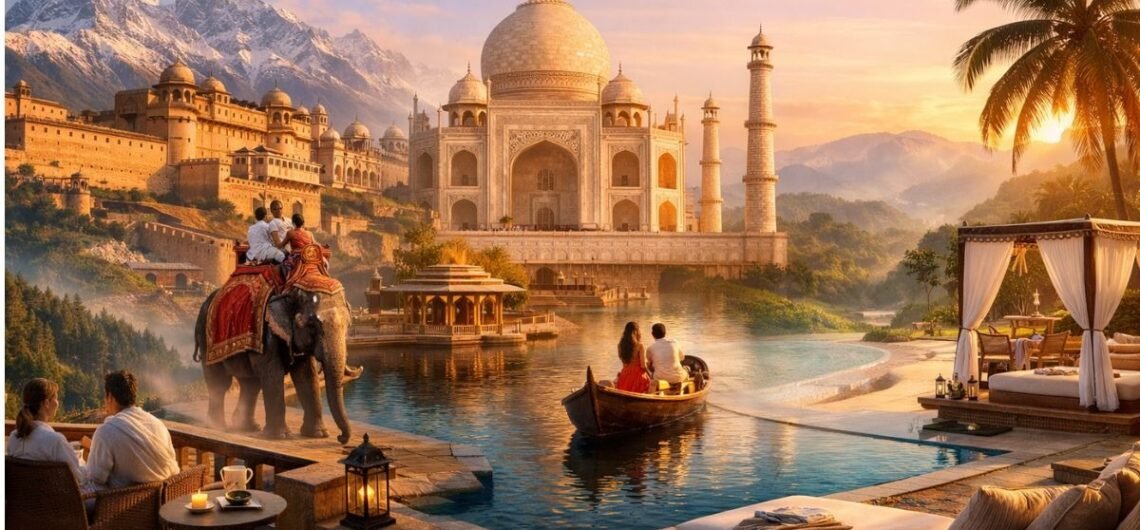
India is incredibly diverse – from snow-capped Himalayan peaks to tropical beaches, ancient temples to bustling cities. Whatever kind of getaway you crave, there’s something special here for every Indian traveler – families, couples, students, or solo adventurers. In the hills you’ll find colonial-era towns with clear mountain air; historic cities boast palaces and forts; spiritual centers invite meditation by sacred rivers; and wildlife parks are teeming with tigers, elephants, and more. Pack your bags for a trip across vivid landscapes and rich culture – India truly has it all.
Best Hill Stations in India
- Shimla, Himachal Pradesh: The famous “Queen of the Hills” was the British summer capital. Snow-capped Himalayan peaks, green forests and colonial-era buildings give Shimla old-world charm. It’s ideal for summer visits (April–June) when the weather is pleasantly cool.
- Manali, Himachal Pradesh: A scenic valley in Kullu, Manali is a top adventure hub. Snowy mountains, winding rivers and pine forests attract trekkers and honeymooners. Known for river rafting, paragliding and nearby Solang Valley, Manali is one of North India’s best-loved hill stations. Visit April–June or September–November to enjoy clear skies and avoid heavy snow.
- Darjeeling, West Bengal: Nestled among emerald tea gardens, Darjeeling offers stunning Himalayan views and a quaint old-world vibe. The Darjeeling Himalayan Railway (“Toy Train”) is a UNESCO site and rides past pine forests and steep hills. Plan 2–3 days here, and come October–March for clear views of Kanchenjunga (the world’s third-highest peak).
- Coorg, Karnataka: Often called the “Scotland of India,” Coorg is a lush green paradise of coffee and spice plantations. Misty valleys, waterfalls (Abbey, Iruppu), and wildlife (Nagarhole National Park) make Coorg popular for nature lovers. Pleasant year-round, Coorg is especially nice from October to March when mornings are foggy and temperatures are cool.
- Munnar, Kerala: This hill town in the Western Ghats is famous for its rolling tea estates and cool climate. Scenic drives through emerald hills and visits to Mattupetty Dam and Eravikulam National Park (home to Nilgiri tahr) are highlights. The best time is September to March after the monsoon, when the air is fresh and tea leaves are emerald-green.
- Ooty (Udhagamandalam), Tamil Nadu: A British-era hill station in the Nilgiri Hills, Ooty is known for its botanical gardens, mountain lakes and toy train. Nicknamed “Snooty Ooty,” it has colonial charm and flower-filled valleys. Visit from October to June to enjoy mild weather and the famous Ooty Rose Garden in bloom.
Incredible Places to Visit in India
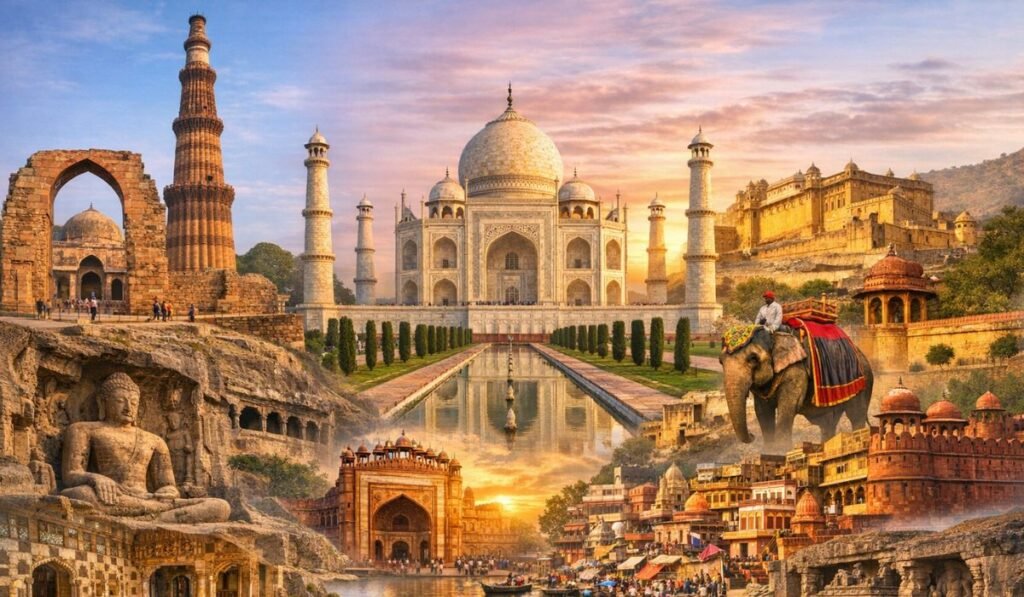
- Taj Mahal : India’s most iconic monument and UNESCO World Heritage site, the Taj Mahal is a marble mausoleum built by Emperor Shah Jahan as a symbol of love. Its stunning architecture and gardens draw millions of tourists every year. Come between October and March when the weather is cool and the skies clear for that perfect sunrise or sunset view.
- If you’re planning to witness the beauty of the Taj Mahal up close, choosing a well-organized tour can make your experience seamless. From comfortable travel to expert guides, a professionally curated package ensures you don’t miss any detail of this iconic monument. Explore our Taj Mahal tour packages to enjoy a hassle-free and memorable journey to Agra.
- Qutub Minar : This soaring 73-meter brick tower (built in 1193) is the world’s tallest brick minaret. It’s part of a complex of ruins with intricate Islamic-era carvings and early Indo-Islamic architecture. Located in South Delhi, Qutub Minar is open year-round, but visiting in winter (Nov–Feb) means less heat and a more enjoyable stroll through the surrounding archaeological park.
- Amer Fort: A majestic hilltop fort palace of red sandstone and marble, Amer Fort blends Rajput and Mughal architecture. Famous for its ornate halls, courtyards and the overlooking Maota Lake, it was built in the 16th century by Raja Man Singh. The best time to visit Jaipur’s forts is October to March, when the desert heat is milder.
- Ajanta & Ellora Caves (Aurangabad, Maharashtra): These two cave-temple complexes are UNESCO World Heritage sites showcasing ancient rock-cut art. Ajanta’s 30+ Buddhist caves (dating from 2nd century BCE) feature vibrant murals and sculptures, while Ellora’s caves (6th–10th centuries) include Hindu, Buddhist and Jain temples carved into basalt cliffs. Plan your trip in winter months (October–February) for dry weather and clear skies.
- Other highlights: Agra Fort (next to the Taj), Fatehpur Sikri (near Agra), the Red Fort in Delhi, the palaces of Jaipur and Udaipur, and historical cities like Varanasi (with its ancient Ghats and temples). Each has its own charm and is easiest to explore in the cooler months of the year.
Best Beach Destinations in India
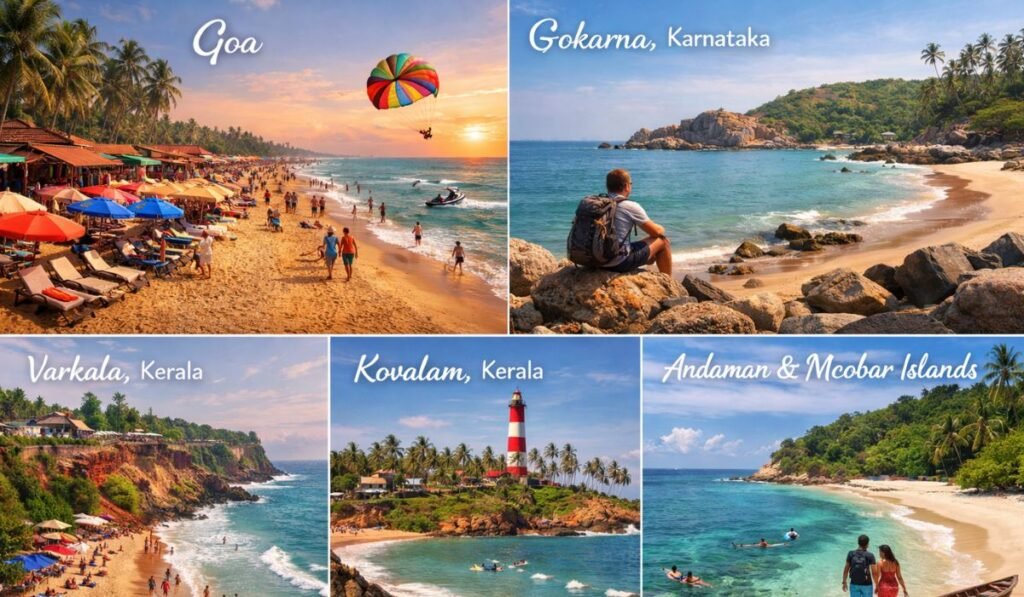
- Goa: India’s most famous beach state offers over 100 km of golden sands. From lively beaches like Baga and Anjuna (packed with shacks and nightlife) to quieter stretches in South Goa, Goa has something for everyone. It’s known for its laid-back vibe, seafood, water sports and Portuguese heritage. The best season is November to February (dry and sunny), though March–May are still warm and popular.
- Gokarna, Karnataka: Goa’s laid-back “cousin,” Gokarna has pristine, undeveloped beaches. Om Beach, Kudle Beach and Paradise Beach are scenic coves with a relaxed vibe. Gokarna is popular with backpackers, solo travelers and couples seeking tranquility. Visit in winter (November–February) to avoid the monsoon and enjoy beach yoga or quiet sunset walks.
- Varkala, Kerala: Perched on cliffs over the Arabian Sea, Varkala Beach is famous for its dramatic setting and Ayurvedic clinics. A holy shrine nearby means pilgrims mingle with tourists here. Varkala’s waters offer calm swimming and low-key nightlife. December to March is ideal for sunny days, though the winds can pick up after monsoon (mid-June to September).
- Kovalam, Kerala: South of Trivandrum, Kovalam features a string of crescent beaches and an iconic lighthouse. The palm-lined shores and calm seas make it a family-friendly spot. Kovalam is also known for Ayurvedic resorts and sunset cruises. Best visited between November and February when the skies are clear.
- Andaman & Nicobar Islands: A tropical paradise in the Bay of Bengal, these islands boast some of India’s most beautiful beaches. Havelock Island’s Radhanagar Beach (often voted Asia’s best) and Elephant Beach offer white sand and vibrant coral reefs. The turquoise waters are perfect for snorkeling and diving. The dry season (November–April) is peak time for beach holidays here.
Best Spiritual Places in India
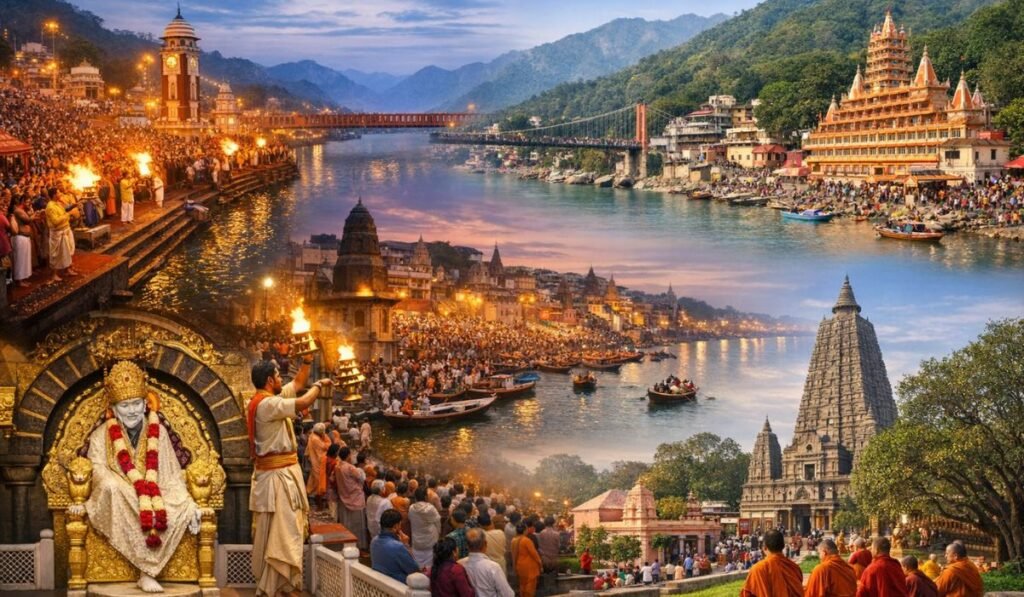
- Haridwar, Uttarakhand: One of Hinduism’s holiest sites, Haridwar is where the Ganges River descends from the Himalayas. The famous ghat Har Ki Pauri hosts the evening Ganga Aarti ceremony – a spectacular devotional ritual with lamps and chanting. Haridwar (literally “Gateway to God”) is a must-visit for pilgrims. The best months are October to March, when the weather is cool and the riverbanks are vibrant with devotees.
- Rishikesh, Uttarakhand: Just north of Haridwar, Rishikesh lies in the Himalayan foothills on the Ganges. It’s the world-famous “Yoga Capital of the World,” with countless ashrams and meditation centers. Adventure seekers also flock here for white-water rafting and trekking. Don’t miss Triveni Ghat for its sacred bathing area and nightly Aarti. Visit September to March to balance spiritual calm with pleasant weather.
- Varanasi (Kashi), Uttar Pradesh: One of the world’s oldest cities, Varanasi sits on the Ganges River and is a major Hindu pilgrimage destination. Pilgrims perform rituals at ghats like Dashashwamedh and Manikarnika, and the grand Ganga Aarti at dusk is mesmerizing. The city’s Kashi Vishwanath Temple (a sacred Jyotirlinga of Shiva) draws crowds year-round. Best avoided in the hottest summer; October to March is cooler and festival season.
- Shirdi, Maharashtra: Home to the Sai Baba Temple, Shirdi is a renowned pilgrimage site for devotees of Sai Baba. Followers of both Hindu and Muslim faiths visit this town to see the saint’s marble shrine and golden hall. Festivals like Guru Purnima (July) see huge gatherings. Cool season (November–February) is comfortable for temple visits.
- Bodh Gaya, Bihar: The most sacred Buddhist pilgrimage spot, Bodh Gaya is where Siddhartha Gautama attained enlightenment under the Bodhi Tree. The Mahabodhi Temple complex (UNESCO site) is a stunning monument reflecting Buddhist history. Monks from around Asia come to meditate here. Visit between October and March to avoid summer heat and monsoon.
Best Wildlife & Nature Destinations in India
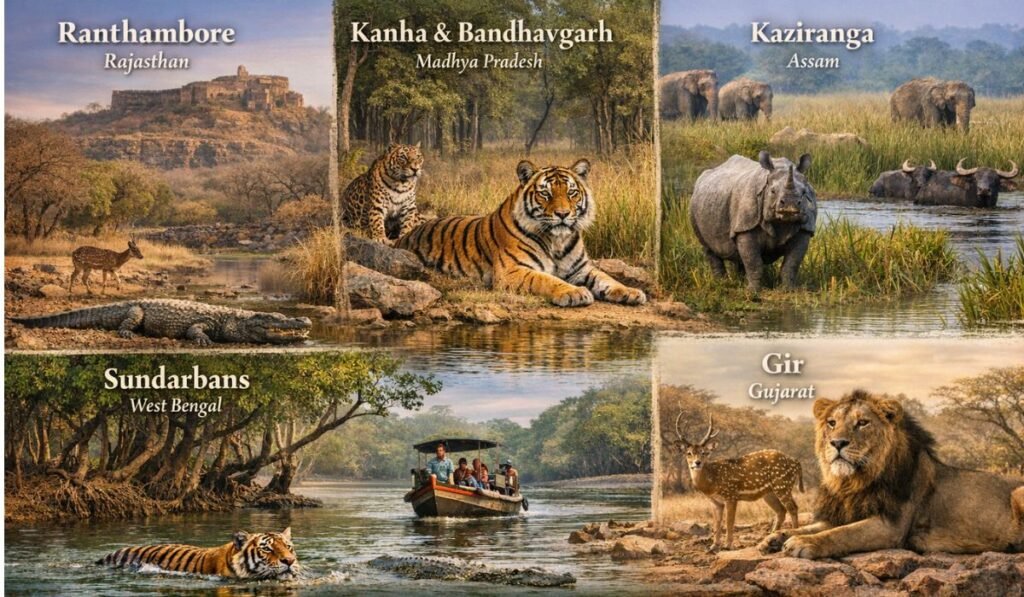
- Ranthambore National Park, Rajasthan: Famous for Bengal tigers, Ranthambore’s rocky landscape and historic fort make it unique. It’s part of India’s Golden Triangle circuit and one of the top tiger reserves. Other wildlife includes leopards and marsh crocodiles. The ideal time to spot animals is in the dry season (October to March), with March–April especially good for seeing tigers near waterholes.
- If spotting majestic Bengal tigers is on your bucket list, Ranthambore National Park is one of the best places in India. Many travelers combine it with Agra and Jaipur for a complete experience of wildlife and heritage. Check out our Ranthambore tiger safari tours for an unforgettable adventure in the wild.
- Kanha/Bandhavgarh National Park, Madhya Pradesh: These central India parks harbor a large population of Bengal tigers. Kanha is known as the “Queen of Central India,” with dense sal forests and grasslands. Bandhavgarh has a very high tiger density. Both parks are also excellent for leopards, deer and rare birds. Wildlife viewing is best in winter-spring (October–March) when vegetation thinns and animals gather at watering holes.
- Kaziranga National Park, Assam: Home to over half the world’s one-horned rhinoceroses, Kaziranga is a UNESCO World Heritage park. You’ll also see wild elephants, water buffalo and maybe tigers. The park’s tall grass and wetlands make it unlike others. Safari is best from November to April (park closes July–October for monsoon).
- Sundarbans National Park (West Bengal): A unique mangrove wilderness spanning India and Bangladesh, Sundarbans is the only place where the Royal Bengal Tiger swims in its tidal waters. It’s also rich in birdlife and saltwater crocodiles. Boat safaris in winter (November–March) are most comfortable for exploring the creeks safely.
- Gir National Park, Gujarat: The sole home of Asiatic lions, Gir is a dry deciduous forest offering unique wildlife. Besides lions, you can encounter leopards, antelopes, deer and many birds. October to February is prime time to visit Gir, when nights are cool and safari chances are high.
Tip: Wildlife viewing in India is generally best in the cooler dry months (October–March). Audley Travel notes that March is considered the best time of year to visit the wildlife parks of central India – when foliage is thin and animals, especially tigers, concentrate near water.
Best Time to Travel in India
India’s vast size means weather varies by region, but in general the winter season (October to March) is the sweet spot for travel. During these months, most of India enjoys sunny, dry days – ideal for sightseeing in cities and comfortable conditions on mountain treks or desert tours. New Delhi and northern India have clear blue skies, while southern beaches and hill stations also come alive. By contrast, the pre-monsoon summer (April–June) can be very hot, and the monsoon (June–September) brings heavy rains to much of the country. One exception is Ladakh (in the far north), which is best visited in summer (June–September) when the mountain passes are open, while the rest of India is rainy. For travel planning, aim for October–March to hit most destinations at their best.
Budget Travel Tips for Indians
- Choose cost-effective transport: India has an extensive rail and bus network. Opt for long-distance trains (book AC or Sleeper class in advance on IRCTC) or Volvo buses for major routes. This saves money compared to flights and lets you see the countryside. Within cities, use public buses, metro/subway (where available), and shared auto-rickshaws to cut costs.
- Stay in budget accommodations: India has many inexpensive options – guesthouses, heritage stays, hostels and homestays. Look for budget hotels on trusted booking sites or try services like OYO and Goibibo. Many heritage towns (like Jaipur, Udaipur) have haveli-stays that are affordable yet charming. In hill stations, consider dorms or camping for the cheapest nights.
- Eat local: Street food and local eateries serve the most affordable and authentic meals. Sample thali meals, dosas, chaat, parathas or biryani at small restaurants or dhabas; they are cheap, filling and delicious. Avoid upscale restaurants if you’re on a tight budget.
- Travel off-season or mid-week: Visiting popular places outside peak holidays or weekends can save on flights and hotels. The shoulder seasons (just before/after monsoon) often have lower rates but still decent weather. Also, consider the many free or cheap attractions (museums, temples, parks) that India offers.
- Use travel passes and deals: For example, AC chair car or sleeper class train passes can sometimes reduce costs. Look for combo tickets (e.g. Jaipur Heritage Pass) or prepaid city tourism cards. Always negotiate rates for taxis/rickshaws and shop around – bargaining is common.
Tips for First-Time Travelers in India
- Plan your itinerary: With so many options, focus on a region or theme per trip (e.g. North India’s Golden Triangle, Kerala backwaters, Himalayan hill stations). Allow travel days between destinations, as distances can be long. Check local festivals and holidays, which might affect opening hours or crowds.
- Pack smart: India’s climate varies greatly. If visiting multiple regions, pack layers (warm clothes for hills, light clothes for cities). Carry essentials like a reusable water bottle (drink only bottled or filtered water), sunscreen, a hat and sturdy shoes for walking. A scarf or shawl can help with sun, temple visits (cover shoulders) and dusty trains.
- Stay connected & safe: Get a local SIM card or portable Wi-Fi device for maps and ride apps. Always keep an ID (Passport/Aadhar copy). For solo women travelers, use only registered taxis or ride-hailing apps, avoid isolated areas at night, and dress modestly in more conservative regions. India is generally safe, but petty theft can occur, so keep valuables secure.
- Respect local culture: Learn a few phrases of the local language or Hindi (“namaste”, “thank you”, etc.). Shoes are often removed before entering temples or homes. When photographing people (especially women in rural areas), always ask permission. India is culturally diverse – a little awareness and politeness goes a long way.

Comments