
Agra sits just a few hours from Delhi, yet stepping into its old quarters feels like moving through several centuries of Mughal history in a single afternoon. This Ultimate Agra Travel Guide for International Tourists is built for first-time visitors who want more than a rushed photo stop at the Taj Mahal — covering how to get here, how long to stay, what to eat, what to see beyond the monument, and the practical details for a smooth first trip.
Most international travelers arrive knowing about the Taj Mahal and little else. In reality, Agra was the seat of Mughal power for generations, and that legacy shows up in its forts, tombs, gardens, markets, and food culture. Read on for a practical, experience-led picture of what to expect and how to plan around it.
Why Should International Tourists Visit Agra?
Agra earns its place on nearly every India itinerary for a simple reason: it holds one of the most recognizable buildings on Earth, the Taj Mahal, alongside a wider collection of Mughal-era architecture rare to find concentrated in one city.
Beyond the Taj Mahal, Agra is home to two more UNESCO World Heritage Sites — Agra Fort and, a short drive away, Fatehpur Sikri — giving travelers a genuine sense of how Mughal emperors lived, ruled, and built. That craftsmanship carries into modern Agra too: marble inlay work, leatherwork, and textiles are still produced by artisan families, and many workshops welcome visitors who want to see the process firsthand.
Food is another reason to slow down here. Agra’s Mughlai-influenced cuisine, street snacks, and iconic petha (a translucent sweet made from ash gourd) give the city its own culinary identity, distinct from Delhi or Jaipur.
Finally, Agra’s location makes it easy to combine with other destinations. It sits roughly midway between Delhi and Jaipur, which is why it’s almost always part of Golden Triangle itineraries covering all three cities.
How Many Days Do You Need in Agra?
Most first-time visitors can see Agra’s major highlights in one full day, while two days allow more time for heritage sites, food, shopping, and cultural experiences. Three days suits travelers who prefer a slower, more immersive trip.
One Day in Agra
A single day works well for travelers on a tight schedule, including many doing Agra as a day trip from Delhi. It’s realistic to cover the Taj Mahal and Agra Fort with a stop for lunch, though the pace will be brisk.
Two Days in Agra
Two days is the sweet spot for most travelers, leaving room for the Taj Mahal, Agra Fort, one or two smaller monuments such as Itmad-ud-Daulah’s Tomb or Mehtab Bagh, a local food experience, and some time in the markets.
Three Days in Agra
Three days allows a relaxed pace: the major monuments, a half-day trip to Fatehpur Sikri, a heritage walk through the old city, and time for shopping or a village experience without feeling rushed.
| Duration | What You Can Realistically Cover |
| 1 Day | Taj Mahal, Agra Fort, a quick local lunch |
| 2 Days | The above, plus Itmad-ud-Daulah or Mehtab Bagh, local food, and markets |
| 3 Days | The above, plus Fatehpur Sikri, Akbar’s Tomb, and a cultural or village experience |
Best Places to Visit in Agra
Taj Mahal
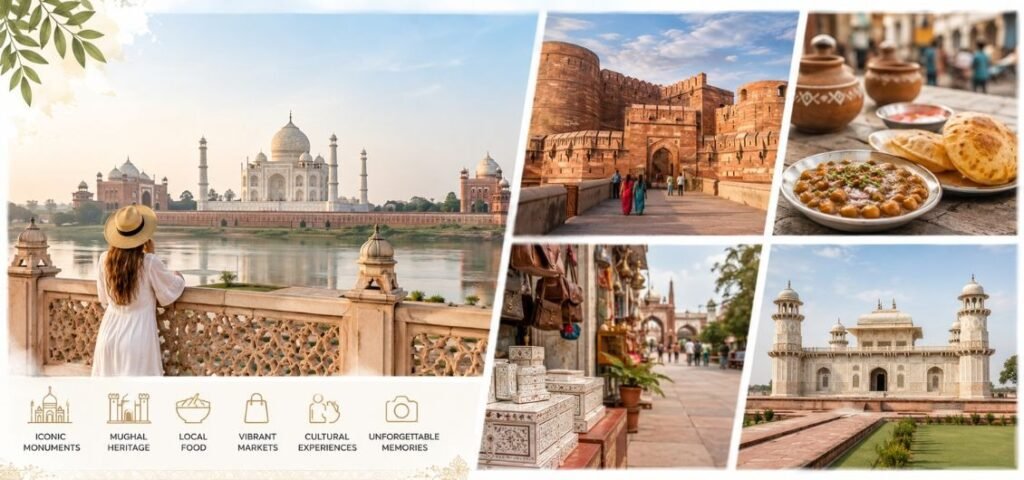
The Taj Mahal is a white marble mausoleum built by Emperor Shah Jahan in memory of his wife, Mumtaz Mahal, and remains one of the most visited monuments in the world. Its symmetry, inlay work, and changing color in different light are the main draws for photographers and first-time visitors alike.
Early morning visits tend to offer softer light and thinner crowds, and most travelers find a couple of hours enough for a relaxed visit. The monument has historically closed to general visitors on Fridays, and entry or security rules can change, so confirm current details before you travel. Travelers wanting a structured visit can also consider dedicated Taj Mahal tour packages.
Agra Fort
Agra Fort was the primary residence of Mughal emperors before the capital shifted to Delhi. Built largely under Akbar and later expanded by Shah Jahan, its red sandstone walls, courtyards, and palace buildings reflect several generations of Mughal rule, and certain vantage points offer distant views of the Taj Mahal itself.
Mehtab Bagh
Mehtab Bagh is a garden complex directly across the river from the Taj Mahal, originally designed as a Mughal moonlight garden. It’s popular with photographers for its symmetrical layout and unobstructed river-facing views of the monument, especially around sunset.
Itmad-ud-Daulah’s Tomb
Built for Mirza Ghiyas Beg, a senior Mughal courtier, this tomb is known for its delicate marble inlay work and is often nicknamed the “Baby Taj” — a popular nickname rather than an official historical name. Architecturally, it’s considered a precursor to the design later refined in the Taj Mahal.
Akbar’s Tomb, Sikandra
Located on the outskirts of the city, Akbar’s Tomb blends architectural styles that reflect Akbar’s reputation for cross-cultural governance. It draws smaller crowds than the central monuments, which makes it appealing for history enthusiasts who want a quieter, more detailed visit.
Fatehpur Sikri
Fatehpur Sikri was briefly the Mughal capital under Akbar before being abandoned, largely due to water shortages. The well-preserved red sandstone city is usually visited as a half-day trip and appeals to travelers interested in Mughal court life beyond the monuments in the city center.
Best Things to Do in Agra Beyond the Taj Mahal
Agra rewards travelers who wander beyond the ticketed monuments. Walking through the older parts of the city reveals narrow lanes and everyday street life that contrasts sharply with the grandeur of the Taj Mahal. Worthwhile experiences include:
- Watching artisans practice marble inlay and other traditional crafts
- Joining a heritage walk through Agra’s historic neighborhoods
- Sampling street food away from the main tourist areas
- Browsing traditional markets for textiles, leather, and handicrafts
- Spending unhurried time photographing Mughal architecture in different light
For travelers who want structure around the old city, a guided Mughal heritage walking experience in Agra is a useful way to understand these neighborhoods rather than exploring them blind.
Best Time to Visit Agra
Traveler preferences vary, so no single month is universally “best” — it depends on how much heat, crowds, and photography conditions matter to you.
October to March
Agra’s most popular stretch, with cooler, drier weather comfortable for long hours outdoors. Expect larger crowds, particularly around the winter holidays.
April to June
Temperatures climb significantly, so early morning visits matter for comfort. Fewer tourists visit during this stretch, which can mean a quieter experience at the major sites.
July to September
Monsoon season brings humidity and occasional heavy downpours, but also greener surroundings and dramatic skies that photographers sometimes prefer. Crowds thin out, though outdoor plans should stay flexible around the weather.
Sunrise visits to the Taj Mahal generally offer the softest light and thinner crowds, while sunset suits garden viewpoints like Mehtab Bagh. Whatever season you choose, check the forecast a few days ahead.
How to Reach Agra
Delhi to Agra by Train
Fast train services connect Delhi and Agra with multiple departures most days, making the journey a comfortable, weather-independent option for a day trip or the start of a longer visit. Travelers who prefer a fully planned experience can look at a Taj Mahal tour by superfast train that bundles the rail journey with sightseeing.
Delhi to Agra by Car
Traveling by road offers door-to-door convenience and the flexibility to stop along the way, including at towns like Mathura. The Yamuna Expressway has made the drive considerably quicker than older routes, and a private car suits families or small groups who want control over their schedule.
Jaipur to Agra
Agra is the natural midpoint on the classic Delhi–Agra–Jaipur route, and most travelers cover this leg by car or train as part of a longer Golden Triangle trip. The road between the two cities is well-traveled and commonly used by tour operators.
Agra by Air
Agra has an airport, but scheduled commercial flights are limited compared with other major Indian cities. In practice, almost all international tourists reach Agra by train or road rather than by air.
Getting Around Agra
Once in Agra, common ways to get around include:
- Private car with driver, for door-to-door convenience across multiple sites
- Auto-rickshaws and e-rickshaws for shorter hops — useful near the Taj Mahal, where a pollution-control zone restricts regular vehicles close to the monument
- Local taxis, best arranged through your hotel or a reputable provider
- Walking, which works well near the Taj Mahal and in the old city lanes
Agree on fares before starting a ride where meters aren’t used, and stick to hotel-recommended or otherwise reputable providers rather than the first driver who approaches you at a monument gate.
Where to Stay in Agra
Where you base yourself depends on your itinerary. Staying near the Taj Mahal’s east or west gates suits travelers prioritizing an early sunrise visit, while central Agra offers easier access to restaurants, markets, and a wider range of accommodation styles.
Options span luxury properties, mid-range hotels, and budget guesthouses; specific names, prices, or ratings aren’t included here since availability changes, so compare current listings closer to your travel dates. As a general rule, pick proximity to the Taj Mahal if an early visit is your priority, and a central location if you’ll spend more time in the markets and old city.
What to Eat in Agra
Agra’s food culture draws on rich Mughlai traditions alongside distinctly local street food. Signature experiences include:
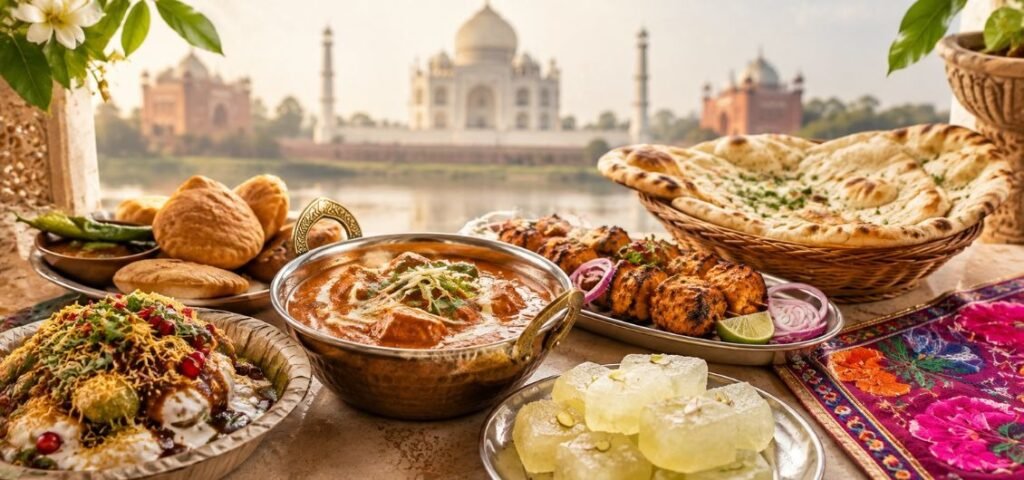
- Mughlai cuisine — slow-cooked meats, kebabs, and rich gravies with roots in the Mughal royal kitchens
- Petha — Agra’s best-known sweet, made from ash gourd and available in many flavors
- Bedai and kachori — popular spiced breakfast items served with curry
- Chaat — tangy, spiced street snacks found throughout the city
- Paratha — stuffed flatbreads served at both casual and formal eateries
- Vegetarian options, which are widely available across price ranges
Street food is a big part of Agra’s appeal, though as anywhere, choose busy, high-turnover stalls and stick to bottled or purified water. For visitors who want a guided introduction to the local food scene, an Agra food tour for exploring local flavors is a practical way to sample multiple dishes with some local context.
Shopping in Agra
Agra is well known for marble inlay products (often called pietra dura), a craft associated with artisans who maintain Taj Mahal-era techniques. Other common purchases include handicrafts, textiles, leather goods, and spices.
Bargaining is common in local markets, so compare prices and quality across a few shops before buying, particularly for higher-value items. Be cautious of guides or drivers who push you toward a single “recommended” shop, since commission arrangements are common in tourist areas.
Exploring Agra’s Spice Markets
Agra’s traditional markets, including areas like Kinari Bazaar, offer a sensory introduction to local life that the monuments don’t — stalls piled with spices, dried fruits, and everyday goods amid the activity of a working city market. They’re also a good, low-cost setting for street photography.
For travelers who want a structured visit rather than wandering alone, an Agra spice market experience helps navigate the market with some cultural context.
Experience Local Life Around Agra
Monuments tell only part of Agra’s story. Rural communities on the city’s outskirts offer a look at traditional agriculture, everyday domestic life, and crafts that rarely make it into a typical sightseeing itinerary. Travelers interested in this side of Agra might consider a village experience near the Taj Mahal that introduces daily life in the surrounding countryside.
Agra Travel Tips for International Tourists
A short checklist that covers most first-time concerns:
- Carry a valid passport and any required travel documents
- Keep digital and physical copies of important documents
- Dress modestly at religious and heritage sites
- Carry drinking water, especially in warmer months
- Wear comfortable, closed footwear for walking on uneven surfaces
- Use sun protection — hat, sunscreen, and sunglasses
- Be cautious with unofficial guides who approach you at monument gates
- Confirm transportation arrangements in advance where possible
- Keep valuables secure and avoid displaying expensive items unnecessarily
- Respect photography restrictions inside monuments
- Follow posted monument rules, including security screening
- Be respectful toward local communities and ask before photographing people
Before You Go — Travel Information to Verify Monument entry rules, ticket booking requirements, and current opening days Train schedules, fares, and seat availability Weather forecast for your specific travel dates Current visa and entry requirements for India Health and vaccination guidance from an official source Currency exchange options and card acceptance in Agra
Is Agra Safe for International Tourists?
Agra is a heavily visited tourist city, and most trips go smoothly with the same general awareness you’d use in any unfamiliar city. Sticking to official transport and reputable tour providers, keeping valuables secure, and avoiding isolated areas late at night all reduce the usual travel risks.
Be cautious about unsolicited offers from strangers near monuments — an unofficial “guide,” a shopping tip, or an unusually cheap tour. Respect local customs, particularly around dress near religious sites. As with any destination, no city is completely risk-free, but ordinary precautions go a long way in Agra.
What to Wear in Agra
Clothing choices depend on the season. In summer, lightweight, breathable fabrics help manage the heat; winter visits benefit from layers, since mornings can be cool and afternoons warm.
Comfortable walking shoes matter more than style, given how much walking is involved at most monuments. Modest clothing — covering shoulders and knees — is advisable at religious and heritage sites, and a hat or scarf offers useful sun protection year-round.
Suggested Agra Itineraries
One-Day Agra Itinerary
- Early morning: Taj Mahal
- Breakfast: local breakfast spot or hotel
- Late morning: Agra Fort
- Lunch: Agra Fort
- Afternoon: Itmad-ud-Daulah’s Tomb
- Evening: Mehtab Bagh or another sunset-friendly spot before departure
Two-Day Agra Itinerary
Day 1: Taj Mahal, Agra Fort, and a local food experience in the evening.
Day 2: A heritage or cultural experience such as a walking tour or village visit, one additional monument (Itmad-ud-Daulah’s Tomb or Akbar’s Tomb), and time for shopping in the markets.
Agra Add-On to the Golden Triangle
Agra rarely stands alone on an India itinerary — it’s usually paired with Delhi and Jaipur as part of the classic Golden Triangle route. A 3-day Golden Triangle itinerary covers all three cities at a brisk but manageable pace.
Private Tour or Independent Travel in Agra?
Both approaches work, and the right choice depends on your priorities.
| Factor | Independent Travel | Private Tour |
| Flexibility | High — set your own pace | Moderate — structured but often customizable |
| Local knowledge | Depends on your own research | Built in, via driver or guide |
| Transportation | Arranged as you go | Pre-arranged, door-to-door |
| Time management | Requires more planning | Generally handled for you |
| Cost | Can be lower with careful planning | Often higher, but includes convenience |
| Best for | Experienced independent travelers | First-time visitors to India |
Independent travel suits experienced travelers comfortable arranging their own transport and tickets. A private, guided setup tends to work better for first-time visitors to India who’d rather not navigate logistics and monument entry systems alone. Companies like Taj Mahal Private Trip offer a private Agra travel experience built around private transportation and guided sightseeing — a practical option if convenience matters more than going it alone, though it’s worth comparing a few providers rather than assuming any one is automatically the right fit.
How to Plan Your First Agra Trip
- Decide how many days you have available for Agra
- Choose your preferred travel season based on heat and crowd tolerance
- Select accommodation based on proximity to the Taj Mahal or the city center
- Plan your Taj Mahal visit timing, ideally early morning
- Decide between train, car, or another transport option from Delhi or Jaipur
- Choose additional attractions based on your available time
- Reserve tours in advance where relevant, especially for popular time slots
- Plan food and shopping experiences alongside the main sightseeing
- Check current monument rules and entry requirements shortly before you travel
Frequently Asked Questions About Visiting Agra
Is Agra worth visiting for international tourists?
Yes. Beyond the Taj Mahal, Agra offers Mughal architecture, food, markets, and cultural experiences that make it worth more than a rushed day trip for most travelers.
How many days are enough for Agra?
One full day covers the highlights, but two days give a more comfortable pace with time for food, markets, and an extra monument.
What is the best time to visit Agra?
October to March offers the coolest, most comfortable weather, though it also brings the largest crowds — the “best” time really depends on your tolerance for heat versus crowds.
How do I travel from Delhi to Agra?
Fast trains and private cars are the most common options; both are comfortable and significantly quicker than older road routes.
Can I visit the Taj Mahal and Agra Fort in one day?
Yes, this is a common and realistic combination for a single-day visit, especially if you start early at the Taj Mahal.
What should I eat in Agra?
Try Mughlai dishes, petha, bedai and kachori for breakfast, and local chaat — vegetarian options are widely available throughout the city.
What should international tourists know before visiting Agra?
Confirm current monument rules, dress modestly at heritage and religious sites, carry water, and use reputable transport providers.
Is Agra suitable for a Golden Triangle itinerary?
Yes, Agra is the standard midpoint between Delhi and Jaipur and is included in almost every Golden Triangle itinerary.
What should I buy in Agra?
Marble inlay items, leather goods, textiles, and spices are among the most popular purchases, though it’s worth comparing quality and prices across shops.
Is a private Agra tour worth considering?
For first-time visitors to India who’d prefer not to manage transport and logistics independently, a private tour can simplify the trip considerably.
Final Thoughts
Agra is far more than a quick stop to photograph the Taj Mahal. Between its Mughal heritage, food culture, markets, and nearby village life, it rewards travelers who give it a full day or two rather than a rushed few hours — and its location between Delhi and Jaipur makes it easy to fold into a longer India trip.

Comments