
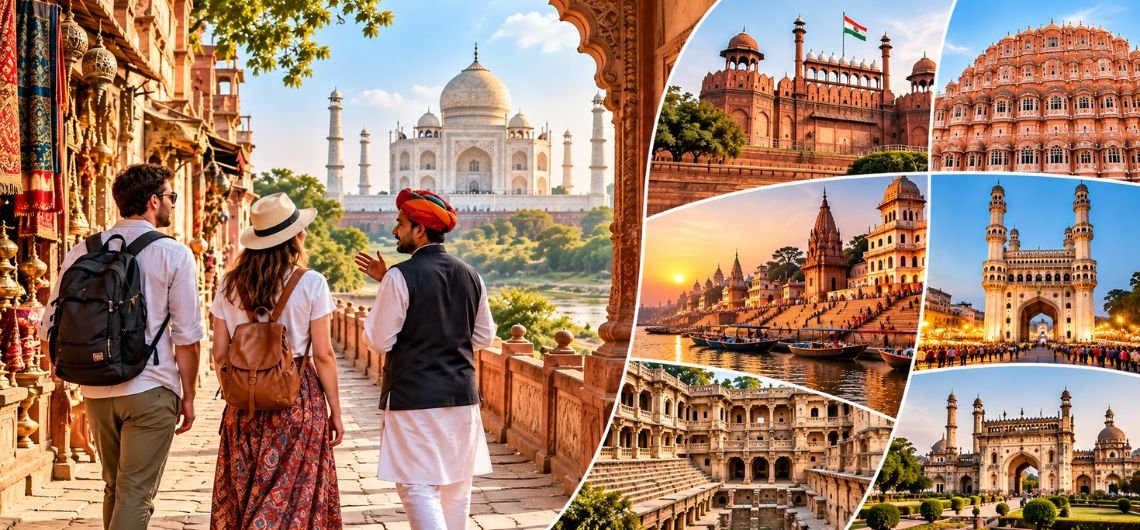
India is home to heritage walks that reveal centuries of architecture, royal history, religious traditions, local communities, and everyday culture. From Mughal-era Agra and historic Delhi to Jaipur’s royal streets and Varanasi’s ancient lanes, heritage walks offer a slower and more immersive way to understand India’s past.
This guide covers eight notable destinations for heritage walks in India, helps you match a city to your interests, and shares practical tips on what to wear, what to carry and how to walk responsibly.
What Is a Heritage Walk?
A heritage walk is a guided (or self-guided) walk through a historic area. The focus is on streets, buildings, stories and living culture rather than a checklist of famous sights.
A conventional sightseeing tour usually moves between major attractions by vehicle. A heritage walk slows down. On foot you notice carved doorways, courtyard houses, shrines tucked into lanes, craft workshops and the way a neighbourhood is laid out around a market or a river.
Most walks include a mix of:
- Architecture and the periods it represents
- Local stories tied to specific streets or buildings
- Markets, crafts and food traditions
- Religious buildings and community spaces
Because many of these areas are lived-in neighbourhoods, a good heritage walk is also an exercise in walking through living history. That means photographing respectfully and interacting kindly with residents.
Why Choose a Heritage Walk in India?
Heritage walks suit travelers who want context, not just photographs. The main benefits:
- Lesser-known historical details. Guides point out features that are easy to miss from a car window.
- Local neighbourhoods. You see how people live around historic sites today.
- Architecture in context. A haveli, mosque or gateway makes more sense when you see the street it belongs to.
- Place-specific stories. Histories attached to particular corners, courtyards and markets.
- Beyond the headline attractions. Routes often link smaller monuments and viewpoints.
- Community connection. Conversations with artisans, shopkeepers and residents.
- Better photographs. Street scenes and architectural details are easier to capture at walking pace.
In short: Heritage walks are useful for travelers who want to understand the history and culture behind India’s famous monuments rather than simply visiting them for photographs.
8 of the Best Heritage Walks in India for History Lovers
The eight destinations below are notable places for heritage walking in India, each with a different historical character. They are not ranked. Which one suits you depends on the period and atmosphere you want to explore.
| Destination | Heritage Experience | Best For |
| Agra | Mughal heritage and village walking routes | Mughal history |
| Delhi | Old Delhi and historic neighbourhoods | Multi-era history |
| Jaipur | Old City and royal heritage | Rajput architecture |
| Varanasi | Historic lanes and riverfront | Religious & cultural history |
| Hyderabad | Old City heritage | Deccan history |
| Ahmedabad | Historic pols and old city | Architecture & urban history |
| Lucknow | Nawabi-era heritage | Indo-Islamic culture |
| Kolkata | Colonial-era heritage | British-era architecture |
1. Mughal Heritage Walk in Agra
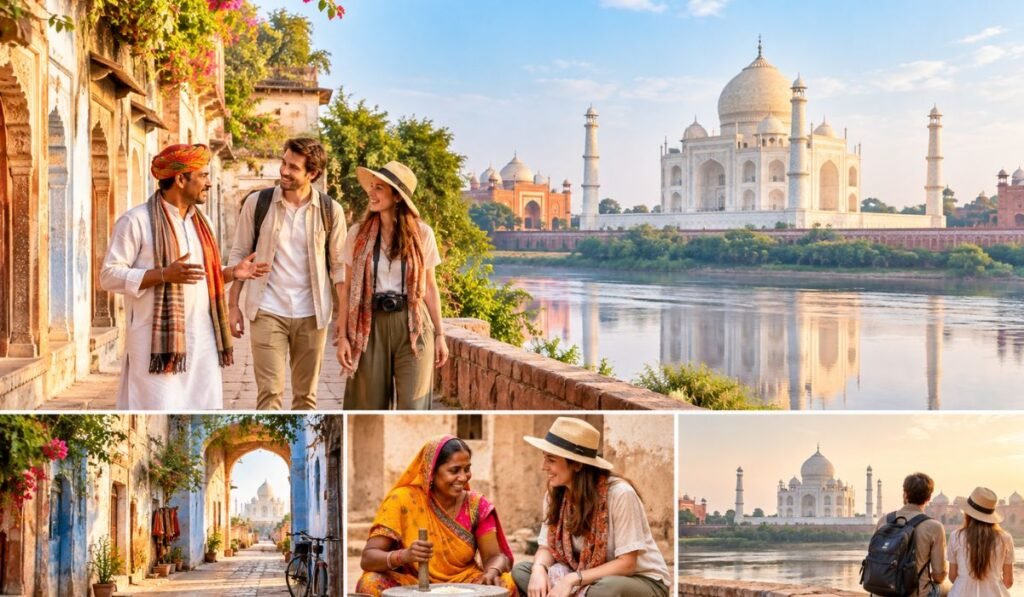
Agra was a major Mughal capital, and its story is told in more than the Taj Mahal. A heritage walk here looks at the everyday landscape around the monuments: riverbank paths, old neighbourhoods, historic structures and the communities that live beside them.
One well-known route centres on Kachhpura village and the Yamuna riverside. Walkers move through traditional lanes, meet local residents and reach viewpoints with a different angle on the Taj Mahal. Seeing the monument from the river side, away from the ticket queues, changes how you understand its setting.
Travelers who want to explore this side of Agra in greater depth can consider a Mughal Heritage Walk in Agra, where the focus extends beyond the city’s headline monuments.
Why it pairs well with a Taj Mahal visit:
- The Taj Mahal shows Mughal architectural ambition. The walk shows the surrounding landscape and community.
- The pace is slower, which balances a day of major monuments.
- The viewpoints and village lanes offer photographs most visitors don’t take.
Those interested in rural life and village heritage may also look at the Taj Mahal Village Tour, which centres on local life around Agra’s Mughal-era heritage.
2. Old Delhi Heritage Walk
Old Delhi, the walled city once known as Shahjahanabad, is one of India’s densest historic neighbourhoods. Founded in the 17th century under the Mughals, it still revolves around Chandni Chowk, the Jama Masjid area and a web of narrow lanes.
A walk here typically covers:
- Chandni Chowk and its specialised markets
- The Jama Masjid surroundings
- Havelis, some restored and some fading
- Food traditions, from street snacks to old sweet shops
- Layers of architecture from Mughal, colonial and later periods
Dense neighbourhoods like this work especially well on foot. Many details, such as carved brackets, old signage and hidden courtyards, are only visible at street level. Travelers building a wider northern India trip can also look at Delhi tour packages to combine a walk with other city highlights.
3. Jaipur Heritage Walk
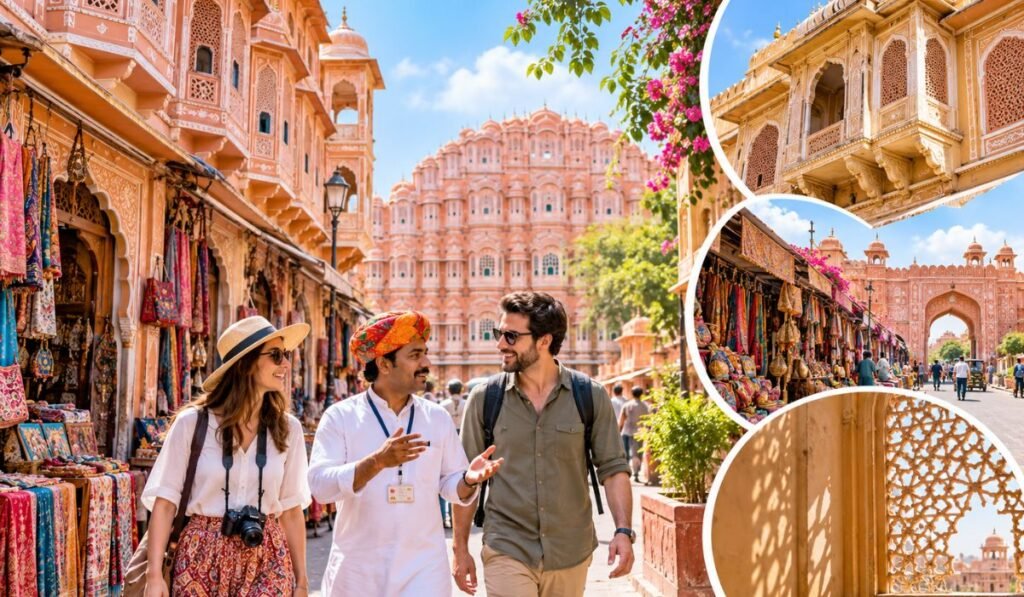
Jaipur’s Old City is a good example of Rajput-era urban planning. Founded in the early 18th century, the walled city was laid out on a grid, and its historic core is recognised as a UNESCO World Heritage Site.
Heritage walks here tend to focus on:
- The City Palace area and the surrounding streets
- Havelis with painted facades and courtyards
- Traditional markets, each associated with particular crafts
- The historic city gates
- Rajput architectural details such as jharokhas (projecting balconies) and jalis (carved screens)
Walking shows how planning, trade and royal patronage shaped the city, and how craft traditions continue in the same streets.
4. Varanasi Heritage Walk
Varanasi is one of India’s most important religious and cultural centres, and its heritage is closely tied to living practice. Walks generally combine the riverfront ghats with the lanes behind them.
Typical themes include:
- The ghats and their role in daily and ritual life
- Temples, shrines and old residential neighbourhoods
- Local crafts, music and food
- Architecture shaped by the river and by centuries of pilgrimage
Approach Varanasi with respect. Many places are active sites of worship and mourning, so follow your guide’s advice on photography and behaviour. Walking gives a very different perspective from a boat ride, because you see how the lanes and ghats connect.
5. Hyderabad Heritage Walk
Hyderabad’s Old City reflects Deccan history and a blend of Islamic and regional influences. The Charminar, built in the late 16th century, anchors the area.
A heritage walk here may include:
- The Charminar and its surrounding streets
- Historic markets such as Laad Bazaar, known for bangles
- Traditional architecture and old mansions
- Local crafts and long-standing food traditions, including Irani cafés and Hyderabadi cuisine
It’s a good choice if you want to understand a very different historical thread from the Mughal north.
6. Ahmedabad Heritage Walk
Ahmedabad’s walled city was inscribed as India’s first UNESCO World Heritage City. It is known for its pols, clustered residential neighbourhoods with intricately carved timber houses, shared courtyards and community spaces.
Walks here typically highlight:
- Pol houses and their wooden facades
- Historic streets and community gathering spots
- Chabutaras (traditional bird feeders), shrines and shared courtyards
- Traditional craft and textile heritage
It’s especially rewarding for travelers interested in architecture and urban history, since the whole neighbourhood is the exhibit.
7. Lucknow Heritage Walk
Lucknow flourished under the Nawabs of Awadh, and its heritage blends Persian-influenced courtly culture with local traditions. Walks in the old city and around the Bara Imambara complex reveal that layered identity.
Expect to encounter:
- Nawabi-era monuments and the Bara Imambara area
- Indo-Islamic architectural influences
- Old markets, including those known for chikankari embroidery
- Awadhi culinary traditions
It’s a strong pick for travelers curious about courtly culture, language, food and craft rather than fortifications.
8. Kolkata Heritage Walk
Kolkata was the capital of British India until 1911, and its cityscape reflects that history alongside a rich Bengali cultural life.
Heritage walks may cover:
- Colonial-era architecture around the old administrative and commercial districts
- British-era buildings and churches
- Cultural institutions and historic educational areas
- Older neighbourhoods and traditional Bengali mansions
Kolkata suits travelers who want to see how colonial and local histories overlap in a single city.
Which Heritage Walk in India Is Right for You?
This table matches interests to destinations. It isn’t a ranking.
| Traveler Interest | Destination to Consider |
| Mughal history | Agra |
| Multiple historical periods | Delhi |
| Royal architecture | Jaipur |
| Religious & living culture | Varanasi |
| Deccan history | Hyderabad |
| Traditional urban architecture | Ahmedabad |
| Nawabi history | Lucknow |
| Colonial history | Kolkata |
Why Agra Is More Than the Taj Mahal
Many itineraries treat Agra as a single-monument stop. In practice the city’s historical experience is broader:
- The major monuments: the Taj Mahal, Agra Fort and Itmad-ud-Daulah
- Mughal-era neighbourhoods: older quarters with their own architecture and stories
- The Yamuna landscape: the river shaped where and how Mughal buildings were placed
- Local markets and crafts: long-standing trades and bazaars
- Food traditions: from Mughlai dishes to traditional sweets
- Village heritage: communities on the outskirts with their own connection to the city’s past
Spending time on even one of these gives the famous monuments more context.
How to Combine a Heritage Walk With a Taj Mahal Visit
Option 1: One-Day Agra Experience
- Morning: Taj Mahal
- Late morning: Agra Fort
- Afternoon: Lunch
- Afternoon: Mughal Heritage Walk
- Evening: Return to Delhi
Agra is roughly three to four hours from Delhi by road, so an early start helps.
Option 2: Two Days in Agra
- Day 1: Taj Mahal at sunrise, Agra Fort, Itmad-ud-Daulah
- Day 2: Heritage walk, local markets and a food experience
A night in Agra gives a more relaxed pace. Remember that the Taj Mahal is closed on Fridays.
If you want to combine the Taj Mahal with cultural and heritage experiences, explore the available Taj Mahal Tour Packages and choose an itinerary that gives you time beyond the main monument.
Tips for a Responsible Heritage Walk
Responsible habits protect both the sites and the people who live around them.
- Ask before photographing people. A smile and a gesture go a long way.
- Respect religious spaces. Follow dress codes and photography rules.
- Don’t litter. Carry waste until you find a bin.
- Don’t touch fragile structures. Old plaster, paint and carvings are easily damaged.
- Support local businesses where appropriate, such as tea stalls and craft shops.
- Listen to local guides. They know what’s appropriate in each area.
- Avoid treating residential communities like photo sets. These are people’s homes.
Can You Combine Heritage Walks With Food Experiences?
Often, yes. In many old cities, food and history are hard to separate. Markets grew around trades, and recipes travelled with rulers, merchants and migrants. Tasting local dishes on a walk adds another layer to what you see.
Agra is a good example, with its Mughlai cooking, traditional sweets and old market areas. In Agra, travelers interested in combining historical exploration with local cuisine can also consider an Agra Food Tour, which introduces traditional dishes, street-food areas and culinary stories alongside the city’s cultural experience.
Heritage Walk vs Traditional Sightseeing Tour
Neither format is universally better. They serve different goals.
| Heritage Walk | Traditional Sightseeing |
| Primarily explored on foot | Usually vehicle-based |
| Focuses on streets & neighbourhoods | Focuses on major attractions |
| More interaction with local surroundings | More structured sightseeing |
| Often slower paced | Usually faster paced |
| Strong focus on stories and context | Strong focus on monuments |
| Good for culture-focused travelers | Useful for covering more attractions |
Many travelers mix both: major monuments for the highlights, a walk for depth.
Frequently Asked Questions
What is a heritage walk in India?
A heritage walk is a guided or self-guided walk through a historic area, focused on architecture, local stories and living culture rather than a checklist of monuments. Most last one to three hours and cover old lanes, markets, religious buildings and neighbourhoods that vehicles cannot easily reach.
Which Indian cities are famous for heritage walks?
Agra, Delhi, Jaipur, Varanasi, Hyderabad, Ahmedabad, Lucknow and Kolkata are notable destinations for heritage walks in India. Each reflects a different historical layer, from Mughal and Rajput to Deccan, Nawabi and colonial-era heritage, so the right choice depends on the period you want to explore.
Is a heritage walk suitable for first-time visitors to India?
Yes. Heritage walks are usually easy-paced, and a guide provides context that helps first-time visitors make sense of unfamiliar streets. Choose a walk of moderate length, start early in hot months, and check the route for uneven ground or steps if you have limited mobility.
What should I wear for a heritage walk?
Wear comfortable, closed walking shoes and breathable clothing suited to the weather. Carry a hat, sunglasses and sunscreen in hot months. Cover shoulders and knees around temples, mosques and gurdwaras, and bring a scarf or light layer that is easy to add when needed.
How long does a heritage walk usually take?
Most heritage walks take between one and three hours, depending on the route and how much time is spent at stops such as markets, viewpoints or tea breaks. Some operators combine a walk with monuments or meals in a half-day format, so check the itinerary before booking.
Is Agra good for a heritage walk?
Yes. Agra offers Mughal-era monuments alongside neighbourhoods, markets and riverside village routes that show life beyond the Taj Mahal. A heritage walk here can add context to major sites and reveal a quieter, more local side of the city.
Can I combine a heritage walk with a Taj Mahal visit?
Yes. Many travelers pair a heritage walk with the Taj Mahal and Agra Fort, either on a long day trip from Delhi or across two days in Agra. Staying overnight gives a more relaxed pace. Note that the Taj Mahal is closed on Fridays, so plan around it.
Final Thoughts
Heritage walks offer a different way to experience India. Instead of seeing history only through monuments and museums, travelers can discover it through old streets, neighbourhoods, architecture, markets, food and local traditions. For travelers interested in Mughal history, Agra offers an especially interesting combination of monumental heritage and everyday cultural life.
If Agra is part of your India itinerary, explore the heritage experiences available through Taj Mahal Private Trip and choose an itinerary that matches your interests and available time.

Comments