
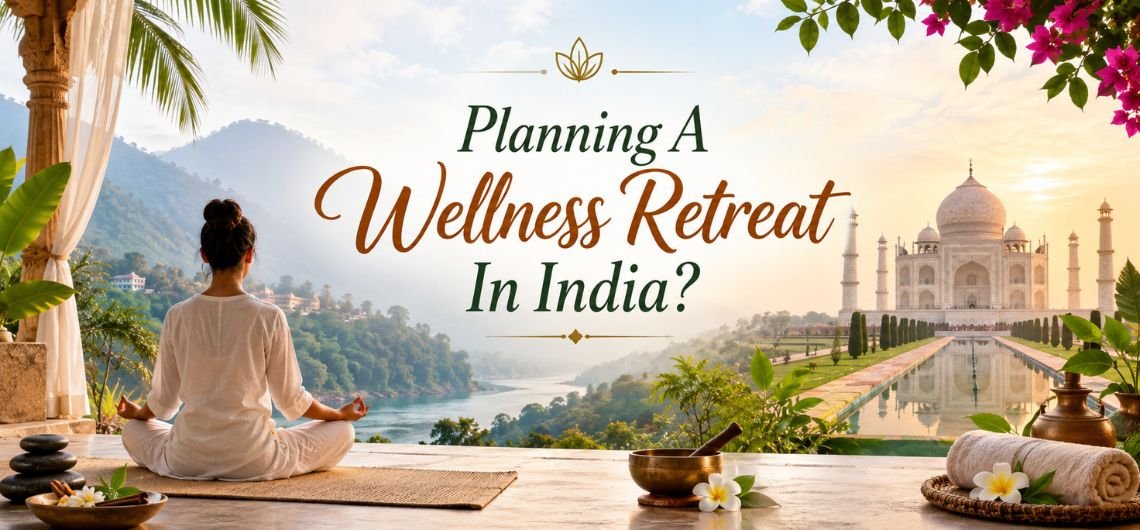
Few countries offer the range of wellness traditions found in India. It is the birthplace of yoga, the home of Ayurveda, and a country where meditation and mindfulness have been practiced for thousands of years. If you’re planning a wellness retreat in India, you have an unusually wide set of choices: mountain ashrams in the Himalayas, Ayurvedic centers in Kerala’s backwaters, beach resorts in Goa, and quiet meditation halls in Himachal Pradesh. Many travelers also choose to pair their retreat with India’s cultural side — its monuments, food, and heritage sites — for a trip that restores the body and satisfies curiosity in equal measure. This guide walks through what to expect, where to go, how to choose a retreat, and how to plan a trip that blends wellness with sightseeing.
What Is a Wellness Retreat in India?
A wellness retreat in India is a structured stay built around practices meant to support physical, mental, or spiritual well-being. No two retreats look exactly alike, but most draw from a similar toolkit:
- Daily yoga sessions, often at sunrise or sunset
- Guided meditation and breathing exercises (pranayama)
- Ayurvedic consultations and treatments
- Wellness-focused meals, often vegetarian or Ayurvedic
- Spa therapies and relaxation treatments
- Mindfulness or reflection activities
- Nature walks or time in quiet, natural surroundings
- Optional digital detox periods
- Cultural or spiritual excursions
The style, intensity, and length of these programs vary a great deal. Some retreats are simple and traditional — a mat, a teacher, and an ashram routine. Others are closer to luxury wellness resorts, with private treatment rooms, curated menus, and five-star accommodation. Neither approach is “better”; the right one depends on what you’re looking for.
Why Choose India for a Wellness Retreat?
Traditional Wellness Practices
India’s wellness traditions aren’t imported trends — they’re rooted in centuries of practice. Ayurveda, India’s traditional system of medicine, informs everything from diet to massage therapy at many retreats. Yoga and pranayama are taught by instructors who often trained within lineages passed down through generations. This depth is part of why so many travelers specifically seek out India rather than a wellness resort closer to home.
Diverse Destinations
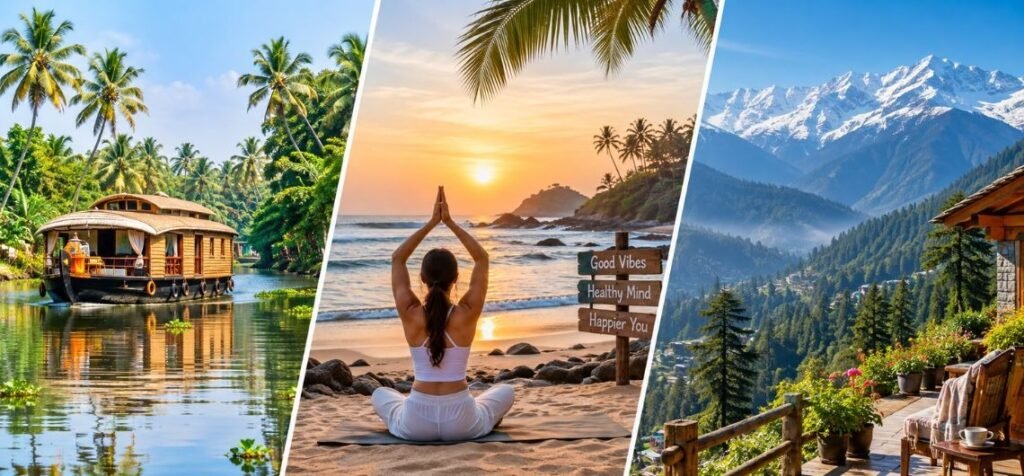
Because India is so geographically varied, “a wellness retreat in India” can mean very different trips. You might choose:
- Himalayan retreats for altitude, quiet, and mountain air
- Beach and coastal wellness resorts for sun and sea
- Forest retreats for immersion in nature
- Spiritual centers built around meditation and study
- Rural wellness experiences away from cities
- Luxury wellness resorts with resort-style amenities
Wellness + Cultural Travel
Because wellness retreats are often set within one region, many travelers extend their trip to include nearby cultural experiences — historic monuments, local cuisine, architecture, and markets. India also has a well-developed network of spiritual tour experiences that combine ashram visits, temple stops, and quiet reflection time with a broader look at the country’s heritage. Pairing a few wellness days with cultural sightseeing tends to make a longer trip feel more complete rather than one-note.
Best Destinations for a Wellness Retreat in India
Rishikesh
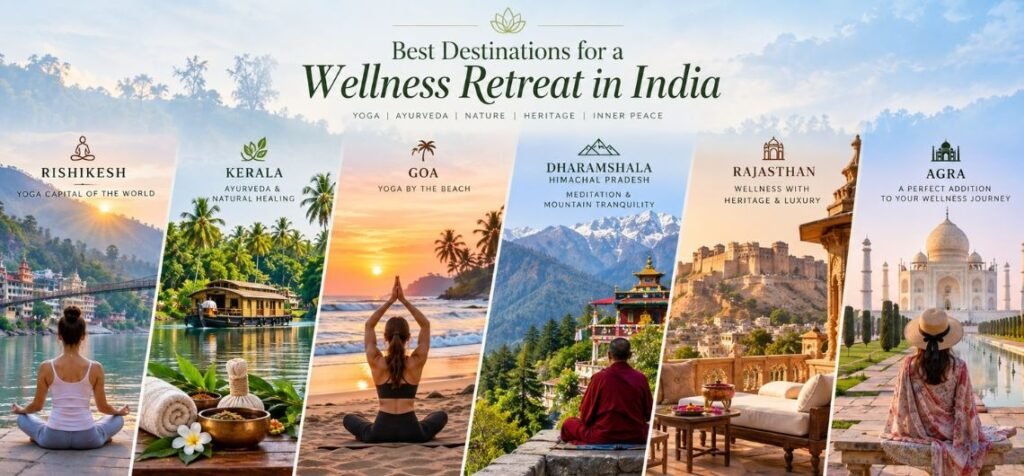
Rishikesh, on the banks of the Ganges in the Himalayan foothills, is often called the yoga capital of the world. It’s home to a large concentration of ashrams, yoga schools, and meditation centers, and its spiritual atmosphere — river ghats, temple bells, evening prayer ceremonies — is part of the appeal as much as the classes themselves.
Kerala
Kerala is the center of India’s Ayurvedic tradition. Retreats here typically combine Ayurvedic treatments and consultations with the state’s backwater and beach surroundings. Because Ayurvedic programs are often designed to unfold over one to two weeks, Kerala tends to suit travelers planning a longer, slower wellness stay.
Goa
Goa has become a hub for yoga retreats set against its beaches. The atmosphere tends to be more relaxed and less strictly traditional than Rishikesh, which makes it a popular choice for travelers who want yoga and wellness alongside a beach holiday feel.
Dharamshala / Himachal Pradesh
Set in the mountains and home to a strong Tibetan Buddhist cultural influence, Dharamshala and the wider Himachal Pradesh region draw travelers focused on meditation, quiet reflection, and mountain scenery. The pace here is generally slower and more contemplative.
Rajasthan
Rajasthan isn’t traditionally thought of as a wellness hub, but a growing number of heritage hotels and luxury properties now offer wellness programs alongside desert landscapes, palaces, and forts. It’s a strong option for travelers who want to combine wellness with heritage and luxury stays — and it pairs naturally with Rajasthan tour itineraries for those extending their trip further.
Agra and North India
Agra isn’t a wellness destination in its own right, but it’s worth including here because of how often it comes up in wellness travel planning. Many travelers combining a retreat with cultural sightseeing add a day or two in Agra to see the Taj Mahal, treating it as a heritage addition to a wellness-focused itinerary rather than the centerpiece of the trip.
How to Choose the Right Wellness Retreat
Define Your Wellness Goal
Start by being honest about what you want out of the trip:
- Stress reduction
- Yoga practice or deepening
- Meditation training
- Ayurvedic treatment
- General fitness
- Better sleep
- Digital detox
- Spiritual growth
- Simple relaxation
Choose the Right Retreat Style
| Retreat Style | Best For |
| Luxury wellness resort | Comfort-focused travelers wanting spa-level amenities |
| Ayurveda retreat | Longer stays focused on traditional treatments |
| Yoga retreat | Structured daily practice and instruction |
| Ashram | Simpler, more traditional, community-oriented stays |
| Meditation center | Focused, often silent, contemplative practice |
| Nature retreat | Travelers prioritizing quiet, natural surroundings |
Check Program Structure
Before booking, review the daily schedule, number of sessions, amount of free time, what treatments are included, meal arrangements, accommodation type, and whether excursions are part of the package.
Check Credentials and Safety
Look into practitioner qualifications, whether treatment descriptions are clear and specific (rather than vague), recent guest reviews, hygiene standards, any medical disclosures required, and the retreat’s cancellation policy.
How Long Should a Wellness Retreat in India Be?
| Duration | Best For |
| 3–4 days | A short reset |
| 5–7 days | First-time wellness travelers |
| 7–14 days | A deeper yoga or Ayurveda experience |
| 2+ weeks | Intensive wellness programs |
The right length ultimately depends on the retreat’s own program structure — some Ayurvedic treatments, for example, are designed to run for a minimum number of days to be effective — as well as your personal goals and how much time you have available.
Best Time for a Wellness Retreat in India
There’s no single “best” season for a wellness retreat in India, because the ideal timing depends heavily on where you’re going.
- Kerala: The monsoon season (roughly June to September) is actually considered a strong time for certain Ayurvedic treatments, though the cooler, drier months from November to February are more comfortable for general travel.
- Rishikesh: Autumn through spring (October to April) brings milder Himalayan weather; summer can be hot, and monsoon season brings heavy rain.
- Goa: The dry season from November to February is the most popular time, with cooler temperatures and lower humidity.
- Himachal Pradesh: Spring through autumn (March to June, September to November) avoids both winter snow and monsoon rain.
- Rajasthan: Winter (November to February) is by far the most comfortable, as summers are extremely hot.
- Agra: October to March brings cooler, clearer conditions, which also happens to be the more comfortable window for sightseeing at the Taj Mahal.
What to Pack for a Wellness Retreat
- Comfortable, breathable clothing
- Dedicated yoga clothes
- Sturdy walking shoes
- A reusable water bottle
- Sunscreen
- Personal toiletries
- A light jacket (for cooler or mountain destinations)
- Your own yoga mat or meditation cushion, if required
- Any prescription medicines you take regularly
- Travel documents (passport, visa, insurance details)
- A power bank
- A journal or book for downtime
- Modest clothing suitable for temples or spiritual centers
Packing needs vary by destination and by the specific retreat, so it’s worth checking your program’s own recommendations before you travel.
What Does a Wellness Retreat in India Cost?
Costs vary widely and depend on several factors:
- The category and reputation of the retreat
- Destination (a Himalayan ashram and a Kerala luxury resort price very differently)
- Accommodation type
- Number of nights
- Included treatments and private sessions
- Meals and dietary programs
- Excursions and transportation
- Season (peak season generally costs more)
Broadly, retreats fall into three categories:
- Budget: Simple ashram-style or shared accommodation, group classes, basic vegetarian meals
- Mid-range: Private rooms, a mix of group and individual sessions, more varied meals and some treatments
- Luxury: High-end resort accommodation, personalized wellness programs, extensive spa and Ayurvedic treatments, and premium dining
Because prices shift by season, provider, and inclusions, it’s best to verify current rates directly with the retreat you’re considering rather than relying on general estimates.
Can You Combine a Wellness Retreat With an India Tour?
Yes — and it’s one of the most popular ways to structure a longer India trip. Common combinations include:
- Wellness + Delhi + Agra + Jaipur
- Wellness + Taj Mahal
- Wellness + Golden Triangle (Delhi–Agra–Jaipur)
- Wellness + Rajasthan
- Wellness + Kerala
Adding cultural sightseeing before or after a retreat gives the trip more range: the retreat handles rest and restoration, while the sightseeing portion covers history, architecture, and local life. Travelers who want to balance relaxation with cultural exploration often add a private Taj Mahal tour to their India itinerary, allowing time to experience one of the country’s most iconic heritage landmarks without turning the entire journey into a rushed sightseeing schedule. For travelers who’d rather not plan wellness and sightseeing separately, some operators also offer India yoga tour packages that build daily practice directly into a broader cultural itinerary.
How to Plan a Wellness and Taj Mahal Experience
There are a few sensible ways to structure this kind of combined trip, each with its own trade-offs.
Option 1: Wellness First Wellness retreat → Delhi → Agra → departure. This lets you arrive rested before sightseeing, though it means ending the trip on a busier note rather than a relaxed one.
Option 2: Sightseeing First Delhi → Agra/Taj Mahal → wellness retreat. This front-loads the more demanding travel days and lets you unwind afterward, which some travelers find better for jet lag recovery.
Option 3: Wellness Between Cultural Stops Delhi → Agra → wellness destination → Jaipur. This breaks up a longer cultural itinerary with a restorative middle stretch, which can work well on longer trips such as a Golden Triangle itinerary.
For travelers who want yoga built into the sightseeing itself rather than treated as a separate stop, a combined option like the Golden Triangle with Yoga Escape tour folds daily practice into a Delhi–Agra–Jaipur route. Whichever structure you choose, it’s worth working with a provider who can adjust the itinerary to your pace rather than fitting you into a fixed template.
Sample 7-Day Wellness and Cultural Itinerary
This is an illustrative example — actual pacing should be adjusted to your chosen retreat and transportation schedule.
- Day 1: Arrival in India, settle in and rest
- Day 2: Yoga and meditation sessions, wellness activities
- Day 3: Ayurveda or spa treatment day
- Day 4: Wellness sessions with free time to relax
- Day 5: Travel toward Delhi or Agra
- Day 6: Taj Mahal and Agra sightseeing
- Day 7: Departure or onward travel
Wellness Retreat vs Wellness Holiday
| Wellness Retreat | Wellness Holiday |
| Structured schedule | Flexible schedule |
| Focused on wellness goals | Wellness combined with tourism |
| More sessions | More sightseeing |
| Often longer stays | Can be shorter |
| Immersive experience | More flexible |
Understanding this distinction helps set expectations before you book. A retreat asks more of your schedule but offers a deeper program; a wellness holiday gives you more room to see the country alongside your wellness time.
Tips for First-Time Wellness Travelers in India
- Research the retreat carefully before booking
- Read recent guest reviews, not just the provider’s own marketing
- Check exactly what’s included in the price
- Don’t overpack the itinerary — leave room to actually rest
- Build in recovery time after long flights
- Confirm dietary arrangements in advance, especially for allergies
- Respect local customs, particularly around dress and temple etiquette
- Keep some flexibility in the schedule rather than booking every hour
- Verify practitioner qualifications where treatments are medically adjacent
- Combine wellness and sightseeing thoughtfully rather than rushing between destinations
Frequently Asked Questions
Is India good for a wellness retreat?
Yes. India offers deep-rooted traditions in yoga, Ayurveda, and meditation, along with a wide range of retreat styles — from simple ashrams to luxury wellness resorts — across very different landscapes.
What is the best place in India for a wellness retreat?
It depends on your goals. Rishikesh suits yoga and meditation-focused travelers, Kerala is best for Ayurveda, Goa suits those who want yoga with a beach holiday feel, and Himachal Pradesh suits travelers seeking mountain quiet.
How many days are enough for a wellness retreat in India?
Many first-time travelers choose 5–7 days. Shorter 3–4 day stays work for a quick reset, while deeper Ayurvedic or yoga programs often run 7–14 days or longer.
What is the best time for a wellness retreat in India?
It varies by destination — generally October to March is comfortable across most of North India, while Kerala’s Ayurvedic season and Goa’s dry season have their own specific windows, covered in more detail above.
How much does a wellness retreat in India cost?
Costs depend on the retreat’s category, destination, duration, and inclusions. Retreats generally fall into budget, mid-range, and luxury tiers, and it’s best to confirm current pricing directly with the provider.
Is India safe for a wellness retreat?
Reputable, well-reviewed retreats generally maintain solid safety and hygiene standards. As with any international trip, it’s worth researching the specific provider, reading recent reviews, and checking their credentials before booking.
What should I pack for a wellness retreat in India?
Comfortable and modest clothing, yoga wear, walking shoes, sun protection, any prescription medication, and travel documents. Specific packing needs vary by destination and retreat, so check the program’s own guidance.
Can I combine a wellness retreat with a Taj Mahal tour?
Yes, this is a common way to structure a longer India trip — either adding Agra sightseeing before or after your retreat, or choosing a combined itinerary that includes both.
Which is better for wellness, Kerala or Rishikesh?
Neither is objectively “better” — Kerala is stronger for Ayurvedic treatment programs, while Rishikesh is more focused on yoga, meditation, and its riverside spiritual atmosphere. The right choice depends on which practice you’re most interested in.
Can I plan a private cultural tour after my wellness retreat?
Yes, many travelers add a private tour of Agra, Delhi, or the wider Golden Triangle circuit after finishing a retreat, using it as a way to see India’s heritage sites once they feel rested.
Final Thoughts
Planning a wellness retreat in India isn’t just about picking a destination — it’s about matching the right style of retreat, region, and duration to what you actually want from the trip. Whether that’s a quiet week of yoga by the Ganges, a longer Ayurvedic program in Kerala, or a shorter reset paired with a few days of cultural sightseeing, India has enough variety to support almost any version of that goal.
Note: Ayurveda, yoga, and meditation are traditional wellness practices, not substitutes for medical treatment. Travelers with specific health conditions should consult a qualified healthcare professional before booking treatments or physically demanding programs.

Comments