
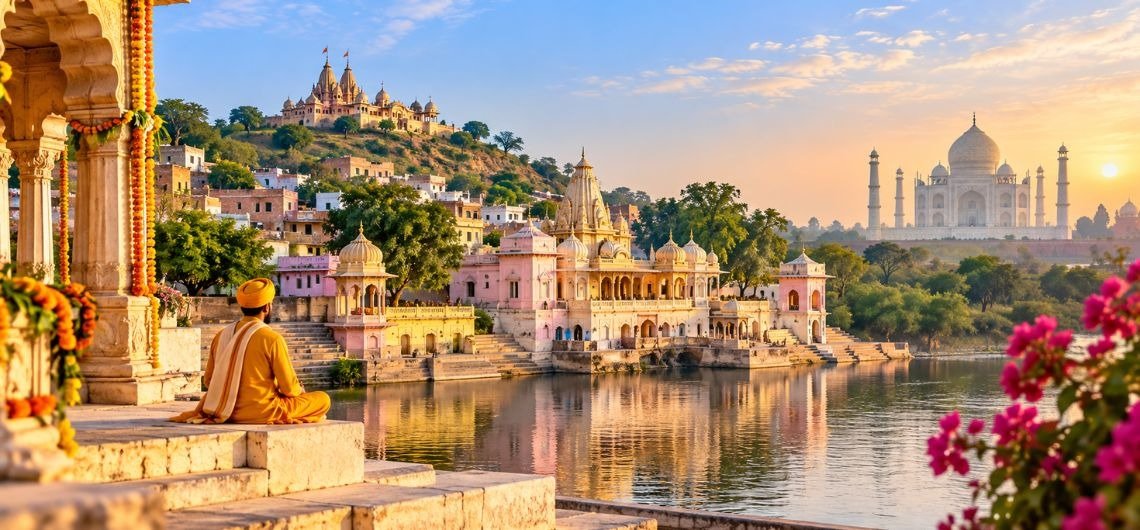
Agra is famous for Mughal monuments, but the countryside around it holds a very different story: Krishna pilgrimage towns, riverside temples and villages where devotion and daily life are closely woven together. If you are looking for hidden villages around Agra, the most rewarding names are Gokul, Barsana, Nandgaon, Govardhan, Bateshwar and Kachhpura, with Mathura as a gateway to the Braj region.
Quick answer: Most of the sacred places near Agra sit in the Braj region around Mathura, with Bateshwar’s temples on the Yamuna and Kachhpura’s village life closer to the city. Some are villages, others are small sacred towns, and none is entirely undiscovered – several become very busy during festivals.
This guide covers both villages and small sacred towns, because not every destination here is technically a village. Where something is a matter of faith or local tradition rather than documented history, we say so.
Why Explore Spiritual Villages and Sacred Places Around Agra?
Spiritual places near Agra let you see how religion shapes everyday life in Uttar Pradesh. Temples here are not only monuments; they are neighbourhood centres where families gather, festivals are organised and traditions are handed down.
A visit to these places can also balance a Taj Mahal itinerary. After the grand scale of Mughal architecture, a quiet ghat at dawn or a temple lane at aarti time offers a gentler view of the region.
A few reasons travellers choose to go:
- Local religious traditions: Experience rituals, songs and festivals as they are actually practised.
- Village life and temples together: Understand how faith, farming, food and regional culture connect.
- A complement to the Taj Mahal: Add depth without repeating the usual monument circuit.
- Slower, respectful travel: Fewer stops, taken with care, usually leave a richer impression than a rushed checklist.
1. Gokul – Discover the Sacred Land Associated With Krishna’s Childhood
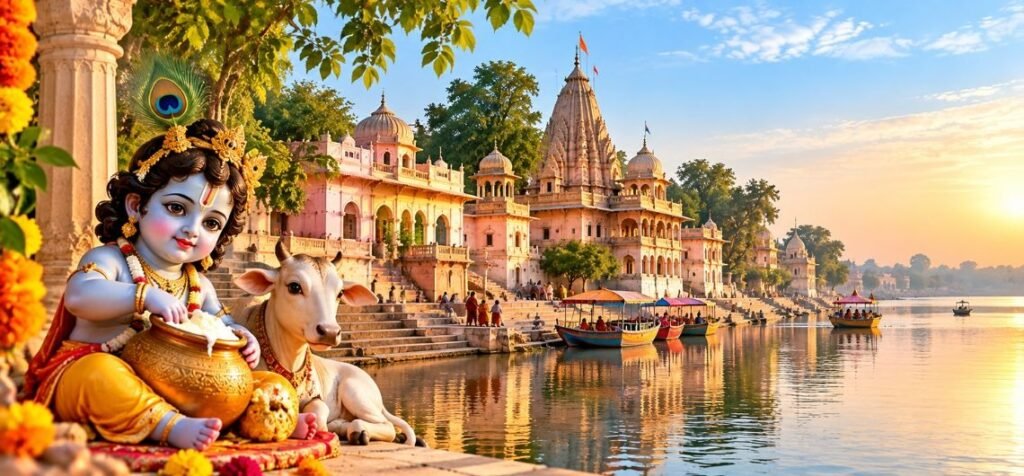
Gokul lies on the Yamuna, a short distance from Mathura. According to Krishna traditions, this is where the infant Krishna was raised by Nanda Baba and Yashoda after his birth in Mathura. That belief is what draws pilgrims, and it gives the town a devotional, family-centred atmosphere.
Sacred sites to know
- Raman Reti: A sandy stretch associated in tradition with Krishna’s childhood play. Many visitors come to sit quietly rather than sightsee.
- Brahmand Ghat: A ghat on the Yamuna linked to the story of Krishna and the mud, which devotees recount as a childhood miracle. It is a calm place to watch river-side routines.
- Local temples: Smaller shrines along Gokul’s lanes reflect the town’s Krishna devotion. Temple timings vary, so check locally.
Combining Gokul with Mathura and nearby places
Gokul pairs naturally with Mathura because the two share the same pilgrimage story. Many travellers visit them together and add one more Braj stop, depending on time and temple schedules. This is a good fit for readers interested in Krishna pilgrimage sites near Agra who want a gentle introduction to the Braj Bhoomi spiritual circuit.
2. Barsana – Explore the Sacred Traditions of Radha Rani
Barsana is traditionally associated with Radha, Krishna’s beloved. Its best-known landmark is the Radha Rani Temple, set on a hill above the town, where devotees climb to offer prayers. Devotional songs and the language of Radha-Krishna worship are a constant presence in the streets.
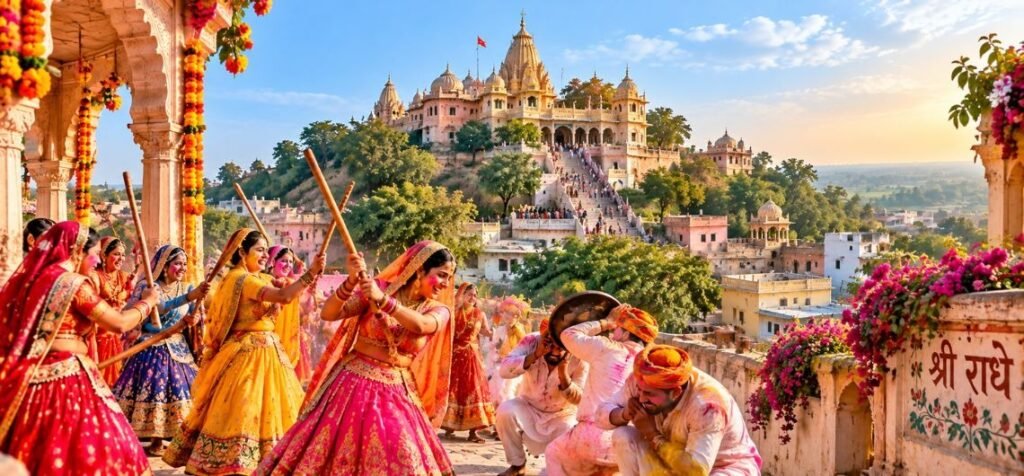
Lathmar Holi
Barsana is also known for Lathmar Holi, a playful festival tradition in which women symbolically “beat” visiting men with sticks while songs are sung. The celebrations are linked with Barsana and Nandgaon and take place around Holi.
For travellers interested in spiritual tourism and regional festivals, Barsana can be especially meaningful. Festival periods, however, are very crowded, so book transport and stays early and expect restrictions on movement. If crowds are not your preference, a visit outside festival dates offers a quieter experience of the same temple culture.
3. Nandgaon – A Peaceful Stop in the Braj Pilgrimage Region
Nandgaon is associated with Nanda Baba, Krishna’s foster father, and is often visited together with Barsana. It is generally smaller and calmer than the larger pilgrimage centres.
What to see
- Nand Bhavan: The hilltop temple traditionally linked with Nanda Baba’s household, offering views over the surrounding countryside.
- Village surroundings: Walk the lanes at an unhurried pace and notice the small shrines, courtyards and community spaces.
- Local customs: Follow what residents do – remove footwear where asked, keep your voice low and ask before taking photographs.
Nandgaon appeals to travellers who prefer a small-scale setting. Because Nandgaon also features in the Lathmar Holi tradition, it can be busy at festival time.
4. Govardhan – Sacred Landscapes and Pilgrimage Traditions
Govardhan is a sacred town and pilgrimage area, not a village. Its focus is Govardhan Hill (Giriraj), which devotees revere because of the tradition that Krishna lifted the hill to shelter the people of Braj. Pilgrims treat the hill itself as sacred.
Govardhan Parikrama
The parikrama is a circumambulation of the hill, often done on foot. Many pilgrims walk it barefoot as an act of devotion; the route also passes shrines and kunds, including Mansi Ganga, a sacred water body closely tied to Govardhan’s traditions.
Before you go
- Walking: The circuit is long and takes real stamina. Confirm the route length and local arrangements before you decide how much to do.
- Footwear: Wear comfortable, sturdy shoes unless you choose to walk barefoot, and be mindful of hot paths in summer.
- Water and rest: Carry water, use shade and pace yourself.
- Respect: Dress modestly, keep to the path, follow local customs and avoid littering near sacred sites.
5. Bateshwar – Explore an Ancient Temple Settlement Near Agra
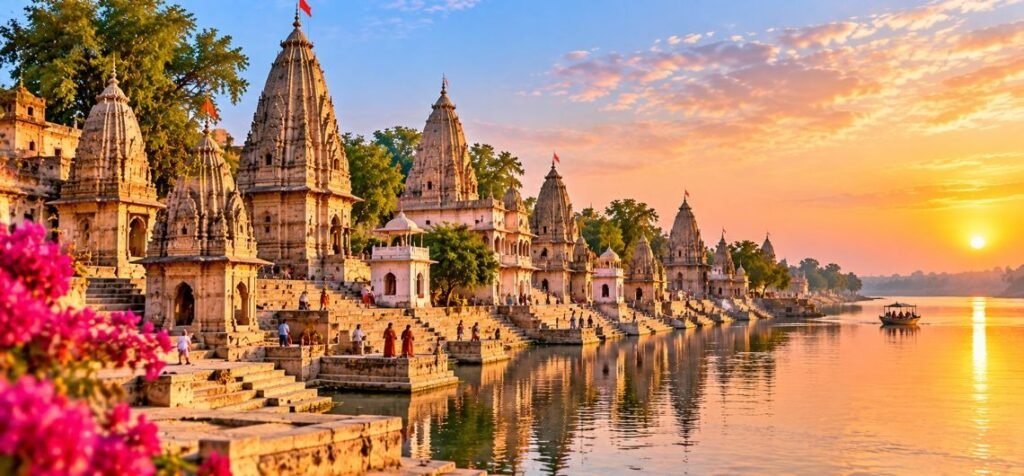
Bateshwar is on the Yamuna in the Agra district and is known for a large group of temples dedicated mainly to Shiva, along the river. It differs from the Krishna-centred towns above, which makes it an appealing addition for visitors who want lesser-known religious places near Agra and an interest in historic temple architecture.
The riverbank setting, with steps leading toward the water and clusters of shrines, creates a quiet atmosphere compared with Mathura’s larger crowds. Bateshwar is also associated with an annual fair that draws visitors from the region, so timing affects what you will find.
Because conditions change, check access, road conditions and temple timings locally before you travel.
6. Mathura’s Lesser-Known Sacred Corners
Mathura is a city, not a village, and this is not a standard temple guide. Instead, consider how the sacred and everyday mix here.
- Vishram Ghat: Tradition holds that Krishna rested here after defeating Kansa. Visitors often come for the riverside atmosphere and the evening ritual on the Yamuna.
- Smaller temples and devotional neighbourhoods: Wander the lanes behind the major shrines, where small temples serve local families.
- Pilgrimage markets: Shops selling devotional items, sweets and offerings show how commerce and worship support one another.
Looking at these corners, rather than only the headline temples, helps you see how Mathura’s sacred places connect to ordinary life.
7. Kachhpura Village – Experience Local Life Near the Taj Mahal
Kachhpura is mainly a cultural and heritage destination, not a major pilgrimage centre. It offers a view of village life close to Agra’s best-known monuments, with community routines, traditional neighbourhoods and traces of the area’s Mughal-era past.
For travellers who want rural tourism near Agra without a long journey, a guided visit explains what you are seeing and keeps the experience respectful of residents. The Taj Mahal Village Tour is one option for exploring local life and rural culture near the city.
If the historical side interests you more, the Mughal Heritage Walk in Agra looks at the area’s historical and cultural significance beyond the main monuments.
How to Plan a Spiritual Trip Around Agra
These places lie on different routes, so they should not be treated as one short day trip. Journey times depend on your starting point, traffic, road conditions and the number of stops. If you would like help with a broader pilgrimage itinerary, a specialist provider of spiritual tours in India can plan routes and timings for you.
A few starting approaches:
- One day: Choose a small number of stops around Mathura and Gokul, depending on travel time and temple schedules.
- Two days: Explore selected Braj destinations such as Mathura, Gokul, Govardhan or Barsana at a comfortable pace.
- A longer cultural trip: Combine Agra’s heritage experiences with a carefully planned spiritual extension.
Some travellers also like to add a wellness element to a longer journey. If that appeals, you can look at yoga tour packages in India as a separate part of the trip; yoga programmes are not offered in every village mentioned here.
Best Time to Visit Sacred Places Around Agra
The cooler months are generally the most comfortable for temple visits and walking. Summers are hot, which matters especially for the Govardhan parikrama and other outdoor routes.
Major festivals such as Janmashtami and Holi bring large crowds to Braj towns, along with special arrangements and restrictions. These periods can be rewarding, but they require advance planning. Check temple schedules and festival arrangements before you travel.
Responsible and Respectful Travel Tips
- Dress modestly at temples and religious sites.
- Follow photography rules, and ask permission before photographing residents.
- Respect rituals, queues and local customs.
- Avoid littering near sacred water bodies and pilgrimage routes.
- Carry water and wear comfortable shoes.
- Verify opening hours and local travel arrangements before departure.
Explore Spiritual India Beyond the Taj Mahal
Sacred towns, temple traditions and village heritage add another dimension to a visit to Agra. The Taj Mahal shows what Mughal power built; Braj and its riverside settlements show how faith continues to shape life today.
If you would like help turning this into a workable plan, you can ask about customized private tours in India and shape an itinerary around your interests, pace and travel dates.
FAQs
1. What are the best hidden villages around Agra to visit?
Gokul, Nandgaon, Barsana and Kachhpura are good starting points, with Govardhan and Bateshwar as sacred-town options. Not all are strictly villages, and some are busy at festivals. The best choice depends on travel time, personal interests and temple schedules.
2. Which spiritual places near Agra are associated with Lord Krishna?
Gokul, Barsana, Nandgaon, Govardhan and Mathura are all linked to Krishna traditions. Gokul relates to his childhood, Barsana to Radha, Nandgaon to Nanda Baba and Govardhan to the hill legend. These are matters of devotion and tradition, so plan around your own interests.
3. Can I visit Gokul, Barsana and Govardhan from Agra?
Yes, but they lie on different routes, so seeing all three in one short day is not realistic. Many travellers pick a few stops or spread them over two days. Journey times depend on traffic, road conditions and temple schedules, so plan carefully.
4. What is the best time to explore sacred villages near Agra?
Cooler months are generally more comfortable, while summers are hot and festivals such as Janmashtami and Holi bring large crowds. Which time suits you depends on whether you prefer calm visits or festival atmosphere. Always check temple schedules before travelling.
5. How can I combine a Taj Mahal visit with a spiritual tour?
See the Taj Mahal and Agra’s heritage first, then add a Mathura and Gokul day or a longer Braj extension. The best itinerary depends on travel time, your interests and temple schedules, and a customized plan can help balance them.

Comments