
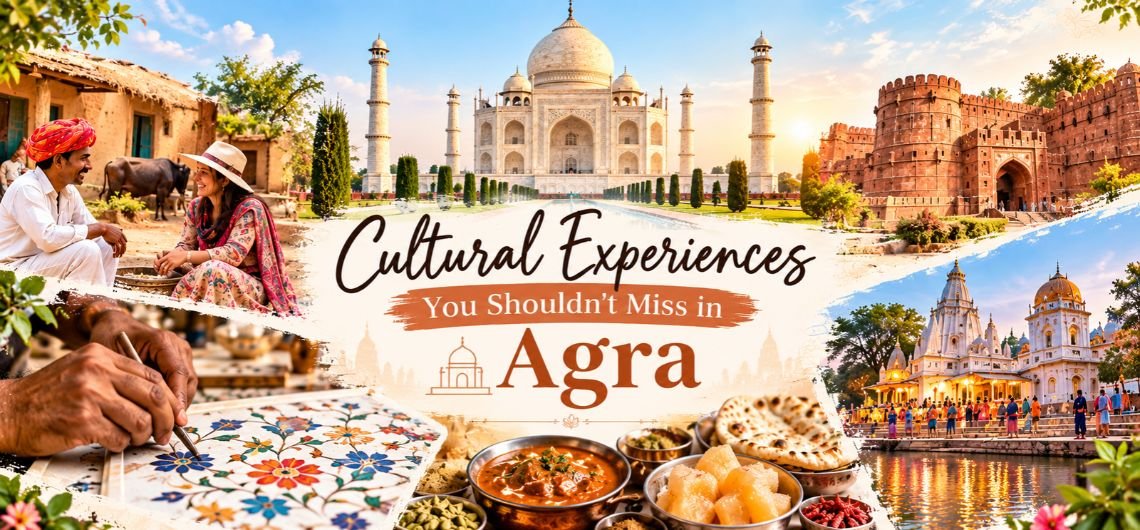
The Taj Mahal is the reason most travellers arrive in Agra, but it is only one chapter of the city’s story. Agra was a major Mughal capital, and that history still shapes its monuments, its food, its craft traditions and the rhythm of its old neighbourhoods. The countryside around the city and the wider Braj region add rural traditions and living religious practices to the picture.
This guide covers the cultural experiences in Agra that help you understand the place rather than just photograph it. It also looks at nearby spiritual destinations and what extra travel they need, so you can decide how much to fit into your trip.
Explore Agra’s Mughal Heritage Beyond the Taj Mahal
Mughal architecture is the backbone of Agra’s identity. The dynasty’s emperors treated the city as a royal seat, so its monuments show how Persian, Central Asian and Indian influences blended over generations.
Agra Fort began as a massive red sandstone fortress under Emperor Akbar in the 16th century. Later rulers, especially Shah Jahan, added refined marble pavilions inside it. Walking through the complex, you can read the shift from military strength to courtly elegance in the stonework itself.
Itimad-ud-Daulah’s Tomb, built in the 1620s for a high-ranking minister of Emperor Jahangir, is often called the “Baby Taj”. It is known for delicate marble inlay and intricate surface decoration, and it is a useful preview of the craftsmanship behind the better-known monument.
Mehtab Bagh is a Mughal-era garden complex on the opposite bank of the Yamuna River. It shows how gardens were part of Mughal design, and it gives a different perspective on the Taj Mahal from across the water.
These places are easier to appreciate with context. A knowledgeable guide can explain why a pattern was chosen, how inlay was done, or who lived in a particular chamber. That storytelling turns a monument into something you understand rather than just see.
Discover Traditional Village Life Near Agra
Beyond the city, the surrounding countryside is another side of the region’s culture. A well-run village visit can introduce you to rural homes, farming routines, local livelihoods and everyday community life, much of which differs from city life in ways that are hard to grasp from a car window.
The key is to approach it as a learning exchange, not a spectacle. Residents are not a tourist display, so go with a guide or organiser who has established relationships and a respectful approach. If you want to experience village life near the Taj Mahal, look for an arrangement that gives you time to listen and ask questions.
A few practical points:
- Always ask before photographing people or their homes, and accept a no gracefully.
- Dress modestly and keep your voice and behaviour considerate.
- Choose experiences where local households benefit directly, such as through meals, crafts or guiding.
- Avoid handing out money or sweets to children; ask your guide about appropriate ways to give back.
Experience Agra’s Local Food and Mughlai Culinary Traditions
Agra’s food shows the city’s history on a plate. Mughlai-inspired cooking, with rich gravies, slow-cooked meats, kebabs and aromatic spices, grew out of the royal kitchens of the Mughal era and continues in many restaurants today.
Two foods are strongly tied to Agra itself. Petha is a translucent sweet made from ash gourd and sold in many flavours across the city. Dalmoth, a crunchy lentil-based snack, is a popular local savoury. You will also find street staples such as chaat and the breakfast pairing of bedai and jalebi, especially in the older parts of town.
Vegetarian dishes are widely available, and many eateries cater to different dietary needs, so don’t assume one set of preferences. If you want to eat at traditional markets and street stalls, choose busy, reputable places where food is freshly prepared, and drink bottled or filtered water. Treat the food as a way into the city’s history instead of chasing a “best of” list.
Explore Agra’s Traditional Crafts and Local Markets
Agra has long been associated with marble inlay work, in which semi-precious stones are set into marble in floral and geometric patterns. The technique is closely tied to the decoration seen on Mughal monuments, and workshops in the city continue the tradition. Stone carving and zardozi (metallic thread embroidery) are also part of the city’s craft heritage, and leather goods are another local speciality.
Markets are where these traditions meet everyday commerce. To get the most out of them:
- Ask artisans about their process, such as how the stones are cut or the thread is worked. Many are happy to demonstrate.
- Compare quality across several shops before buying, and check the stone, finish and stitching up close.
- Agree on prices openly and politely; bargaining is common in markets but should stay good-humoured.
- Be realistic. Not everything sold in a market is handmade or historically authentic, and machine-made imitations exist alongside genuine craft.
Buying directly from workshops where you can watch the work is one of the better ways to support the artisans themselves.
Walk Through Agra’s Lesser-Known Heritage Neighbourhoods
Travelling only between the major monuments means missing much of the city. Older neighbourhoods hold narrow lanes, historic buildings, small shrines, local shops and stories that never appear on a standard sightseeing route.
A guided walk helps here. A good local guide knows which streets reveal layers of history, can explain what you are looking at, and can introduce you to the community life around you. For travellers who want that context, you can explore Agra through a guided Mughal heritage walk and see how the historic environment connects to the famous monuments.
Keep a few things in mind:
- Lanes can be crowded and busy with motorbikes, rickshaws and carts, so stay alert.
- Ask before photographing residents, and avoid pointing cameras into private homes.
- Wear comfortable shoes suited to uneven surfaces.
Discover the Spiritual Side of Agra and the Braj Region
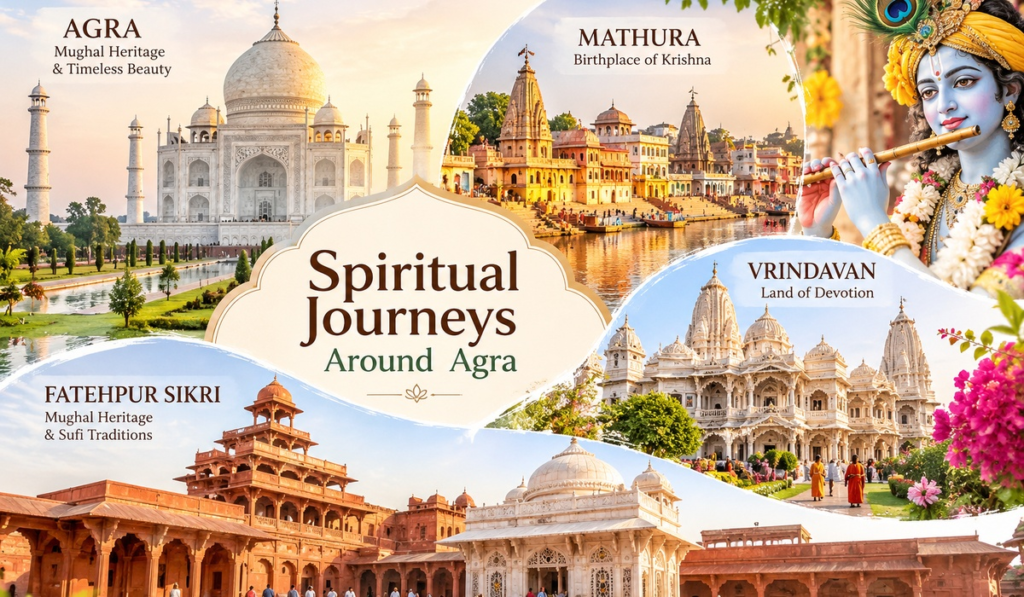
Agra’s cultural identity sits within a wider region shaped by several religious traditions. It helps to be clear about the distinction: Agra is best known for its Mughal heritage, while nearby Mathura and Vrindavan are the main centres of Krishna-related pilgrimage and devotion. They are separate places, each with its own character.
Mathura is revered as the birthplace of Krishna in Hindu tradition. Its temples and the ghats along the Yamuna carry a busy devotional atmosphere, with rituals, offerings and pilgrims throughout the day.
Vrindavan is associated with Krishna’s childhood. It is known for its many temples, for devotional music such as bhajans and kirtans, and for an atmosphere of constant worship.
Fatehpur Sikri is different again. Emperor Akbar built it as his capital in the 16th century, and it is a Mughal heritage site first and foremost. It is also home to the tomb of the Sufi saint Salim Chishti, which draws devotees of many backgrounds. Treat it as a historical and spiritual site in its own right, not as a substitute for Mathura or Vrindavan.
At any of these places, observe respectfully. Follow each temple’s rules, which may cover footwear, dress, phones and photography. Don’t photograph worshippers without permission, and step aside rather than interrupt prayers or ceremonies. For travellers who want to combine Agra sightseeing with a spiritual visit to Mathura and Vrindavan, a guided arrangement can help with local context and logistics.
Experience the Wider Spiritual Traditions of North India
If you have more time, North India offers other spiritual experiences, though each one is a separate destination that requires additional travel and cannot comfortably be squeezed into a short Agra visit.
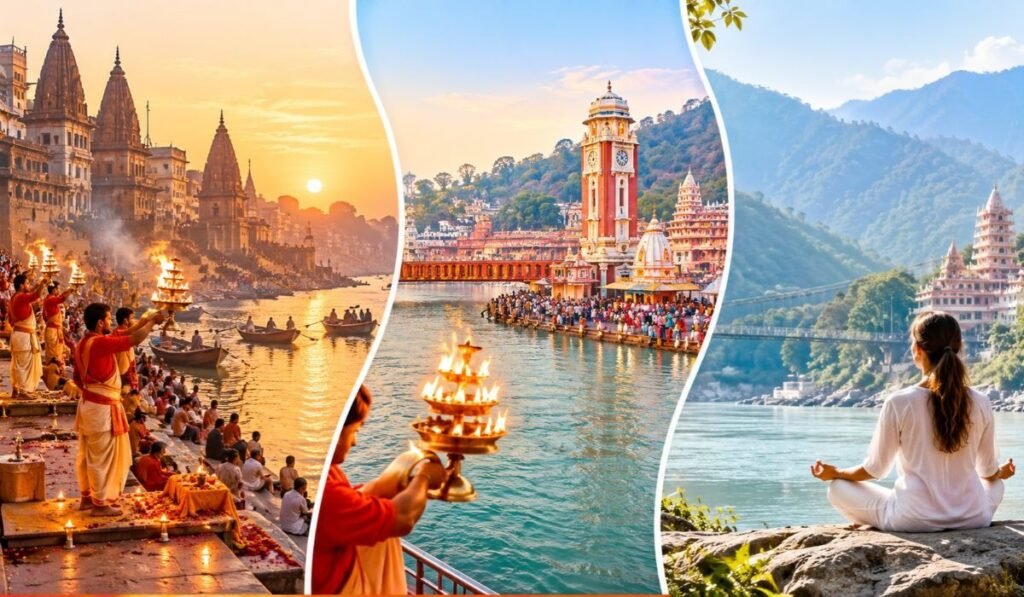
- Varanasi: Known for its sacred river ghats, temple traditions and the evening Ganga Aarti, a ritual of lamps and chanting on the riverbank.
- Haridwar: A major pilgrimage town, famous for the Ganga Aarti at Har Ki Pauri.
- Rishikesh: Associated with yoga, meditation, ashrams and riverside spiritual life.
Think of these as additional legs of a longer journey, not add-ons to an Agra day trip.
Learn About Indian Spirituality Through Yoga and Meditation
Yoga and meditation offer another window into India’s living traditions. They can be approached as cultural and practical experiences, and they don’t require adopting any religious belief.
Depending on the programme, a suitable experience for beginners might include guided yoga sessions, breathing exercises, meditation, or time spent in an ashram setting. Programmes differ widely in style and intensity, so check what a specific one actually involves before you commit. If this interests you, you can explore India yoga tour packages to see how such experiences are structured. Avoid anything that promises guaranteed health results, since the real value is learning and personal reflection.
Practical Tips for Experiencing Agra’s Culture Respectfully
- Dress comfortably and for the weather. Agra can get very hot, so choose breathable clothing that also covers shoulders and knees for religious sites.
- Follow dress codes and footwear rules. Many temples and shrines require you to remove shoes, and some restrict leather items.
- Ask permission before photographing residents, artisans or worshippers.
- Don’t interrupt prayers or ceremonies. Observe quietly from a distance.
- Check current conditions. Opening hours, access rules and local travel conditions can change, so verify before you go.
- Allow enough time. Village visits, markets and heritage walks are best done unhurried.
- Support local artisans and community-run experiences where your money reaches the people doing the work.
- Be mindful of differences. Customs vary between communities and religions, so treat any guidance as a starting point and follow local cues.
How to Plan a Cultural Trip to Agra
A rewarding itinerary usually mixes a few kinds of experience: a major heritage site or two, a village visit, a heritage walk, time with local food, and a stop to see traditional craft being made. You don’t need to do everything. Choosing a handful of meaningful activities beats rushing through a long list in a single day.
With extra days, Mathura and Vrindavan pair naturally with an Agra visit because of their proximity within the Braj region. Varanasi, Haridwar and Rishikesh work better as extra stages of a longer North India itinerary.
A private guided tour can be worth considering when it genuinely helps, for example with transport, local explanation or coordinating several stops. Otherwise, independent travel works well for many of these experiences.
Frequently Asked Questions
What are the best cultural experiences in Agra beyond the Taj Mahal?
Agra Fort, Itimad-ud-Daulah’s Tomb and Mehtab Bagh show different sides of Mughal heritage. Village visits, local food, craft workshops and guided heritage walks add the living culture.
Can visitors experience traditional village life near Agra?
Yes. Village visits are possible and work best when arranged responsibly, with respect for residents’ privacy and benefit to the local community.
What traditional handicrafts is Agra known for?
Marble inlay work, stone carving, zardozi embroidery and leather goods are the best-known. Quality varies, so compare items and ask questions.
Which local foods should visitors try in Agra?
Petha, dalmoth, chaat, bedai-jalebi and Mughlai dishes such as kebabs and kormas are all worth trying. Vegetarian options are widely available.
Are there spiritual places to visit near Agra?
Fatehpur Sikri, with the tomb of Salim Chishti, is the nearest. Mathura and Vrindavan, important for Krishna devotion, are also within reach as separate destinations.
Can Mathura and Vrindavan be combined with an Agra trip?
Yes, they are commonly added to an Agra itinerary. Plan for extra time, and keep in mind they are living pilgrimage sites rather than monuments.
Can travellers combine Agra with Varanasi, Haridwar or Rishikesh?
They can, but these are separate destinations requiring significant extra travel. They suit a longer North India journey better than a short Agra stay.
What should visitors know before visiting temples and religious sites in India?
Dress modestly, follow footwear and photography rules, and don’t interrupt worship. Rules differ from site to site, so check locally.
Conclusion: Experience Agra Beyond Its Famous Monument
The cultural experiences in Agra go well beyond one famous monument. The city’s Mughal architecture, traditional crafts, regional food and nearby village life, together with its connections to the spiritual traditions of North India, make it a place worth exploring slowly.
Choose the experiences that match your interests and the time you have, and leave room to talk with the people you meet along the way. If you would like help shaping a route, Taj Mahal Private Trip offers cultural and spiritual tours that you can look through at your own pace.

Comments