
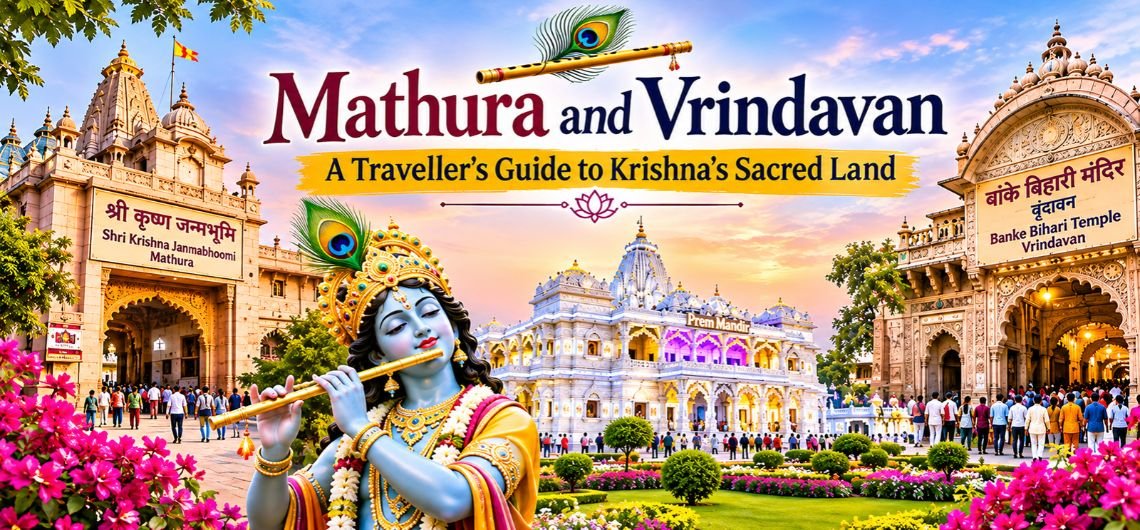
Few places in India feel as alive with devotion as Mathura and Vrindavan. Only about 12 km apart on the banks of the Yamuna River, these two towns are among the most important destinations linked to Lord Krishna, one of Hinduism’s best-loved deities. For many Hindus, a journey here is a pilgrimage. For international visitors, it is a rare chance to see religion practised as part of everyday life.
This Mathura and Vrindavan travel guide is written for first-time visitors. You will find temple courtyards filled with devotional singing, riverside ghats at dusk, narrow lanes of sweet shops and flower sellers, and festivals that turn whole towns into celebrations. Exploring the region is about more than ticking off temples. It is a way to understand Braj Bhoomi, the “land of Braj”, the wider area in and around Mathura where Krishna’s life stories are believed to have unfolded and where those stories are still retold, sung and acted out every day.
Quick Answer: Mathura and Vrindavan are famous for Lord Krishna’s birthplace, Radha-Krishna temples, ghats and festivals like Janmashtami and Holi. Most visitors can cover the main sights in one full day, but two to three days allows a calmer pace, while four days adds Gokul, Govardhan, Barsana and Nandgaon.
Why Are Mathura and Vrindavan Important in Krishna’s Life?
Both towns are central to Krishna traditions, but they represent different chapters of his story and offer different experiences.
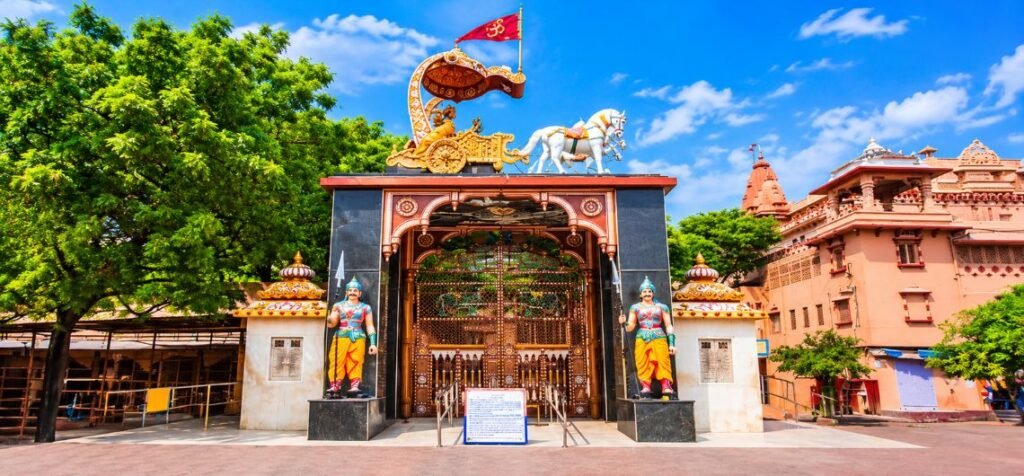
Mathura is traditionally recognised as the birthplace of Krishna. According to Hindu tradition, he was born in a prison cell to Devaki and Vasudeva, and was carried across the Yamuna to safety in nearby Gokul. Later, as a young man, he returned to Mathura and defeated his tyrannical uncle, King Kamsa. Mathura is also a genuinely ancient city. It was an important centre of trade, Buddhism, Jainism and Hindu worship, and its sculpture tradition, known as the Mathura school of art, flourished in the early centuries.
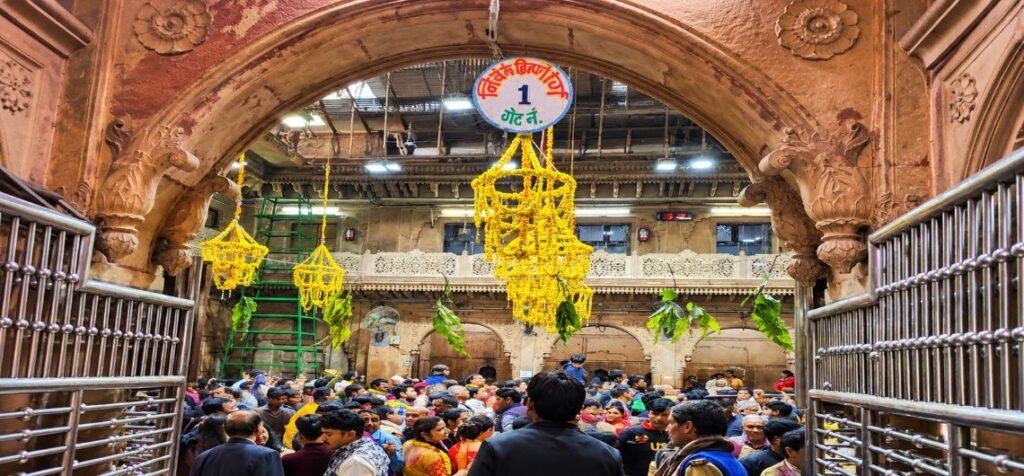
Vrindavan is associated with Krishna’s childhood and youth, especially his playful bond with Radha and the cowherd community. This is where the devotional (bhakti) tradition of Radha-Krishna worship is most prominent. Many of Vrindavan’s major temples were established from the 16th century onwards by devotional teachers and communities, and the town’s atmosphere still reflects that heritage.
Mathura vs Vrindavan: What Is the Difference?
| Mathura | Vrindavan | |
|---|---|---|
| Associated with | Krishna’s birth and later life | Krishna’s childhood, Radha-Krishna devotion |
| Feel | Busier, historic city with markets and a museum | Devotional town with many temples and lanes |
| Best for | Janmabhoomi, Vishram Ghat, history and art | Temple darshan, bhajans, spiritual atmosphere |
The Yamuna and Radha-Krishna Worship
The Yamuna River is considered sacred in Braj traditions and is often worshipped as a goddess. Many stories about Krishna take place on its banks, which is why ghats and riverside rituals matter so much here. Radha is revered as Krishna’s beloved and the embodiment of devotion. In Braj, you will often hear people greet each other with “Radhe Radhe”, a small clue that Radha is as central as Krishna himself.
Best Places to Visit in Mathura
Mathura is the easier starting point for a first visit. It combines religious sites with a strong historical dimension.
Shri Krishna Janmabhoomi Temple
The Shri Krishna Janmabhoomi complex marks the spot traditionally believed to be Krishna’s birthplace. The central shrine is built close to the place identified as the prison cell of his birth story. The complex also includes other shrines and a large prayer hall, and is most atmospheric during Janmashtami.
Be aware that the site sits beside the Shahi Idgah mosque and has long been the subject of legal disputes, so security is tight. Visitors typically pass through several checkpoints, and mobile phones, cameras, bags and other items are commonly not allowed inside, with storage arrangements nearby. Rules change, so check current guidance locally and travel with as little as possible.
Dwarkadhish Temple
Dwarkadhish Temple, built in the early 19th century, is one of Mathura’s most popular temples. It is known for its ornate, colourful architecture, carved details and a lively devotional atmosphere. Worship here follows the Pushtimarg tradition, in which the deity is cared for like a beloved child, with changing outfits, offerings and decorations through the day.
The temple is especially busy during Janmashtami, Holi and the Jhulan (swing) festival in the monsoon season, when the deity is placed on decorated swings. Visit outside festival days if you prefer a calmer experience.
Vishram Ghat
According to tradition, Krishna rested at Vishram Ghat (vishram means “rest”) after defeating Kamsa. It is Mathura’s best-known riverside ghat and a natural place to understand the Yamuna’s role in local religion. Pilgrims bathe or offer prayers here, and many visitors come for the evening Yamuna aarti, a ritual of lamps, bells and chanting at dusk. Boat rides are sometimes available, depending on water levels and season.
Government Museum Mathura
For a different perspective, visit the Government Museum. It holds an important collection of sculptures from the Mathura school of art, including Buddhist, Jain and Hindu works from the Kushan and Gupta periods. If the temples show you Mathura’s living faith, the museum shows how long the city has been a major cultural centre. Check opening days and hours before you go.
Famous Temples and Attractions in Vrindavan
Vrindavan rewards slow exploration. Many of its temples sit in narrow lanes, so expect plenty of walking. Both walking and e-rickshaws are practical here.
Banke Bihari Temple
Banke Bihari is arguably Vrindavan’s most beloved temple. The deity, a form of Krishna, is associated with the 16th-century saint Swami Haridas. The temple is known for its unusual darshan (sacred viewing) tradition. A curtain is drawn repeatedly across the deity’s face, so devotees see him only in short glimpses, reflecting the belief that his gaze is overwhelmingly powerful.
What to expect:
- Crowds: It can be extremely crowded, particularly on weekends, festivals and Ekadashi days. The approach lanes are narrow.
- Footwear: Shoes must be removed before entering. Leave them at your hotel or a designated shoe stand.
- Photography: Cameras and phones are often restricted inside. Check on arrival.
- Rules: Access arrangements and management of the temple have been changing in recent years, so confirm timings and entry rules locally.
ISKCON Temple Vrindavan
The Krishna Balaram Mandir, run by the International Society for Krishna Consciousness (ISKCON), was established in the 1970s by A.C. Bhaktivedanta Swami Prabhupada, who founded the movement in the West. Its white marble halls, kirtan (call-and-response devotional singing) and structured daily programme make it one of the easiest temples for first-timers to follow.
International visitors often find it particularly interesting because the community is global, many explanations are given in English and the atmosphere is organised and welcoming. You may also see the samadhi (memorial shrine) of Prabhupada.
Prem Mandir
Prem Mandir is a more recent temple, inaugurated in 2012 and built in white marble. It is known for its detailed carvings of Radha-Krishna and scenes from Krishna’s life, as well as landscaped gardens. In the evening, the temple is illuminated, and a light-and-music display is usually held when operating. Because it is newer and more spacious than the old lane temples, it is comfortable for families and older visitors. It is best seen as a visual, devotional spectacle rather than a historic monument.
Radha Raman Temple
Radha Raman Temple is one of Vrindavan’s oldest devotional centres, linked to the 16th-century teacher Gopala Bhatta Goswami. Its main deity is traditionally believed to have manifested from a sacred Shaligram stone. The temple is quieter than Banke Bihari and offers a good look at traditional worship, including music, offerings and ceremonies carried out by hereditary priestly families.
Nidhivan
Nidhivan is a small, enclosed grove of low, twisted tulsi (holy basil) trees. According to local belief, Krishna and Radha perform the divine Raas Leela dance here every night, which is why the grove is closed after the evening aarti and visitors are not meant to remain there at night.
It is important to separate belief from verifiable history. These stories are matters of faith and local tradition, not independently documented facts. Visiting respectfully, and listening to what local people say, is the best approach. Expect monkeys and a crowd of devotees.
Explore Beyond Mathura and Vrindavan: Sacred Places in the Braj Region
If you have more time, the wider Braj region adds depth. These places need extra transport and planning, so consider hiring a private car with a driver, and do not try to squeeze all of them into a single afternoon.
Gokul
About 15 km from Mathura, Gokul is where Krishna is said to have spent his infancy. Raman Reti is a sandy riverside area where, according to tradition, he played as a child, and many pilgrims roll in or touch the sand as a devotional act. The Gokulnath Temple is a major Pushtimarg shrine. It is a quieter, more rural side of Braj.
Govardhan Hill
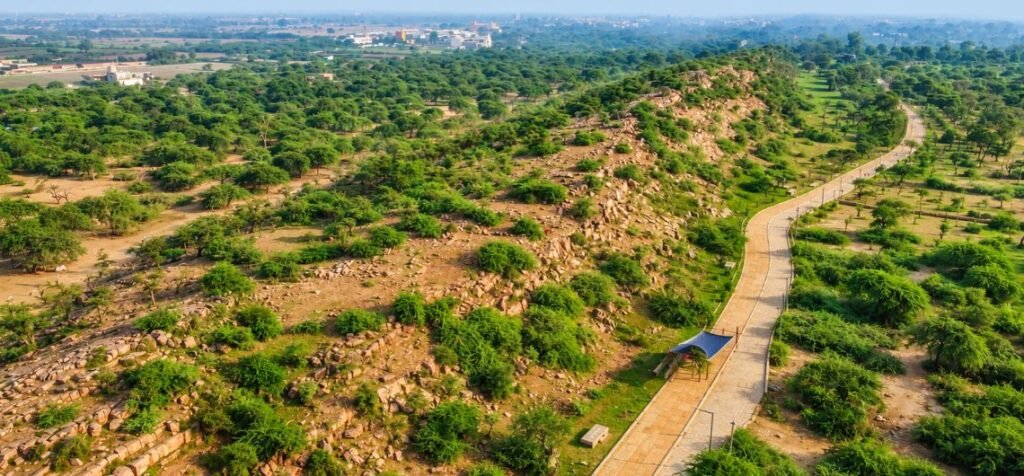
Govardhan is a low, sacred hill associated with the story of Krishna lifting it to shelter villagers from heavy rain. Devotees perform the Govardhan Parikrama, a circumambulation (walk around the hill) of around 21 km, often barefoot. Along the way are sites such as Kusum Sarovar, a historic reservoir with stepped ghats, and Radha Kund, one of the most sacred ponds in Braj.
The full parikrama requires considerable time and physical preparation. It is hot for much of the year, and many visitors choose to cover just a section, or visit selected sites by car.
Barsana
Barsana is the hometown of Radha, according to tradition. The Radha Rani Temple (also called Shriji Mandir) sits on a hill and is reached by a flight of steps. The area is best known for Lathmar Holi, one of India’s most distinctive festivals.
Nandgaon
Nandgaon is traditionally identified as the home of Nand Baba, Krishna’s foster father. Nand Bhawan, a hilltop temple, is the main attraction, and stories of Krishna’s childhood in this household are told here. Nandgaon is close to Barsana (roughly 8 km), so the two are often visited together.
Famous Festivals in Mathura and Vrindavan
Festivals are not an add-on in Braj. They shape the calendar. Dates follow the Hindu lunar calendar and change every year, so always check current dates before booking.
Krishna Janmashtami
Janmashtami celebrates Krishna’s birth and usually falls in August or September. Temples are decorated, devotees fast and sing through the day, and at midnight, the moment of the birth in tradition, special ceremonies take place. Mathura’s Janmabhoomi and Dwarkadhish see the biggest crowds. It is a memorable time to visit, but expect heavy congestion and security checks.
Holi in Mathura and Vrindavan
Braj Holi lasts longer than the single day celebrated in much of India, and is typically held in February or March.
- Lathmar Holi (Barsana and Nandgaon): Rooted in a playful tradition, men from Nandgaon visit Barsana and women playfully “beat” them with sticks, while the men try to protect themselves with shields. The roles reverse the next day in Nandgaon. It is boisterous, with singing and colour everywhere.
- Flower Holi (Vrindavan): Temples such as Banke Bihari celebrate with flower petals rather than powdered colour, which is a gentler experience.
- Temple celebrations: Many temples hold their own colour and music events.
Practical advice: Wear clothes you do not mind ruining, protect your phone and camera in waterproof pouches, carry minimal valuables, keep your eyes and mouth protected from colour powders, and expect large crowds, especially in Barsana. Women travellers should be aware that crowds can be rowdy and may prefer to stay near the edges or go with a guide.
Radhashtami and Other Religious Celebrations
Radhashtami marks Radha’s birth and is celebrated particularly in Barsana, roughly two weeks after Janmashtami. Other occasions include Jhulan Yatra (the swing festival, in the monsoon), Govardhan Puja (the day after Diwali) and Kartik-month pilgrimages. Festivals can make temples more atmospheric, but they also affect road closures, hotel availability and prices.
Best Time to Visit Mathura and Vrindavan
- October to March: The most comfortable period for sightseeing, with milder days and cooler mornings and evenings. Winter mornings can be foggy, which sometimes delays trains and road travel.
- March (festival season): Holi draws large crowds. It is exciting and colourful, but it requires advance booking and patience.
- August to September: Janmashtami and Radhashtami bring beautiful decorations and devotion, along with heavy crowds and monsoon humidity.
- April to June: Summer is very hot, making outdoor sightseeing hard. If you travel then, go early in the morning.
- Monsoon (July to September): The landscape is greener and the swing festivals are lively, but rain and humidity can disrupt plans.
Festival periods are rewarding but can involve heavy crowds, closed roads and transportation delays. If you prefer quiet temples and easy movement, choose a non-festival week in the cooler months.
How Many Days Are Enough for Mathura and Vrindavan?
| 1day | Main attractions in Mathura and Vrindavan: Janmabhoomi and Vishram Ghat in Mathura, then Banke Bihari, ISKCON and Prem Mandir in Vrindavan |
| 2days | Mathura, Vrindavan and major temples at a more relaxed pace, including Dwarkadhish, the museum, Radha Raman and Nidhivan |
| 3days | Mathura, Vrindavan, Gokul and selected nearby attractions |
| 4days | Extended Braj exploration including Govardhan and Barsana (with Nandgaon) |
These are suggested planning options, not fixed tour schedules. Your ideal time depends on your interest in temples, how much walking you want to do and whether you are travelling during a festival.
How to Reach Mathura and Vrindavan from Delhi and Agra
Delhi to Mathura
Mathura is roughly 145–150 km from Delhi. By private car, the journey typically takes around three hours or a little longer, depending on traffic and the route, with the Yamuna Expressway being a common option. By train, Mathura Junction is on a major rail line, with several fast and express trains from Delhi. Journey times vary by service, so check current schedules.
Agra to Mathura
Agra is only about 55–60 km from Mathura, which usually takes around an hour to an hour and a half by road. This makes Mathura an easy and natural addition to an Agra trip, either as a stop on the way to or from Delhi, or as a day trip from Agra.
Travelling Between Mathura and Vrindavan
The two towns are about 12 km apart. Options include:
- Private taxi or car with driver: The most comfortable option, especially for mixing multiple temples in one day.
- Auto-rickshaws and e-rickshaws: Convenient for short hops and narrow lanes, but agree the fare before starting.
- Shared transport: Available, but crowded and less suitable for luggage.
The journey often takes 30–60 minutes depending on traffic. Traffic, festival crowds and road conditions can change the duration at short notice, so allow extra time between stops.
Can You Combine Mathura and Vrindavan with the Golden Triangle Tour?
Yes, and it is a natural fit. The classic Golden Triangle covers Delhi, Agra and Jaipur. Mathura and Vrindavan sit almost on the road between Delhi and Agra, so adding them does not require a large detour.
A combined journey could look like this:
- Delhi: Historic monuments, old markets and diverse cultural neighbourhoods.
- Mathura: Krishna Janmabhoomi, Vishram Ghat and the museum.
- Vrindavan: Famous temples, devotional music and lane-side life.
- Agra: The Taj Mahal and Mughal heritage, including Agra Fort.
- Jaipur: Royal architecture, forts, palaces and bazaars.
The result is a trip with contrast: Mughal and Rajput grandeur alongside living devotion. If you want to explore Delhi, Agra, Mathura and Vrindavan together, the Golden Triangle Tour with Mathura and Vrindavan is one itinerary worth considering. Private transport and a flexible schedule help, because temple visits are often easier early in the day or in the late afternoon.
Choosing a Spiritual Journey in India
Braj is only one of India’s sacred regions. If you are drawn to pilgrimage traditions and want to see how they differ across the country, take a look at these spiritual tour experiences in India to see how other sacred destinations can be planned.
Devotional Experiences and Wellness
Some travellers want temple visits to be balanced with something quieter. If you would like to combine cultural sightseeing with yoga and spiritual practice, the Golden Triangle with Yoga Escape is one option to explore. Check the itinerary page for exactly which locations and activities are included.
Extending the Spiritual Journey Beyond Braj
Travellers interested in river rituals, pilgrimage towns and yoga in the Himalayan foothills may also like the Golden Triangle Tour with Haridwar and Rishikesh. Haridwar and Rishikesh sit on the Ganges and are known for evening aarti ceremonies and yoga and meditation centres, giving a natural follow-up to the traditions you see in Braj.
Practical Travel Tips for First-Time Visitors
- Dress modestly. Cover shoulders and knees. Loose, lightweight clothing works well, and a scarf is handy.
- Check temple timings. Many temples close in the afternoon and have set darshan times, which vary by season and festival. Confirm locally.
- Follow photography and phone rules. Some temples ban cameras and phones. Use lockers where provided.
- Plan for footwear. Shoes come off before entering. Wear slip-on footwear and carry socks if floors are hot.
- Prepare for crowds. Popular temples such as Banke Bihari get very busy. Go early, and keep valuables close.
- Carry water and comfortable shoes. You will walk a lot on uneven lanes.
- Be careful around monkeys. They can snatch glasses, phones, bags and food. Do not display food or loose belongings, and do not feed or tease them.
- Use reliable transport. Prefer a pre-arranged driver or clearly agreed fares.
- Check festival dates before booking. Hotels fill up and roads close during major festivals.
- Respect religious customs. Ask before photographing people, avoid pointing your feet at shrines and follow the lead of locals.
Frequently Asked Questions About Mathura and Vrindavan
1. What are Mathura and Vrindavan famous for?
Mathura is famous as Lord Krishna’s traditional birthplace, and Vrindavan for his childhood and Radha-Krishna devotion. Together they offer major temples, riverside ghats, devotional music, and festivals such as Janmashtami and Holi. They also form the heart of the wider Braj region, which draws pilgrims and travellers from around the world.
2. How many days are enough to visit Mathura and Vrindavan?
One full day covers the main highlights, but two days is more comfortable and lets you add extra temples and the museum. Three days allows a visit to Gokul, and four days is better if you want to include Govardhan, Barsana and Nandgaon without rushing.
3. Which temples should first-time visitors see in Vrindavan?
First-time visitors usually start with Banke Bihari Temple for its distinctive darshan, ISKCON’s Krishna Balaram Mandir for an accessible international atmosphere, and Prem Mandir for its marble architecture. If you have time, add Radha Raman Temple and Nidhivan for deeper insight into Vrindavan’s traditions and local beliefs.
4. Is Mathura the birthplace of Lord Krishna?
According to Hindu tradition, yes. Mathura is the place where Krishna is believed to have been born, and the Shri Krishna Janmabhoomi complex marks the traditionally identified spot. This is a matter of faith and long-standing tradition rather than something that can be confirmed by independent historical evidence.
5. What is the best time to visit Mathura and Vrindavan?
October to March is generally best because the weather is cooler and more comfortable for sightseeing. March brings Holi celebrations, and August to September brings Janmashtami, both memorable but crowded. Summers are very hot and the monsoon can be humid, so plan outdoor time carefully.
6. Can Mathura and Vrindavan be visited from Agra in one trip?
Yes. Mathura is roughly 55–60 km from Agra, and Vrindavan is about 12 km further. Many travellers do this as a long day trip by private car, but a more relaxed plan is to stay overnight in Mathura or Vrindavan, especially if you want to see evening aarti or visit more temples.
7. What is the difference between Mathura and Vrindavan?
Mathura is a historic city known as Krishna’s birthplace, with ghats, markets and a museum. Vrindavan is a smaller, more devotional town associated with Krishna’s youth and Radha-Krishna worship, filled with temples and lanes. Mathura feels more urban and historical, while Vrindavan feels more spiritual and immersive.
8. Can Mathura and Vrindavan be included in a Golden Triangle tour?
Yes. Because Mathura and Vrindavan lie between Delhi and Agra, they can be added to a Delhi–Agra–Jaipur itinerary with little extra travel. They bring a spiritual and cultural dimension to a trip otherwise focused on Mughal and Rajput heritage, and work best with a private vehicle and flexible timing.
Conclusion
Mathura and Vrindavan offer a rare combination: ancient history, temple architecture, devotional music, river rituals and festivals that fill the streets with colour. What makes them special is not any single monument but the atmosphere of daily devotion that surrounds you in the lanes, ghats and courtyards.
Resist the urge to rush. Give both towns enough time, start early to avoid crowds, and leave space for unplanned moments, such as an evening aarti or a conversation with a local priest. If you would like help shaping a comfortable, well-paced trip, we invite you to explore the Mathura and Vrindavan itinerary offered by Taj Mahal Private Trip, planned around private transport and your own pace.

Comments