
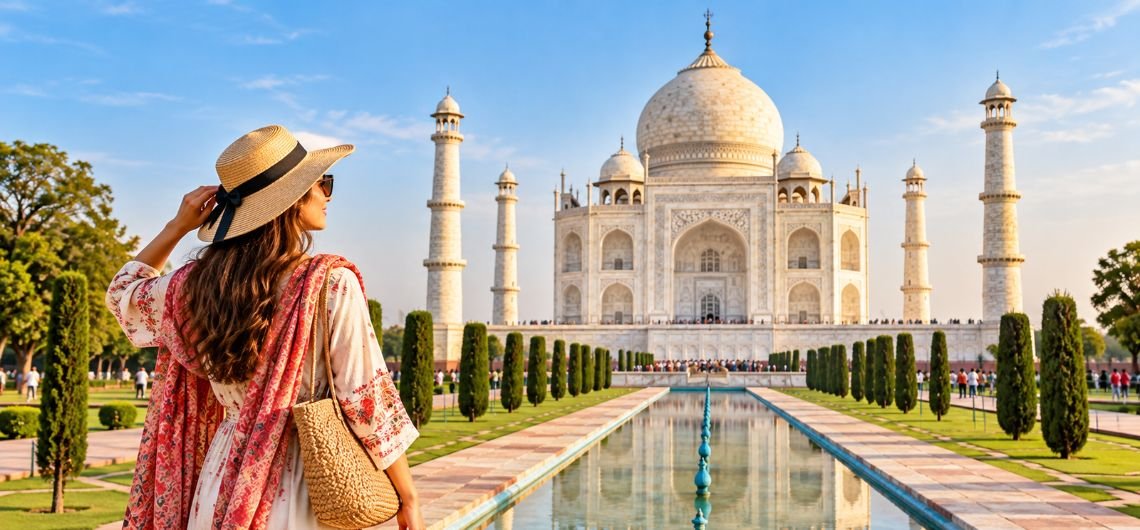
You have booked the trip, planned the sunrise slot and charged the camera. Then comes the practical question: what should you actually put on? A Taj Mahal visit means a fair amount of walking, hours outdoors in Agra’s changeable weather, and a lot of bright white marble that reflects sun and heat.
The short answer: what to wear while visiting the Taj Mahal comes down to breathable, comfortable clothing suited to the season, plus footwear you can walk in for hours. Modest, relaxed outfits are a considerate choice at a heritage monument, but you do not need to dress formally or in traditional Indian clothes.
This guide covers outfits for women and men, season-by-season advice, shoes, photography, what to pack, and how clothing expectations change at spiritual places such as Varanasi, Haridwar and Rishikesh.
Is There a Dress Code for Visiting the Taj Mahal?
Based on the official visitor guidelines, there is no published, mandatory clothing dress code for the Taj Mahal. The official Taj Mahal Do’s and Don’ts page focuses on prohibited items and visitor conduct. It covers things like drones, tripods, food, smoking items, large bags, silent phones and no photography inside the main mausoleum.
That means:
- Traditional Indian clothing is not required. Sarees, kurtas and salwar kameez are lovely options if you enjoy them, but Western clothing is perfectly fine.
- Comfort is the real priority. Light fabrics, easy movement and good footwear matter far more than any particular style.
- Respectful dressing is good etiquette. The Taj Mahal is a mausoleum and a UNESCO World Heritage Site, so many visitors choose clothes that cover shoulders and knees. Treat this as a personal courtesy and a practical choice for sun protection, not an official rule.
Visitor rules can change, so check the official website shortly before you travel. If staff give you instructions at the gate, follow them.
What Should Women Wear to the Taj Mahal?
Women have plenty of comfortable options. None is compulsory, so choose what suits the weather and your plans for the day.
Taj Mahal outfit ideas for women:
- Cotton trousers with a breathable top. Easy to move in, forgiving on stairs and in crowds.
- Long skirts or comfortable dresses. A midi or maxi length works well in warm weather. Avoid very long hems that could trail on steps.
- Kurtas with trousers or leggings. A lightweight kurta is cool, covering and practical, and many visitors enjoy buying one locally.
- A light scarf or shawl. Handy for sun on the shoulders, a chilly morning or extra coverage if you want it.
- Walking shoes or comfortable sandals. You will be on your feet for a long time.
Sarees and salwar kameez are optional traditional choices. If you wear a saree, practise walking and climbing steps in it first.
What Should Men Wear to the Taj Mahal?
For men, the same rule applies: dress for the weather and for walking, not for a formal occasion.
Taj Mahal outfit ideas for men:
- Lightweight cotton shirts or T-shirts.
- Linen or cotton trousers.
- Comfortable chinos.
- Knee-length or longer shorts, if that suits your comfort and the weather.
- Walking shoes or supportive sandals.
Breathable fabrics keep you cooler through security checks, queues and open courtyards. Formal shirts and stiff trousers add heat without adding anything to the experience. Shorts are not banned in the official guidelines, but longer, looser options are often more comfortable in strong sun and are a considerate choice.
What to Wear While Visiting the Taj Mahal in Different Seasons
Agra’s climate ranges from fierce heat to chilly, foggy mornings, so the season shapes your outfit more than anything else.
Summer (April to June)
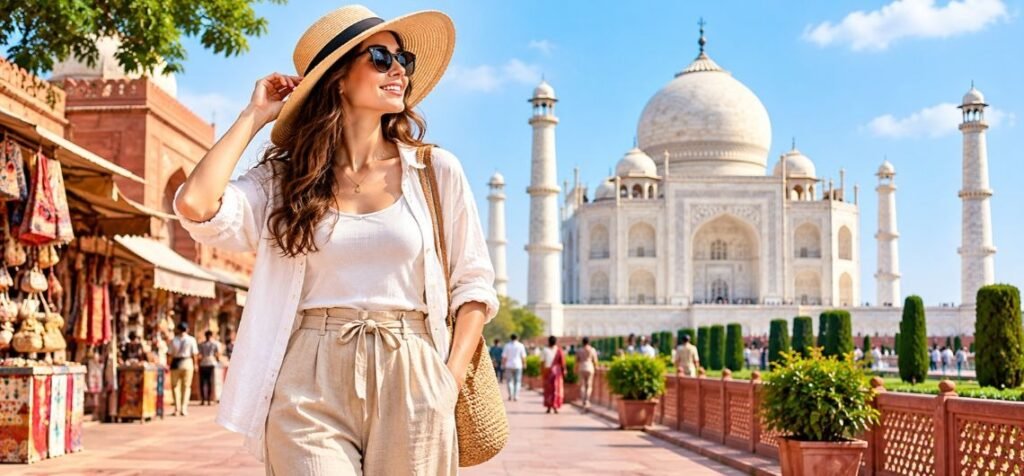
Agra can become extremely hot, often well above 40°C in the afternoon. Choose:
- Lightweight cotton or linen clothing in light colours.
- A breathable top and loose trousers or a long skirt.
- Sunglasses, a hat and sunscreen.
Aim for an early-morning visit to avoid the strongest midday heat, and carry water. Bottled water is permitted inside the monument according to the official guidelines.
Monsoon (July to September)
Expect humidity, sudden showers and wet marble. Pack:
- Quick-drying clothing that will not stay damp.
- Comfortable shoes with good grip.
- A lightweight rain jacket or poncho.
Wet surfaces become slippery, so walk carefully on steps and polished stone. Check the forecast before you leave your hotel.
Winter (November to February)
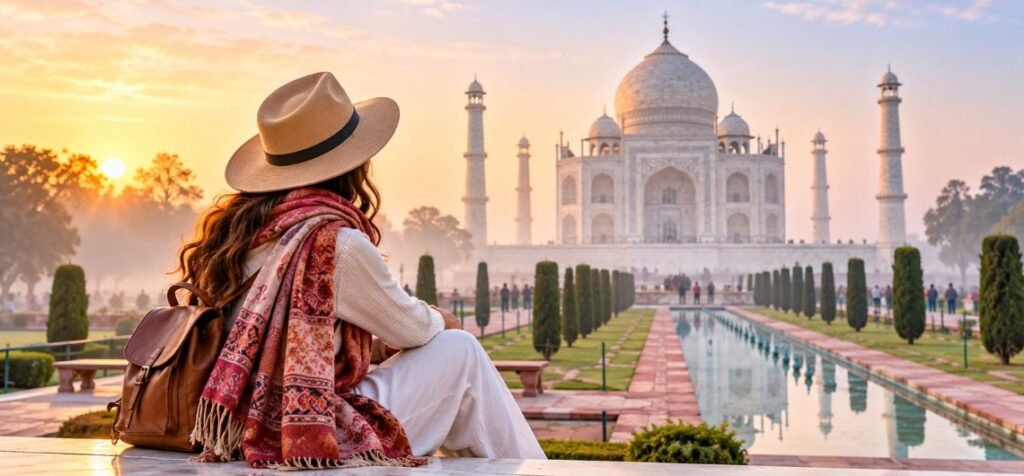
Mornings can be cold and often misty, especially at sunrise. Layering works best:
- Comfortable trousers and a warm base layer.
- A light jacket or sweater.
- A scarf for early starts.
Sunrise visits feel noticeably colder than afternoon sightseeing, and temperatures vary from day to day. Layers let you shed clothing as the sun climbs.
Spring and Autumn
February to March and October to early November are usually milder. Wear breathable layers you can add or remove, such as a cotton shirt with a light cardigan. Check the local forecast rather than relying only on seasonal averages, as warm spells and cool snaps both happen.
What Shoes Should You Wear at the Taj Mahal?
Comfortable shoes for visiting the Taj Mahal matter more than almost any other clothing choice. You will walk from the entrance gate through gardens and across the marble platform, often on warm or uneven surfaces.
- Walking shoes with good grip are the safest all-round choice.
- Comfortable sandals work well in hot weather if they are secure and supportive.
- Slip-on or easy-to-remove footwear saves time when you need to take shoes off.
- Clean socks are an optional extra if you prefer them on the marble.
- Care on polished marble, which can be slippery, especially when wet.
Footwear arrangements around the main mausoleum are managed by monument staff, so follow their instructions. According to the official page, free shoe covers are provided with foreign visitor entry tickets. Shoes do not need to come off across the whole complex, so check the current arrangement at the entrance rather than assuming.
What to Wear for Taj Mahal Photography
If photos are a priority, a few simple choices help your outfit look good against the architecture. These are aesthetic preferences, not entry requirements.
- Pastel colours and earthy tones such as soft pink, sage, terracotta or mustard stand out against white marble.
- Simple patterns keep attention on you and the monument rather than clashing with the detailed inlay work.
- Well-fitted, comfortable outfits let you move naturally for photographs.
- Lightweight layers are useful at sunrise, when it can be cold before the sun warms up.
- No long, trailing garments near steps and crowded areas, where they can catch underfoot.
Remember that photography is prohibited inside the main mausoleum, and drones and tripods are not allowed. Be mindful of other visitors when taking posed shots.
What to Wear When Visiting Spiritual Places in India
The Taj Mahal is only one stop for many travellers. If your itinerary includes temples, ghats or ashrams, remember that clothing expectations vary by destination and by individual religious institution. A mausoleum visit is not the same as entering an active temple or ashram, so check local guidance rather than assuming one set of rules applies everywhere.
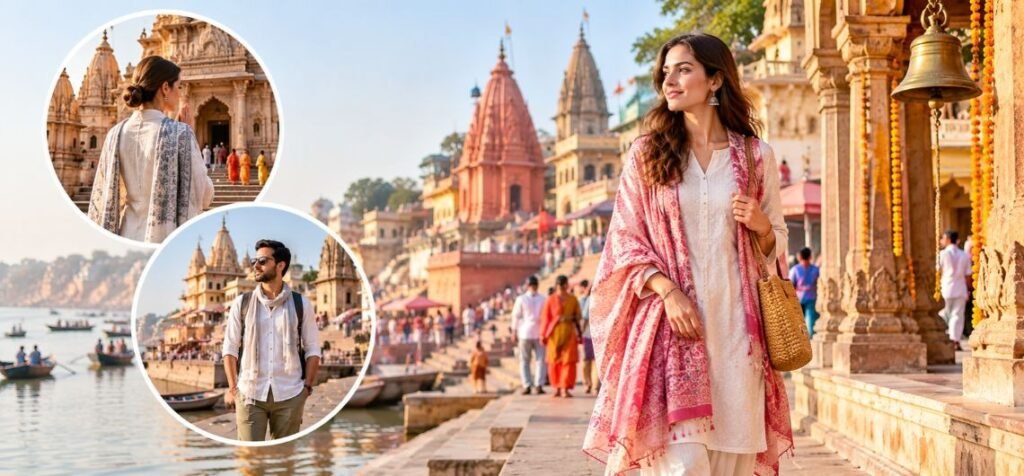
Varanasi: Temples and the Ganga Ghats
Wear comfortable, modest clothing, because you will be walking through crowded lanes and steps. Some temples have their own entry requirements, including restrictions on leather items or phones, so check ahead or ask your guide. Slip-on footwear is practical because shoes are often removed.
Haridwar: Ganga Aarti and Pilgrimage Sites
Choose breathable, modest outfits and footwear with grip, since ghat steps are often wet. Evenings by the river can be cooler, so a light scarf is useful. Follow instructions at each religious site.
Rishikesh: Ashrams, Yoga and Meditation
Bring comfortable, stretchy clothing for yoga classes and more covered clothing, such as long trousers and a loose top with sleeves, for visiting ashrams and temples, in line with each venue’s guidance. If you want a structured wellness experience, you can explore India Yoga Tour Packages for related travel ideas.
Spiritual Travel Across India
A spiritual itinerary may combine temple visits, meditation, heritage sightseeing and local cultural experiences. Learn about local customs before each stop, as dress norms, footwear rules and photography etiquette change from place to place. If you are considering a wider journey, you can read more about spiritual tours across India and how different destinations can fit together.
What Should You Carry for a Comfortable Taj Mahal Visit?
Pack light. Large bags can slow down security checks, according to the official guidance.
- Entry ticket and valid identification, as required.
- A small day bag.
- Sunglasses and sun protection.
- Water (bottled water is permitted, subject to current rules).
- A light jacket or scarf when the weather calls for it.
- Comfortable footwear.
- Essential personal items only.
Security restrictions apply to certain items. The official list includes drones, tripods, food, smoking items, headphones, chargers and other electrical goods apart from cameras. Read the official visitor guidelines before you pack.
Can You Combine a Taj Mahal Visit With Cultural Experiences in Agra?
Agra offers much more than its most famous monument. Comfortable walking clothes suit these experiences too, though you should adapt your outfit to the itinerary and any site-specific requirements. Respect local communities and heritage sites wherever you go.
Mughal Heritage Walk
If you enjoy history, a Mughal Heritage Walk explores Agra’s older neighbourhoods and the traces of Mughal life that remain there. Expect narrow lanes and uneven ground, so wear sturdy, comfortable shoes.
Taj Mahal Village Tour
For a look at rural life and local traditions beyond the main monuments, a Taj Mahal Village Tour offers a quieter perspective. Light, modest clothing and closed footwear are sensible choices, especially in dusty or warm conditions.
Common Clothing Mistakes to Avoid
- Wearing brand-new shoes that have not been broken in. Blisters can spoil a long day.
- Choosing heavy fabrics in hot weather. Denim and synthetics can feel stifling in summer.
- Forgetting a warm layer for an early winter visit.
- Wearing footwear with poor grip, especially in monsoon or on polished marble.
- Carrying unnecessary belongings that slow security checks.
- Assuming all spiritual places follow the same dress rules.
- Treating unofficial dress-code advice as an official monument regulation.
Frequently Asked Questions
What is the best outfit to wear while visiting the Taj Mahal?
The best outfit is breathable, comfortable clothing suited to the season, paired with supportive walking shoes. Cotton trousers, a light top or a kurta work well. In winter, add layers for cold mornings. Choose what lets you walk, stand and take photos comfortably for several hours.
Is there an official dress code at the Taj Mahal?
The official visitor guidelines list prohibited items and conduct rules but do not publish a mandatory clothing dress code. Many visitors still choose modest, comfortable clothing out of respect for the site. Check the official Do’s and Don’ts page before your trip, and follow staff instructions on the day.
Can women wear jeans to the Taj Mahal?
Yes, comfortable jeans are a practical option in cool or mild weather. During hot months, lightweight cotton trousers or a long skirt are usually more comfortable. Pair them with a breathable top and good walking shoes, and carry a scarf if you would like extra coverage.
Can men wear shorts at the Taj Mahal?
The official guidelines do not mention a ban on shorts. Knee-length or longer shorts can be comfortable in summer, though lightweight long trousers offer better sun protection. Treat it as a personal comfort and courtesy choice, not an official restriction.
What colours look best in Taj Mahal photographs?
Pastel, neutral and earthy tones, such as blush, sage, sand, terracotta and soft blue, contrast nicely with white marble. These are optional photographic preferences, not entry requirements. Simple patterns usually photograph better than very busy prints or pure white.
What shoes are best for visiting the Taj Mahal?
Choose comfortable footwear with good grip, such as broken-in walking shoes or secure sandals. Slip-ons make removal easier. Marble can be slippery when wet. Follow staff instructions near the main mausoleum, and ask at the entrance about the current shoe cover arrangements.
What should I wear for a sunrise visit to the Taj Mahal?
In cooler months, wear layers such as a light jacket, sweater or scarf, as early mornings can be chilly and misty. In warmer months, breathable cotton or linen is enough. Comfortable shoes matter in every season because you will walk in low light.
What should I wear when visiting temples in India?
Wear modest, comfortable clothing that covers shoulders and knees, and choose footwear that is easy to remove. Temple rules differ, so check the requirements of each place before you go. When in doubt, ask your guide or local staff.
What should I wear for yoga or meditation in India?
Wear comfortable, breathable, flexible clothing for practice. Bring a light cover-up such as a scarf, shawl or loose long-sleeved top for visits to ashrams, temples and other spiritual venues. Follow the guidance of your teacher or venue.
Can I combine a Taj Mahal tour with spiritual destinations in India?
Yes. Many travellers pair Agra with Haridwar, Rishikesh or Varanasi, depending on time and transport. Plan realistic travel times between stops, and pack clothing that works for both heritage sightseeing and religious or wellness settings.
Conclusion
Three things matter most when deciding what to wear while visiting the Taj Mahal: comfortable, weather-appropriate clothing, footwear made for walking, and awareness of local customs. You do not need a special costume. A relaxed, respectful outfit lets you enjoy the marble, the gardens and the light.
Give yourself enough time in Agra to see the monument without rushing, and, if you are curious, to explore the city’s heritage and the wider region. Check the official visitor guidelines before you go, pack light, and enjoy the visit.

Comments